


On a no-carb diet, you may lose weight in the first few days to a week, but much of that is not just fat—it is water lost along with glycogen. There is no need to cut carbohydrates to zero. Adjusting the amount and quality of staple foods while making sure you get enough protein, vegetables, and dietary fiber is a safer approach that is easier to keep up. This doctor-reviewed article explains the changes over one week, what you can eat, how to cut back only at night, and warning symptoms.
Key takeawaysPoints of this article
- No need to cut them out completely: Rather than going to “zero,” cut back on sugary drinks, sweets, and refined staple foods, and review the amount and quality.
- Weight loss in one week varies from person to person: Weight lost early on includes a lot of water, and it does not necessarily mean the same amount of fat was lost.
- What you can eat: Combine fish, meat, eggs, soy products, vegetables, mushrooms, seaweed, unsweetened dairy products, and so on.
- Cutting back only at night is one option: However, overeating at breakfast and lunch may mean you don’t lose weight; what matters is your total energy intake for the whole day.
- When to stop and seek advice: If you have a severe headache, lightheadedness, palpitations, cold sweats, changes in consciousness, or cannot eat or drink, stop and consult a medical facility.
What are carbohydrates? Understanding the basics
Carbohydrate basics
- 1
Role
Main energy source for the brain and muscles
Made up of sugars and dietary fiber
- 2
Types
Simple: sugar, white rice, etc.
Complex: whole grains, vegetables, legumes
- 3
When cutting back
Sudden restriction can cause headache and fatigue
Keep the dietary fiber
Adjust amount and quality
Carbohydrates are the main energy source for the brain and muscles and are made up of sugars and dietary fiber. When you sharply reduce sugars, the body also uses ketone bodies derived from fat, but sudden restriction may cause headache, fatigue, constipation, and other symptoms. Rather than cutting carbohydrates to “zero,” it is important to adjust the amount and quality while keeping foods that contain dietary fiber.
Carbohydrates are broadly divided into “simple carbohydrates (sugar, white rice, etc.)” and “complex carbohydrates (whole grains, vegetables, legumes, etc.),” which differ in nutritional value and how quickly they are digested and absorbed. Complex carbohydrates are rich in dietary fiber, vitamins, and minerals and play an important role in maintaining health.
How cutting carbs leads to weight loss
How cutting carbs leads to weight loss
- 1
Changes in the body
Uses fat for energy
Enters a state of ketosis
- 2
Short-term weight loss
Glycogen decreases
Stored water is excreted
- 3
Points to note
Body fat is not determined by insulin alone
Get your overall diet in order
Meta-analysis: slightly greater long-term weight loss
When you cut carbs, the body enters a state of “ketosis,” and you tend to lose weight in the short term. When you cut carbs, the body enters a state called “ketosis,” in which it uses fat as its energy source instead of sugar. At this point, glycogen (the storage form of sugar) in the body decreases and stored water is excreted at the same time, so body weight drops significantly in a short period.
Reducing your sugar intake makes it easier to curb the rise in blood sugar after meals, but body fat loss is not determined by insulin alone. You need to get your overall diet in order, including total energy intake, the amount of protein and fat, and your activity level.
[Reference]
Very-low-carbohydrate ketogenic diet v. low-fat diet for long-term weight loss: a meta-analysis
This meta-analysis shows that a very-low-carbohydrate ketogenic diet produced slightly greater long-term weight loss than a low-fat diet.
Risks of a no-carb diet
Risks of cutting carbs
- 1
Unbalanced nutrition
Lack of dietary fiber and vitamins
Can lead to constipation and fatigue
- 2
Lower metabolism
Possible loss of muscle mass
Energy expenditure also drops
- 3
Psychological stress
Anxiety and guilt
Burden of eating out
See a doctor for ongoing problems
If low mood or overeating keeps recurring
A no-carb diet comes with risks that should not be overlooked in exchange for weight loss. Here we sort out what you should know in advance, such as unbalanced nutrition, lower metabolism, and effects on your mental health.
Unbalanced nutrition
If you cut back across the board, including staple foods, fruit, and legumes, you may run short of dietary fiber, vitamins, and minerals, which can lead to constipation and fatigue. Cutting back on sugary drinks and sweets is not the same as eliminating vegetables, legumes, and whole grains. Make adjustments while making sure you still have sources of dietary fiber.
Lower metabolism
If you are short not only of sugars but also of total energy and protein, you may lose muscle mass and your energy expenditure may drop. Make up for the staple foods you cut back on with protein, vegetables, and a moderate amount of fat, and include strength training as well.
Psychological stress
Strict dietary restriction can lead to anxiety and guilt about eating, and make eating out or dining with others a burden. If low mood or overeating keeps recurring, don’t force yourself to continue—consult a medical facility.
[Reference]
Long-term effects of a very low-carbohydrate diet and a low-fat diet on mood and cognitive function
Recommended: a diet that manages carbohydrates properly
Tips for managing carbohydrates
- 1
Three things to manage
Quality: choose complex carbohydrates
Adjust the timing
Don’t fix amounts on your own
- 2
Easy things to cut back
Sugary drinks and sweets
Sweet breads and large servings of staples
- 3
Who should seek advice
People being treated for diabetes or with kidney or liver disease
Pregnancy/breastfeeding, history of eating disorders
Watch for possible hypoglycemia
Target: 50–65% of total energy
If you cut carbs, managing three things—quality, timing, and minimum amount—can keep the risks down. Cutting carbs is one approach in itself, but following the points below lets you lose weight healthily while keeping the risks down.
1. Choose the “quality” of your carbohydrates
Actively eat complex carbohydrates such as whole grains and vegetables rather than simple sugars. This helps prevent sharp rises in blood sugar while also giving you dietary fiber.
2. Adjust when you eat them
Eating less of your staple food at night is one way to adjust your daily energy intake. However, the right amount varies depending on how much you eat at breakfast and lunch, when you exercise, your sleep, and any illnesses being treated. There is no need to cut them to zero at night.
3. Don’t set a fixed “up to X g” on your own
The right amount of carbohydrates varies with age, build, activity level, chronic conditions, and medications. Japan’s Ministry of Health, Labour and Welfare “Dietary Reference Intakes for Japanese (2025 edition)” sets the target carbohydrate intake for the general adult population at 50–65% of total energy. This is not a carbohydrate restriction level for treatment purposes. Even while losing weight, don’t set a uniform figure such as 50 g or 100 g; adjust while checking your overall diet and how you feel.
Easiest things to cut back first
Sugary drinks, sweets, sweet breads, large servings of staple foods
Things to keep
Vegetables, legumes, mushrooms, seaweed, moderate amounts of fruit and whole grains
Who should consult a doctor
People being treated for diabetes, with kidney or liver disease, who are pregnant or breastfeeding, or with a history of eating disorders
People using diabetes medications or insulin may develop hypoglycemia with sudden carbohydrate restriction. Don’t start on your own—consult your doctor or a registered dietitian.
How much weight can you lose on a no-carb diet in one week?
How much can you lose in one week?
- 1
There is no single answer
Varies with food intake and activity
Also depends on starting weight
- 2
Right after starting
Water drops and weight falls quickly
Not all of it is body fat
- 3
How to check
Weekly average, waist, how you feel
Look over several weeks
Stop if something is wrong
See a doctor for severe fatigue or dizziness
There is no single figure for how many kg you will lose in one week. Right after starting, weight may drop quickly because water bound to the glycogen stored in the body decreases. However, not all of that is a reduction in body fat. Changes vary greatly depending on how much you eat, your starting weight, your activity level, swelling, bowel movements, and so on.
Rather than competing over day-to-day changes or a figure like “X kg in one week,” check your weekly average weight measured under the same conditions, your waist measurement, what you eat, and how you feel over several weeks.
If you experience rapid weight loss, severe fatigue, or dizziness, stop and consult a medical facility.
What to eat and what to limit on a no-carb diet
| Category | Example foods | How to include them |
|---|---|---|
| Foods to combine | Fish, meat, eggs, soy products, vegetables, mushrooms, seaweed | Combine protein and dietary fiber at every meal |
| Foods to include in adjusted amounts | Brown rice, rice with barley, whole-grain bread, oatmeal, fruit, legumes | Don’t cut them out completely; match them to your activity level and daily food intake |
| Foods to limit | Sugary drinks, sweets, sweet breads, large servings of white rice, noodles, or bread | Eat them less often and in smaller amounts, and avoid bingeing when hungry |
| Foods not to overdo | Fried foods, processed meats, fatty meats, dishes based on butter or heavy cream | Don’t overcompensate for cutting sugars by eating too much fat and too many total calories |
Potatoes and other tubers, pumpkin, corn, and root vegetables also contain sugars, but there is no need to ban them across the board. Instead of rice, you can use cauliflower rice, tofu, shirataki noodles, and so on. Rather than relying only on substitutes at every meal, another option is to have a small amount of brown rice or rice with barley.
Sample menu for one day

Breakfast
Egg dish, unsweetened yogurt, vegetables, half a slice of whole-grain bread or a small amount of oatmeal
Lunch
Fish or chicken, a vegetable-heavy side dish, a small amount of rice
Dinner
Tofu or fish, vegetable soup. Adjust the staple food according to how much you have eaten up to lunch and your activity level
Snacks
A small amount of nuts, unsweetened yogurt, etc.
The above is a general example, not a therapeutic diet. The content will differ depending on your energy needs and any chronic conditions.
Does cutting carbs only at night work?
Eating less of your staple food at night may lead to weight loss if, as a result, your total daily energy intake goes down. However, it is not the case that “cutting carbs only at night will definitely make you lose weight.” If you overeat at breakfast or lunch, eat too much fat, or snack more, results will be harder to achieve. If you exercise at night, can’t sleep because of hunger, or feel very tired the next morning, keep an adjusted amount of staple food at dinner.
Effects of carbohydrate restriction based on scientific evidence
Low-carbohydrate diets may lead to faster weight loss in the short term, but they are not necessarily clearly superior to balanced weight-loss diets in the long term. A 2022 Cochrane review concluded that, for adults with overweight or obesity, low-carbohydrate diets and balanced-carbohydrate diets showed “little or no difference” in weight loss and cardiovascular risk markers for up to 2 years. What matters is building an overall diet you can keep up.
In diabetes, adjusting carbohydrate intake may help with blood sugar control, but it needs to be coordinated with drug treatment. The American Diabetes Association also emphasizes individualization based on total energy intake, nutritional quality, and metabolic goals, rather than recommending a specific nutrient ratio for everyone.
Who a no-carb diet suits and who it doesn’t
Whether a no-carb diet suits you varies greatly depending on your constitution and whether you have chronic conditions. Use the following to check which type you are closer to.
Suitable for
- People who want to lose weight in the short term
- People with guidance from a doctor or dietitian
- People who need blood sugar management (prediabetes)
Not suitable for
- People with kidney or liver disease
- People who are pregnant or breastfeeding
- People who are prone to psychological stress
Depending on your health, extreme carbohydrate restriction may cause serious harm. If you have a chronic condition or are concerned about your health, be sure to consult a professional before starting.
Not sure if it suits you? Start with a consultation.
A doctor decides whether you can use it and which dose is appropriate, based on your consultation and questionnaire.
No consultation fee (first & follow-up visits)Online consultation available
Effects of a no-carb diet on the body
When you cut carbs, your metabolism shifts significantly, starting with changes in blood sugar and insulin. Cutting carbs causes the following changes in the body.
Lower blood sugar and insulin
Eating carbohydrates raises blood sugar and triggers insulin secretion. Reducing your sugar intake makes it easier to curb the rise in blood sugar after meals, but whether body fat decreases also depends on total energy intake, the amount of protein and fat, and your activity level. If fat or total calories increase by as much as you cut sugars, you may not get the weight loss you expected.
Production of ketone bodies
When you cut carbohydrates drastically, fatty acids are broken down in the liver and ketone bodies are produced. Once you enter a “state of ketosis,” in which these are used as an energy source, metabolism that burns fat rather than sugar as fuel becomes dominant. This is one reason weight tends to drop on a low-carbohydrate diet.
However, prolonged ketosis may be accompanied by body odor or bad breath (ketone odor), fatigue, and headache, so caution is needed.
[Reference]
Long-term effects of ketogenic diets: a review
What is “healthy weight loss” that isn’t just about the number on the scale?
The weight lost right after starting includes not only fat but also glycogen and the water that goes with it. When you eat more carbohydrates again, the water returns and your weight may go up, but that alone does not mean you have gained the same amount of fat. Instead of daily numbers, check your weekly average weight measured under the same conditions, your waist measurement, and how you feel.
Key point
What matters is to “reduce body fat while maintaining muscle mass.” Extreme carbohydrate restriction may promote muscle breakdown and lower your basal metabolism. As a result, when you go back to your usual eating habits after the diet, your weight tends to come back—this is the cause of “rebound” weight gain.
Tips to avoid cutting carbs too much
Key point
The key to keeping it up is to be mindful of your PFC balance and switch from “cutting out” to “replacing.” Using the following ideas lets you lose weight healthily while avoiding an excessive lack of carbohydrates.
Think about your PFC balance
PFC refers to the balance of Protein, Fat, and Carbohydrate. Japan’s Ministry of Health, Labour and Welfare “Dietary Reference Intakes for Japanese (2025 edition)” sets the target carbohydrate intake for the general adult population at 50–65% of total energy. On the other hand, carbohydrate adjustment for treatment purposes is done individually. Check your total energy intake and the quality of your food so that cutting “only carbohydrates” does not lead to too much fat.
“Replace” rather than “don’t eat”
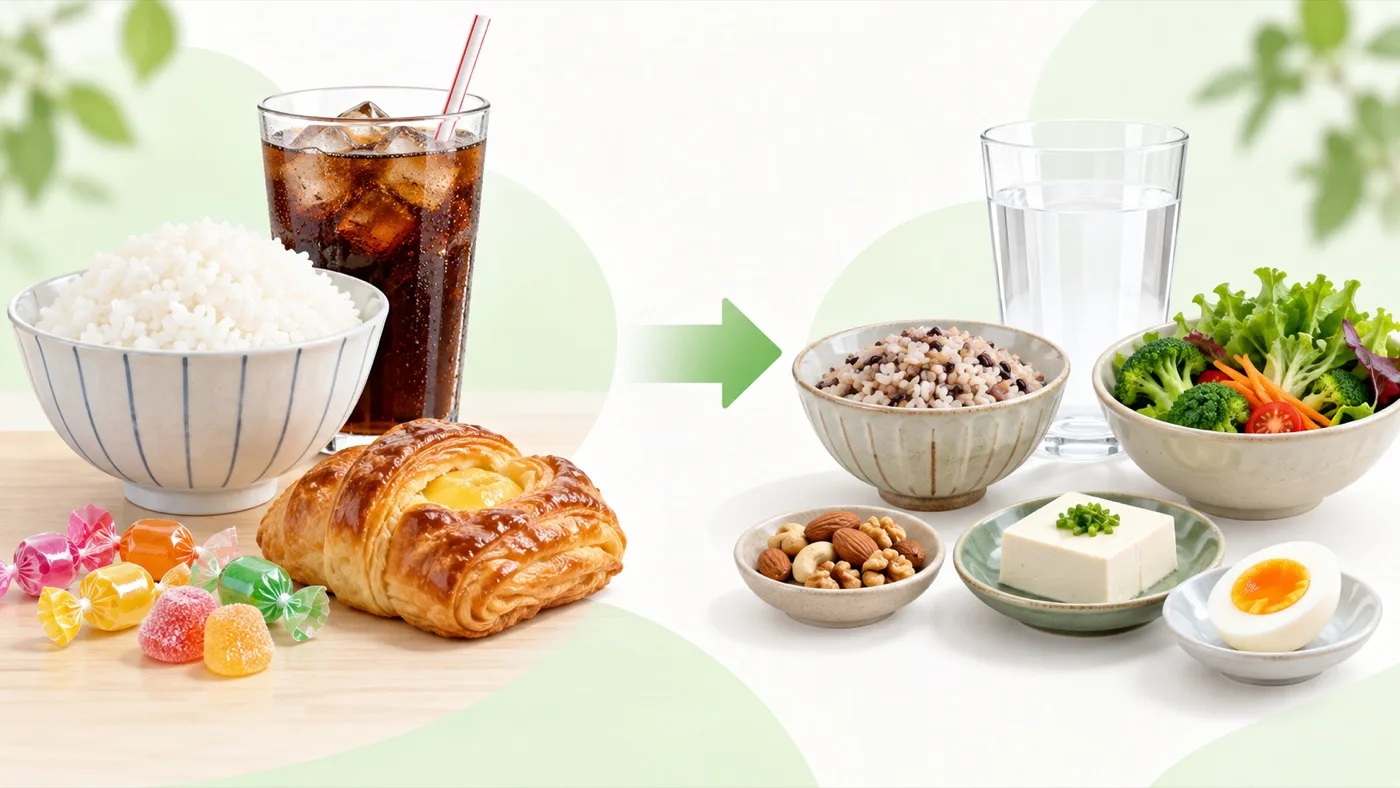
Replacing refined white rice and white bread with whole grains and brown rice improves the quality of your carbohydrates. The advantage is that you also get vitamins, minerals, and dietary fiber at the same time, and you tend to feel full for longer.
Make your intake visible
Use an app or a food diary to get a sense of how much carbohydrate you eat in a day. If you cut back based only on feel, you may end up short of even the energy you need without realizing it.
Habits shared by people who succeed at dieting
People who are able to maintain weight loss over the long term share common patterns of behavior. According to research, people who maintain their weight loss over the long term keep up behaviors such as the following.
- Eating a proper breakfast
- Weighing themselves every day
- Recording what they eat
- Doing aerobic exercise and strength training regularly
- Avoiding extreme restriction and aiming for sustainable eating habits
[Reference] National Weight Control Registry
Even when doing a no-carb diet, combining it with these habits increases your chances of success.
Expert opinion and the latest findings
It has been reported that health risks may increase when the proportion of carbohydrate intake is either extremely low or extremely high. Research on low-carbohydrate diets has increased in recent years, but debate remains about their long-term health effects. For example, a large study presented at the American College of Cardiology in 2018 showed that both extremely low- and extremely high-carbohydrate diets were associated with an increased risk of death, and that risk tended to be lowest with a moderate proportion of carbohydrate intake (about 50–55% of total calories).
[Reference] Association of carbohydrate intake with mortality
For this reason, it is recommended to keep extreme carbohydrate restriction as a short-term strategy and to design your diet with your overall health in mind.
About self-pay treatment and off-label use
Frequently asked questions about no-carb diets
We have summarized the points many people tend to wonder about regarding no-carb diets. Check the following points before you start.
QDo you really lose weight faster if you cut carbs?
Much of the initial weight loss is due to a decrease in water and glycogen in the body. Since fat itself is not suddenly decreasing, don’t judge by the number on the scale alone; also check changes in your body fat percentage and how you feel.
QShould I give up rice and fruit completely?
There is no need to give them up completely. The complex carbohydrates in whole grains, vegetables, and fruit are sources of dietary fiber and vitamins, and cutting them out excessively can upset your nutritional balance. We recommend adjusting the amount and timing instead.
QWhat should I do if I get a headache or dizziness while restricting carbohydrates?
This may be a sign that you are not getting enough carbohydrates. Don’t force yourself to continue; have a small amount of carbohydrate and see how you feel. If symptoms persist, don’t keep making decisions on your own—consult a doctor.
QCan I do a no-carb diet if I have diabetes?
There are cases where carbohydrate intake is managed under a doctor’s guidance for blood sugar control, but suddenly restricting carbohydrates on your own can affect how treatment drugs such as insulin work and is dangerous. Be sure to consult your doctor before proceeding.
QHow long can I continue a no-carb diet?
The longer you continue, the higher the risk of unbalanced nutrition and a lower metabolism. A planned approach is recommended: aim for a period of several weeks to several months, and gradually reintroduce good-quality carbohydrates while watching how you feel.
QHow many kg will I lose if I cut carbs for one week?
There is no single answer. The weight lost right after starting includes a lot of water, and it does not necessarily mean the same amount of fat was lost. Check your weekly average weight, waist measurement, and how you feel over several weeks.
QWhat happens if I don’t eat carbohydrates for a day?
For a healthy adult, cutting back for just one day will not necessarily cause serious problems right away, but you may experience hunger, headache, sluggishness, or difficulty concentrating. People being treated for diabetes, who are pregnant or breastfeeding, or who have kidney or liver disease should not do this on their own.
QWhich carbohydrates are most fattening?
Your weight is not determined by any single food. However, sugary drinks, sweets, and large servings of refined staple foods tend to increase your energy intake, so be careful about how often and how much you eat them. Don’t treat foods that contain dietary fiber, such as whole grains, legumes, and vegetables, the same way; think about your diet as a whole.
QWill I lose weight if I cut carbs only at night?
If cutting back on your staple food at night results in a lower total daily energy intake, you can expect some effect. However, if you eat more at breakfast, lunch, or in snacks, you will not necessarily lose weight. Rather than cutting them out completely, adjust the amount to suit your exercise schedule, sleep, and hunger.
QWhy do I feel cold on a no-carb diet?
It may be related to a lack of energy from eating too little, weight loss, dehydration, and so on. If you have severe chills that persist even when you keep warm, palpitations, cold sweats, lightheadedness, or changes in consciousness, stop and consult a medical facility.
QWhat should I eat instead of rice?
Options include cauliflower rice, tofu, and shirataki noodles. You don’t need to rely only on substitutes at every meal; another approach is to have a small amount of brown rice or rice with barley and combine it with fish, meat, eggs, or soy products and vegetables.
Not sure? Talk to us
No consultation fee (first & follow-up visits)Online consultation available
Toll-free 0120-241-929 (toll-free in Japan, 9:00–18:00 JST, Japanese only)
Steps to put it into practice: a healthy carbohydrate management plan
Plan your no-carb diet in six steps, from setting goals to consulting a doctor. Finally, here is a summary of the basic flow if you want to try a no-carb diet.
Set goals
Decide on specific goals, such as improving body fat percentage or blood sugar control
Record your current eating habits
Get a sense of your average carbohydrate intake
Start restricting gradually
Don’t go to zero all at once; start by cutting back 20–30%
Replace with good-quality carbohydrates
Make active use of vegetables, whole grains, and legumes
Assess how you feel and your weight every 1–2 weeks
Watch for dizziness, fatigue, and low mood
Consult a doctor or registered dietitian as needed
Keeping these in mind lets you lose weight while keeping the burden on your body to a minimum.
Summary
A no-carb diet may bring short-term results, but managing the amount, quality, and timing determines long-term success. The short-term effects of a “no-carb” diet are recognized in theory as well. However, considering its effects on nutritional balance and metabolism, simply eliminating all carbohydrates cannot be recommended. The key to weight loss is to properly manage the quality, amount, and timing of carbohydrates and to keep it up without strain.
Dieting is not about temporary restriction; long-term lifestyle improvement is what matters most. Learn the right information and choose a healthy weight-loss method that suits you.
Reference links
Here is a list of the studies and guidelines cited in this article. Please refer to them if you would like to learn more.
- Very-low-carbohydrate ketogenic diet v. low-fat diet for long-term weight loss: a meta-analysis
- Long-term effects of a very low-carbohydrate diet and a low-fat diet on mood and cognitive function
- Efficacy and safety of low-carbohydrate diets: a systematic review
- Ministry of Health, Labour and Welfare (Japan): “Dietary Reference Intakes for Japanese (2025 edition)”
- Cochrane: Low-carbohydrate diets or balanced-carbohydrate diets (2022)
- American Diabetes Association, Standards of Care in Diabetes—2025
Medically reviewed by: Dr. Hiroko Oka (Chair, Fukubikai Medical Corporation; Certified Member, Japanese Society of Internal Medicine)


 Free consultation on LINE
