

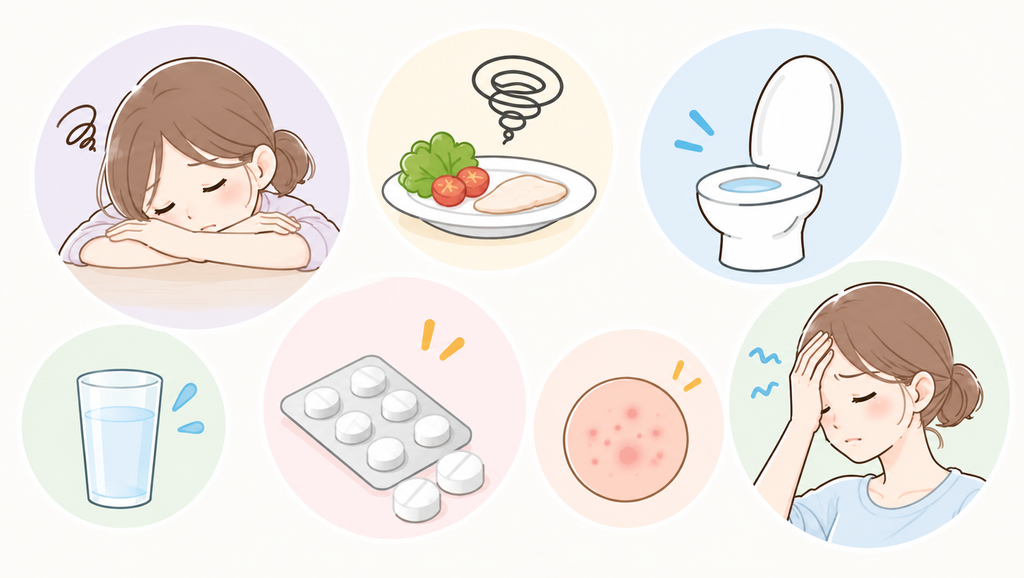
Rybelsus is a medication that tends to cause digestive symptoms such as nausea and diarrhea when you first start taking it and when the dose is increased. Most of these ease as your body gets used to the medication, but in rare cases symptoms that need immediate medical attention, such as acute pancreatitis or hypoglycemia, can occur. In this article, we organize the side effects based on official primary sources such as the package insert and the Drug Guide for Patients. From a doctor’s perspective, we summarize the types and frequency, when they tend to occur, how to manage each symptom, and when to see a doctor.
The short answerIf you’re busy, just read this
- The most frequently reported side effects are nausea and diarrhea, each seen at a frequency of 5% or more
- Digestive symptoms are most likely right after you start taking it and right after the dose is increased from 3 mg to 7 mg or 14 mg
- The basic way to keep side effects down is not to raise the dose on your own, but to increase it step by step from 3 mg to 7 mg to 14 mg
What you will learn in this article
- The types and frequency of side effects reported with Rybelsus
- When side effects are most likely to occur, and why
- What you can do at home, symptom by symptom
- How to recognize symptoms that need immediate medical attention, such as acute pancreatitis and hypoglycemia
- Tips for continuing treatment while keeping worries about side effects in check
What kind of medication is Rybelsus?
Rybelsus is an oral (tablet) GLP-1 receptor agonist containing the active ingredient semaglutide. In Japan it is approved as a treatment for type 2 diabetes, and because it suppresses appetite it is also used for medical weight loss (self-pay treatment, off-label use).
GLP-1 receptor agonists promote insulin secretion while slowing the passage of stomach contents into the intestines. This effect helps you feel full for longer, but it also makes digestive side effects more likely. The basic rules for taking it correctly are explained in 3 rules for taking Rybelsus, so please check that as well.
About self-pay treatment and off-label use
Using Rybelsus for medical weight loss (weight management) falls outside the indications approved in Japan, which makes it “off-label use.” Before considering it, please check the following points.
| Approval status in Japan | Rybelsus (semaglutide) tablets are a drug approved in Japan. However, the approved indication is “type 2 diabetes,” so use for weight management or weight loss is outside the scope of approval (off-label use) and is provided as self-pay treatment. |
|---|---|
| How we obtain it | The Rybelsus tablets we prescribe are drugs approved in Japan, obtained from a domestic pharmaceutical wholesaler (authorized distributor). Whether it can be prescribed, and at what dose, is decided by a doctor after a consultation. |
| Approved drug in Japan with the same ingredient | As an injectable drug with the same active ingredient as Rybelsus (semaglutide), there is “Wegovy subcutaneous injection,” which is approved in Japan for “obesity disease.” However, Wegovy has strict prescribing criteria (such as BMI values and the presence of obesity-related health problems), and it can only be prescribed at certain facilities. |
| Cost | Because this is off-label use, it is not covered by health insurance and you pay the full cost yourself (self-pay treatment). |
| Relief System for Adverse Drug Reactions (Japan) | This system provides relief for health damage that occurs when a drug is used properly in accordance with its approved indications, dosage and administration. If a serious side effect occurs with off-label use (such as self-pay use for weight loss), it is not covered by this system (not eligible for benefits). |
| Main risks and side effects | Digestive symptoms such as nausea, diarrhea, constipation and stomach discomfort may appear in the early stages of taking it. Serious adverse reactions that may occur include acute pancreatitis, hypoglycemia, cholecystitis, cholangitis, cholestatic jaundice, bowel obstruction, and severe allergic reactions (anaphylaxis) (frequency unknown for all). |
Approval status and safety information in other countries are summarized in What is Rybelsus? (About self-pay treatment and off-label use).
Main side effects of Rybelsus: mostly digestive symptoms
The most frequently reported side effects are nausea and diarrhea, each seen at a frequency of 5% or more. Constipation, vomiting, abdominal discomfort and abdominal pain have also been reported at a frequency of about 1–5%.
| Frequency | Main symptoms |
|---|---|
| 5% or more | Nausea, diarrhea |
| 1% to less than 5% | Constipation, vomiting, abdominal discomfort, abdominal pain, indigestion, upper abdominal pain, abdominal bloating, gastroesophageal reflux disease, decreased appetite, headache |
| 0.5% to less than 1% | Hypersensitivity (rash, hives, etc.), dizziness, taste disturbance, flatulence, gastritis, belching, fatigue, weakness |
| Frequency unknown | Abnormal sensations, increased heart rate, delayed gastric emptying, weight loss |
This table is based on the package insert for Rybelsus tablets published by the Pharmaceuticals and Medical Devices Agency (PMDA). Looking at the numbers alone may make you anxious. However, most cases of nausea and diarrhea are mild to moderate, and in the majority of cases they settle down as you continue taking the medication.
When side effects are most likely to occur, and why
Digestive symptoms are most likely right after you start taking it and right after the dose is increased from 3 mg to 7 mg or 14 mg. Because the speed at which stomach contents move into the intestines suddenly slows down, you are more likely to feel heaviness in the stomach or nausea until your body adjusts.
Nausea and stomach heaviness are said to occur not only when you first start taking it but also right after a dose increase. They often ease as you continue on the same dose, but symptoms may temporarily return each time the dose is increased, so please watch for changes in how you feel for a while after each increase.
How symptoms appear varies from person to person. Some people stop noticing them within a few days, while others have discomfort for a few weeks. Don’t rush; watch how things go, and if it is hard on you, contact the clinic early.
Cases that need caution regarding hypoglycemia
The risk of hypoglycemia with Rybelsus alone is not high. However, caution is needed if you are also taking other diabetes medications such as insulin products or sulfonylureas. The package insert also lists hypoglycemia as one of the serious adverse reactions, although its frequency is unknown.
Symptoms of hypoglycemia include strong hunger, cold sweats, trembling hands and feet, palpitations, dizziness and feeling foggy or less alert. Even people not taking other diabetes medications are said to be more prone to hypoglycemia in the following situations.
| Situations that make hypoglycemia more likely | Notes |
|---|---|
| Irregular meals, or eating too little | Poor nutrition makes blood sugar drop more easily |
| Doing strenuous physical exercise | Blood sugar may drop suddenly right after exercise |
| Drinking a lot of alcohol | Alcohol interferes with the liver’s production of glucose (gluconeogenesis) |
| Taking other diabetes medications | Particular caution is needed when combined with insulin products or sulfonylureas |
If you notice symptoms of hypoglycemia, eat or drink something containing sugar right away. If it happens while working at heights or driving a car, it could lead to an accident, so if this applies to you, it is reassuring to talk to your doctor in advance.
Serious adverse reactions you should not miss
They are not common. However, acute pancreatitis, cholecystitis or cholangitis, and ileus (bowel obstruction) are clearly listed in the package insert as serious adverse reactions that require prompt examination by a doctor. For all of them, knowing the early signs helps you respond early.
| Serious adverse reaction | Main signs | Frequency |
|---|---|---|
| Acute pancreatitis | Persistent severe abdominal pain with vomiting, back pain, fever | 0.1% |
| Cholecystitis / cholangitis | Fever, chills, severe pain in the upper right abdomen, yellowing of the whites of the eyes or skin | Frequency unknown |
| Cholestatic jaundice | Yellowing of the whites of the eyes or skin, dark urine, itchy skin | Frequency unknown |
| Ileus (bowel obstruction) | Severe constipation, abdominal bloating, persistent abdominal pain, vomiting | Frequency unknown |
Persistent severe abdominal pain with vomiting, or back pain, is a sign to watch for especially closely as an early symptom of acute pancreatitis. If you notice these symptoms, do not wait and see on your own judgment; stop taking the medication and see a medical facility promptly. If you have had pancreatitis in the past, or have a history of abdominal surgery or ileus, you must tell your doctor before it is prescribed.
What to do if side effects occur
Mild nausea or stomach heaviness may be eased by avoiding fatty meals and overeating and eating small amounts at a time. The effective approach differs slightly depending on the type of symptom.
If diarrhea continues, make replenishing fluids and electrolytes your priority. If vomiting or diarrhea goes on for a long time, dehydration may lead to acute kidney injury. If you continue to be unable to keep fluids down, do not leave it; contact us. For constipation, in addition to drinking fluids and getting moderate exercise, if symptoms are strong, check with your doctor whether you can use over-the-counter medicines before using them.
In our actual practice, we find that when we carefully explain these measures one by one at the first visit, many people are able to continue treatment without feeling anxious. Rather than adding supplements or over-the-counter medicines on your own, make it a habit to check with your prescribing doctor if you have any symptoms that concern you.
Tips for taking it while keeping side effects down
The basic way to keep side effects down is not to raise the dose on your own, but to increase it step by step from 3 mg to 7 mg to 14 mg. Starting suddenly at a high dose is said to make digestive symptoms more likely to be strong.
Take it right after waking up, on an empty stomach, with about half a glass of water (120 mL or less), and avoid eating or drinking for 30 minutes afterward. Following this basic rule also helps keep the burden on your body steady. Detailed steps for taking it are explained in 3 rules for taking Rybelsus, so please refer to that as well. If you are curious how its side effects differ from injectable types such as Mounjaro, see also A doctor’s thorough comparison of Mounjaro, Ozempic and Saxenda.
Worried about side effects? Why not start by talking with a specialist online?
Book a counseling session now *This is self-pay treatment.If you have these symptoms, see a doctor right away
Symptoms such as persistent severe abdominal pain with vomiting, feeling foggy or less alert, or yellowing of the whites of the eyes or skin should not be left to wait and see on your own judgment. Use the following table as a guide to decide whether you need to see a doctor.
| Symptom | Possible condition | What to do |
|---|---|---|
| Persistent severe abdominal pain with vomiting, back pain | Acute pancreatitis | Stop taking it and see a doctor immediately |
| Fever, severe pain in the upper right abdomen, jaundice | Cholecystitis / cholangitis | See a doctor promptly |
| Severe constipation, abdominal bloating, persistent abdominal pain | Ileus | Stop taking it and see a doctor promptly |
| Strong hunger, cold sweats, reduced consciousness | Hypoglycemia | Take some sugar; if it does not improve, see a doctor |
Most important of all is not to make the decision alone when you are unsure. If you feel even slightly unwell, don’t put up with it; contact your prescribing doctor.
Not sure if it suits you? Start with a consultation.
A doctor decides whether you can use it and which dose is appropriate, based on your consultation and questionnaire.
No consultation fee (first & follow-up visits)Online consultation available
How prescribing works at our clinic
Hiro Clinic Medical Weight Loss prescribes Rybelsus through online consultation. We also explain the risks of side effects before starting treatment. We also have weekday evening consultation slots, so it is easy to consult us even if you are busy during the day.
In the questionnaire and interview, we check things such as any history of pancreatitis, chronic gastrointestinal conditions and other medications you are using, and then decide whether starting at 3 mg is appropriate. Rybelsus 3 mg (30 tablets, a 1-month supply) costs ¥8,980 (tax incl.). Please note that because this is self-pay treatment, insurance does not apply and you pay the full cost yourself. You can check the latest pricing details on our price page.
After you start taking it, you and your doctor will decide together when to increase the dose while checking how side effects appear and how your weight changes. Costs for each dose and comparisons with other medical weight-loss drugs are explained in detail in Comparing the cost and duration of medical weight loss.
FAQ
QHow soon after starting Rybelsus do side effects appear?
Digestive symptoms such as nausea and diarrhea are said to be most likely right after you start taking it or right after a dose increase. Many people find they gradually settle down as the body gets used to the medication’s effects.
QWhat should I do when nausea is hard to bear?
Avoiding fatty meals and eating large amounts at once, and eating small amounts at a time, may help ease it. If symptoms are strong or last a long time, don’t just put up with them on your own; talk to your prescribing doctor.
QWhat should I do if diarrhea or constipation continues?
If diarrhea continues, make replenishing fluids and electrolytes your priority. Drinking fluids and moderate exercise are said to help with constipation, but in either case, if symptoms last a long time, talk to your doctor before deciding what to do.
QCan hypoglycemia occur if I take Rybelsus alone?
The risk of hypoglycemia when taking it alone is not high, but it becomes more likely if you are eating little or drinking a lot of alcohol. Particular caution is needed if you are also taking insulin products or sulfonylureas.
QIf I have severe abdominal pain, what should I suspect?
Persistent severe abdominal pain with vomiting, or back pain, may be an early symptom of acute pancreatitis. If such symptoms appear, stop taking the medication and see a medical facility promptly.
QI’m worried about side effects and want to stop taking it. What should I do?
Before stopping on your own, first talk to your prescribing doctor. Together you can consider options suited to your symptoms, such as adjusting the dose or switching to another treatment.
QAre side effects different compared with Mounjaro?
Both act through the GLP-1 receptor, so they have in common that digestive symptoms such as nausea and diarrhea are the main side effects. How strongly you feel them varies from person to person, and it cannot be said across the board that one is milder. For more details, see A doctor’s thorough comparison of Mounjaro, Ozempic and Saxenda.
QCan I be prescribed Rybelsus if I have a pre-existing condition?
Some conditions, such as a history of pancreatitis or severe gastrointestinal disorders, require careful judgment. In the questionnaire and interview, accurately tell us all of your past and current conditions and the medications you are taking, and follow the doctor’s judgment.
Not sure? Talk to us
No consultation fee (first & follow-up visits)Online consultation available
Toll-free 0120-241-929 (toll-free in Japan, 9:00–18:00 JST, Japanese only)
Summary: knowing the full picture of side effects helps you avoid unnecessary worry
Most side effects of Rybelsus are digestive symptoms such as nausea and diarrhea. They tend to appear when you start taking it or when the dose is increased, and in many cases they ease over time. On the other hand, there are also symptoms that require immediate medical attention, such as acute pancreatitis, cholecystitis and ileus.
While symptoms are mild, adjusting how you eat may be enough to manage them. When you are unsure, not deciding on your own and instead consulting your prescribing doctor is the shortest route to continuing treatment safely. With a better understanding of side effects, you should be able to approach treatment calmly without worrying more than necessary.
The right dose and treatment approach for you depend on your constitution and medical history. Check the cost estimates on our price page, and for any questions, please also refer to our FAQ page.
If you are interested in medical weight loss with Rybelsus
Who to contact if side effects occur | When to see a doctor
If any of the following symptoms occur, please contact us rather than waiting to see on your own judgment. GLP-1 receptor agonists, including Rybelsus (oral semaglutide), are known to cause side effects, mainly digestive symptoms. Most are mild, but in rare cases they can be serious.
| Symptom | Possible cause | What to do |
|---|---|---|
| Nausea or vomiting that continues | Digestive symptoms; the most common side effect | Please contact us if you continue to be unable to keep fluids down |
| Severe abdominal pain (pain that goes through to the back) | Possible acute pancreatitis | Stop taking it immediately and see a doctor |
| Cold sweats, palpitations, strong hunger, feeling dazed or confused | Hypoglycemia | Take some sugar right away and contact us |
| Skin rash, difficulty breathing, swelling of the face or throat | Allergic reaction | See a doctor immediately |
If it is urgent outside these hours, go to an emergency hospital. Call an ambulance if necessary.
Direct phone numbers for each clinic are listed on the clinic information page.
Using Rybelsus for purposes other than type 2 diabetes (such as weight loss) is self-pay treatment and is not covered by public health insurance. Effects and side effects vary from person to person.
References
For details on systems and medications, please be sure to check the primary sources as well.
- Pharmaceuticals and Medical Devices Agency (PMDA): Rybelsus tablets package insert information
- PMDA Drug Guide for Patients: Rybelsus tablets 3 mg/7 mg/14 mg
- Novo Nordisk Pharma Ltd.: For people taking Rybelsus tablets
- Ministry of Health, Labour and Welfare
*This article is intended to provide general information, and effects and side effects vary from person to person. Rybelsus is a prescription drug provided as self-pay treatment (not covered by health insurance). It must always be used under a doctor’s examination and guidance. Using Rybelsus for weight loss is off-label use (see “About self-pay treatment and off-label use” above).
Medically reviewed by: Dr. Hiroko Oka (Chair, Medical Corporation Fukubikai; Certified Member, Japanese Society of Internal Medicine)
Here are articles that will deepen your understanding.
If you’d like to start by finding the plan that suits you



 Free consultation on LINE
