

The main reasons Mounjaro may not seem to work are: the period of use is short, you are on the 2.5 mg starting dose, there is a problem with how it is injected or stored, your eating or activity level has not changed, your weight is temporarily not moving due to constipation, swelling or similar, or the dose or your health condition is not a good fit. Having no side effects alone does not mean it “isn’t working.”
Responses to Mounjaro (generic name: tirzepatide) vary between individuals, and it is not possible to reliably tell “who it works for and who it doesn’t” from someone’s constitution before treatment. It is important to check appetite, food intake, weekly average weight, waist circumference, side effects and injection method, and to work through the causes with the prescribing doctor without increasing the dose on your own. Note that in Japan, Mounjaro’s approved indication is type 2 diabetes, and use for weight loss is self-pay treatment and off-label use.
The short answerKey points of this article
- Even if your weight doesn’t drop over a few days to 4 weeks, you can’t immediately conclude it “isn’t working.”
- 2.5 mg is the starting dose. Even if the effect is small, do not shorten the interval between injections or increase the dose on your own.
- Check not only appetite but also food intake, snacks, drinks, activity level, weekly average weight and waist circumference.
- No side effects does not mean no effect, and strong nausea does not mean it is working well.
- If you have symptoms such as severe abdominal pain, repeated vomiting or being unable to keep fluids down, contact a medical institution before worrying about whether it is working.
7 reasons Mounjaro may not seem to work
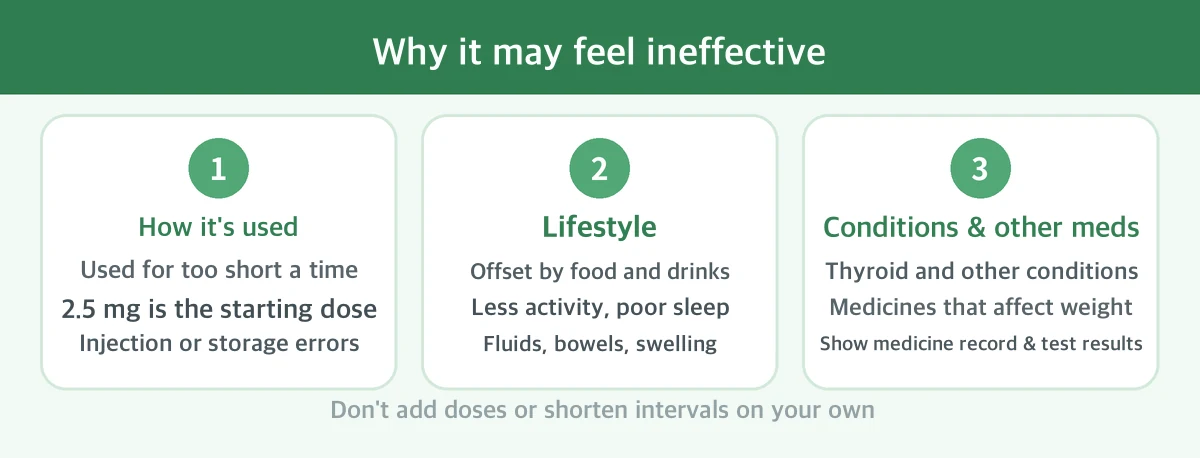
If your appetite or weight does not change while using Mounjaro, first narrow down the cause. Don’t assume “it doesn’t work because of my constitution”; check the following items.
| Item | Why it may not seem to work | How to review |
|---|---|---|
| Period of use | A few days to a few weeks after starting may be too early to judge the trend in your weight. | Check your weekly average weight measured under the same conditions and the change over each 4-week period. |
| Dose | 2.5 mg is a starting dose to let your body get used to the medication. | Do not increase the dose on your own; tell the prescribing doctor about the effect and side effects. |
| Injection and storage | If there are problems such as missed injections, technique or storage temperature, treatment may not go as intended. | Compare your injection days, technique and storage method with the instructions from the prescriber. |
| Food and drinks | Even if meal portions decrease, intake may be made up through sweet drinks, alcohol, snacks or high-fat foods. | Keep a record for 3–7 days and check everything, including drinks and condiments. |
| Activity and sleep | When fewer steps and lack of sleep overlap, weight may be harder to shift. | Build manageable walking, strength training and sleep time into your treatment plan. |
| Fluids and bowel movements | Constipation, swelling, salt, the menstrual cycle and similar factors can make changes in fat harder to see on the scale. | Record not only your weight but also waist circumference, bowel movements and swelling. |
| Health conditions and other medications | Conditions such as thyroid problems, or medications that affect weight, may be involved. | Show your medication record book and test results and have a doctor examine you. |
Avoid adding injections or shortening the interval on your own. A guide to timing is also explained in when Mounjaro starts to show effects.
Even if 2.5 mg doesn’t seem to work, don’t increase the dose right away
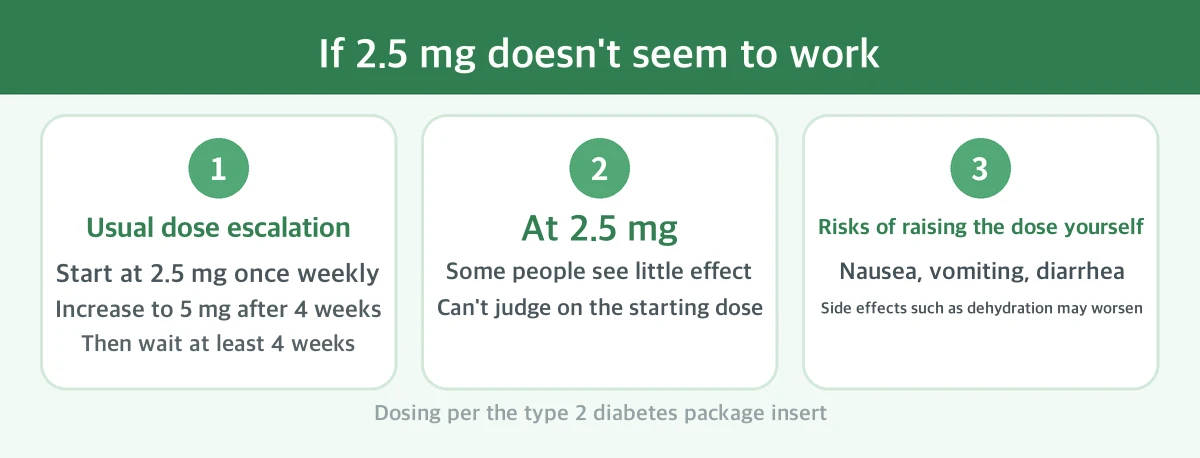
According to Mounjaro’s package insert, for type 2 diabetes it is usually started at 2.5 mg once weekly, and after 4 weeks the dose is increased to 5 mg once weekly. Any further dose escalation is also done at intervals of at least 4 weeks while checking the patient’s condition.
Some people see only small changes in appetite or weight at the 2.5 mg stage, but you cannot conclude that someone is a person “Mounjaro doesn’t work for” based on the starting dose alone. Increasing the dose on your own because you want to lose weight quickly may make side effects such as nausea, vomiting, diarrhea and dehydration worse.
How long without change before you consider it “not working”?
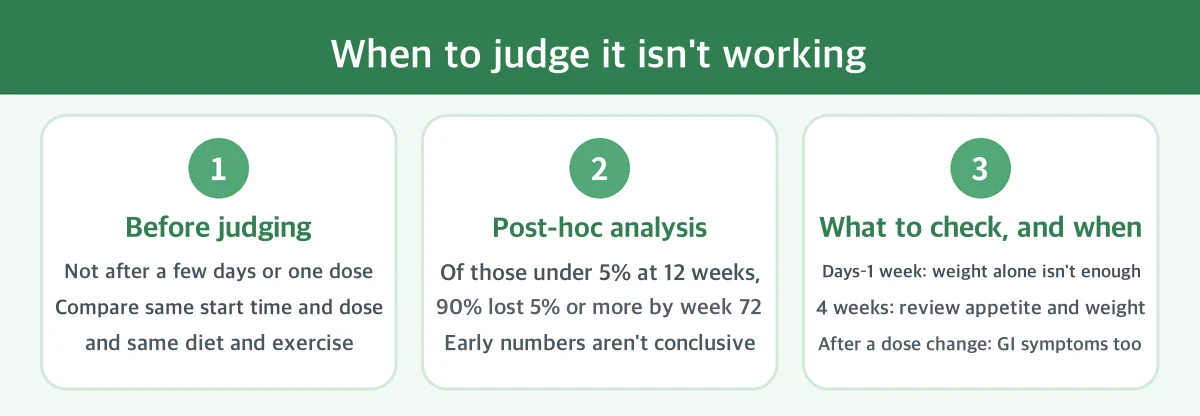
Some people notice changes in appetite relatively early, but weight is affected by body fluids and bowel movements. It needs to be assessed not from a few days or a single injection but by taking into account when you started, the dose, and your eating and exercise.
In a post hoc analysis of the SURMOUNT-1 trial, 90% of participants who had lost less than 5% of their weight at 12 weeks achieved weight loss of 5% or more at 72 weeks. This does not mean everyone will lose weight if they continue long enough, but it shows that the final response cannot be determined from early numbers alone.
A few days to 1 week
Don’t judge the effect by weight alone
4 weeks
Review appetite, food intake, weekly average weight and side effects
After a dose change
Check not only the effect but also digestive symptoms and fluid intake
Little change continues
Review injection method, lifestyle habits, other medications and test values with the prescribing doctor
Not sure if it suits you? Start with a consultation.
A doctor decides whether you can use it and which dose is appropriate, based on your consultation and questionnaire.
No consultation fee (first & follow-up visits)Online consultation available
If I have no side effects, does that mean Mounjaro isn’t working?
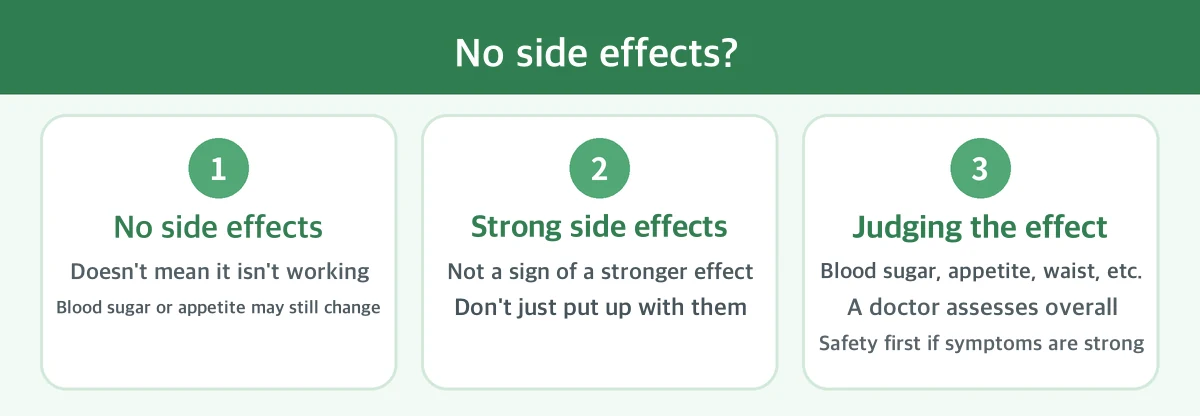
Having no side effects alone does not mean Mounjaro isn’t working. Nausea and diarrhea are not indicators of how strong the effect is; some people see changes in blood sugar, appetite, food intake and weight without any side effects. Conversely, putting up with strong nausea because you think it means “it’s working well” is also dangerous.
Key point
The doctor evaluates the effect comprehensively, not just by weight but also by blood sugar and HbA1c, appetite, waist circumference and more, depending on the treatment purpose. If you have severe symptoms, prioritize checking your safety over judging the effect.
Do people Mounjaro works well for have anything in common?
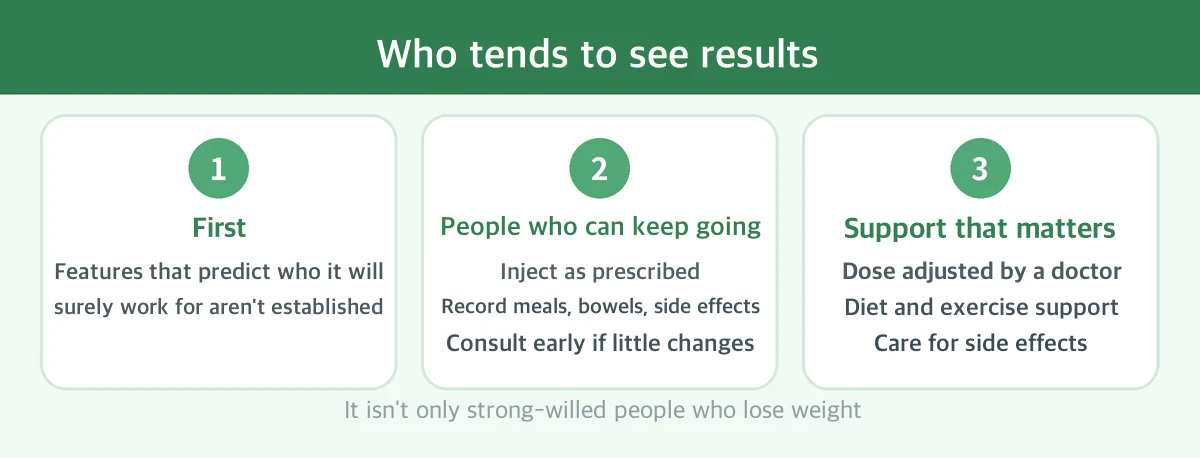
No characteristics have been established that can identify, before treatment, “people it will definitely work for.” However, people who find it easier to continue treatment safely tend to have the following in common:
- Can inject on the prescribed day, at the prescribed dose and by the prescribed method
- Can record not only appetite and weight but also what they eat, bowel movements and side effects
- Can keep up any necessary changes to diet and exercise within a manageable range
- Can consult the prescribing doctor early about side effects or a lack of change
- Don’t increase the dose on their own or stop based on short-term weight changes alone
Key point
This does not mean “only people with strong willpower lose weight.” A treatment environment that includes dose adjustment by a doctor, support for diet and exercise, and management of side effects is important. For specific meal examples, see the meal guide while using Mounjaro; for how to maintain muscle, see strength training and muscle maintenance while using Mounjaro.
Checklist to share with your doctor when it doesn’t seem to work
- Start date, current dose, and date and time of your last injection
- Weight at the start and now, weekly average weight, waist circumference
- Changes in appetite, feeling of fullness, snacking, drinks and alcohol
- Symptoms such as nausea, diarrhea, constipation, abdominal pain and swelling
- Any concerns about missed injections, injection technique or storage
- Medications and supplements you are taking, recent test results
Bringing records when you consult helps lead to decisions such as “it’s still too early to assess,” “check the injection method,” “adjust lifestyle habits,” “tests are needed” or “review the dose or treatment.” You can check prescription conditions and the consultation process in Mounjaro prescription conditions and online consultation.
People Mounjaro may not suit, or who need careful judgment
“People it doesn’t work for” and “people who cannot use it or need careful judgment for safety reasons” are different. According to the package insert, it may not be usable in cases such as a history of hypersensitivity to Mounjaro’s ingredients, type 1 diabetes or diabetic ketoacidosis. Also, if you are pregnant or may be pregnant, are breastfeeding, have a history of pancreatitis, gallbladder disease or severe gastrointestinal disorders, or are using diabetes medications that can cause hypoglycemia, be sure to tell the doctor before it is prescribed.
Rather than deciding uniformly by age or BMI alone, the doctor makes an individual judgment based on the approved indications, medical history, other medications and treatment purpose.
About self-pay treatment and off-label use
Frequently asked questions when Mounjaro doesn’t seem to work
QWhy doesn’t my second Mounjaro pen seem to work?
Appetite and weight don’t necessarily change the same way every week. Don’t judge the effect from the second pen alone; record your food intake, bowel movements, fluids and injection method, and consult the prescribing doctor.
QWhat if my appetite doesn’t decrease even on Mounjaro 5 mg?
Multiple factors are checked, not just the dose but also the period of use, injection method, diet, other medications and health conditions. Even if there is little change at 5 mg, do not increase the dose or inject two pens on your own.
QDoes Mounjaro not work for people who have no side effects?
Some people see effects even without side effects. Rather than whether you have nausea, appetite, food intake, weight, waist circumference, blood sugar and so on are evaluated depending on the treatment purpose.
QWhat are the traits of people who don’t lose weight on Mounjaro?
Factors such as a short time since starting, the 2.5 mg starting dose, injection or storage method, intake, activity level, constipation or swelling, and health conditions or other medications may be involved. You cannot conclude that someone is a person “it doesn’t work for” based on a particular constitution alone.
QWill my Mounjaro dose be increased if my weight plateaus?
A plateau alone does not automatically mean a dose increase. The prescribing doctor decides on the treatment plan after checking side effects, food intake, blood sugar, other medications, and your current dose and how long you have been on it.
QCan I stop Mounjaro if it doesn’t work?
Do not stop on your own; consult the prescribing doctor. The plan is decided taking into account the treatment purpose, effects, side effects, and how to manage appetite and weight after stopping.
Not sure? Talk to us
No consultation fee (first & follow-up visits)Online consultation available
Toll-free 0120-241-929 (toll-free in Japan, 9:00–18:00 JST, Japanese only)
Summary: if it doesn’t seem to work, check the period, dose, how you use it, your lifestyle and your health
Even if Mounjaro doesn’t seem to work, you can’t judge from short-term weight changes or the presence or absence of side effects alone. Go over the period of use, starting dose, injection and storage method, eating and activity level, bowel movements and fluids, and health conditions and other medications, and review them with your doctor.
Increasing the dose on your own or adding injections to speed up results raises the risk of side effects. If you have severe symptoms, prioritize checking your safety, and even if there is little change, consult the prescribing doctor with your records.
Who to contact about side effects: when to seek care
If you have any of the following symptoms, do not wait and see on your own; please contact us. GIP/GLP-1 receptor agonists, including Mounjaro, are known to have side effects, mainly digestive symptoms. Most are mild, but serious ones occur in rare cases.
| Symptom | Possible cause | What to do |
|---|---|---|
| Persistent nausea or vomiting | Digestive symptoms | Contact us if you continue to be unable to keep fluids down |
| Severe abdominal pain (pain that spreads to the back) | Possible acute pancreatitis | Stop the medication and see a doctor promptly |
| Cold sweats, palpitations, intense hunger, feeling dazed | Hypoglycemia | Take sugar as instructed and contact us |
| Skin rash, difficulty breathing, swelling of the face or throat | Allergic reaction | Seek medical care immediately |
If symptoms are severe outside reception hours, please go to your nearest emergency medical facility.
References
- PMDA: “Mounjaro Subcutaneous Injection Ateos: electronic package insert”
- PMDA: “Patient medication guide: Mounjaro”
- Jastreboff AM, et al. Tirzepatide Once Weekly for the Treatment of Obesity. N Engl J Med. 2022.
- Weight reduction over time by early weight loss response: SURMOUNT-1 post hoc analysis. Diabetes Obes Metab. 2025.
- Ministry of Health, Labour and Welfare: “On the use of type 2 diabetes medications for cosmetic, slimming and similar purposes”
Using Mounjaro for purposes other than type 2 diabetes is off-label use, and use for weight loss is self-pay treatment. Effects and side effects vary between individuals.



 Free consultation on LINE
