

Rybelsus is a GLP-1 receptor agonist taken as an oral medication rather than an injection. It is often chosen by people who say, “I’m afraid of injections, but I want to curb my appetite.” However, what you can expect differs completely by dose, and 3 mg is not a weight-loss dose. In our consultations, many people who don’t know this decide after one month that “it doesn’t work.” This article walks you through how it helps you lose weight, the role of the 3 mg, 7 mg and 14 mg doses, how long results take, costs, and why it won’t work if you don’t follow the dosing rules.
The short answerBusy? Just read this part
- 3 mg is a dose “to get your body used to the medication” and is not a dose expected to produce weight loss
- Many people tend to notice a change in appetite about 2–4 weeks after moving up to 7 mg
- Rybelsus is a medication whose dosing conditions are considerably stricter than those of other medications
What you’ll learn in this article
- Why Rybelsus curbs appetite (three actions)
- What each dose — 3 mg, 7 mg and 14 mg — is for
- How long it takes to see results, and what happens at each stage
- Costs at our clinic (tax incl.) and the monthly cost if you continue
- Why, by the way it works, it won’t be effective unless you follow the dosing rules
- How we decide whether you can increase the dose
- How to think about avoiding weight regain after stopping
What kind of medication is Rybelsus?
The main ingredient of Rybelsus is semaglutide, which works in the same way as GLP-1, a hormone secreted in the body. GLP-1 is released from the small intestine when you eat. It acts on the brain’s satiety center to send a “you don’t need to eat any more” signal, and at the same time slows the rate at which food passes from the stomach to the intestines.
The idea behind this medication is to make a mechanism your body already has work for longer. As a result, the amount you eat naturally decreases, and cravings for snacks also settle down. Rather than forcing yourself to eat less, you simply feel less like eating — that is the decisive difference from do-it-yourself dieting.
In Japan, it is approved as a treatment for type 2 diabetes. Using it for weight loss is off-label use, so health insurance cannot be used and it is self-pay treatment.
About self-pay treatment and off-label use
Using Rybelsus for medical weight loss (weight management) is “off-label use,” outside the indications approved in Japan. Please review the following points when considering it.
| Approval status in Japan | Rybelsus (semaglutide) tablets are a drug approved in Japan. However, the approved indication is “type 2 diabetes,” and use for weight management or dieting falls outside the approval (off-label use) and is self-pay treatment. |
|---|---|
| How we obtain it | The Rybelsus tablets we prescribe are a drug approved in Japan, obtained from a domestic pharmaceutical wholesaler (authorized distributor). A doctor decides whether it can be prescribed and at what dose after a consultation. |
| Drugs approved in Japan with the same ingredient | An injectable drug with the same active ingredient as Rybelsus (semaglutide), “Wegovy subcutaneous injection,” is approved in Japan for “obesity disease.” However, Wegovy has strict prescribing criteria (such as BMI values and whether you have obesity-related health problems), and it can only be prescribed at certain facilities. |
| Costs | Because this is off-label use, health insurance does not apply and you pay the full cost yourself (self-pay treatment). |
| Relief System for Adverse Drug Reactions (Japan) | This system provides relief for health damage that occurs when a drug is used properly in accordance with its approved indications, dosage and administration. If a serious side effect occurs with off-label use (such as self-pay use for weight loss), it is not covered by this system (not eligible for benefits). |
| Main risks and side effects | Digestive symptoms such as nausea, diarrhea, constipation and stomach discomfort may occur in the early stages of taking it. Serious adverse reactions that may occur include acute pancreatitis, hypoglycemia, cholecystitis, cholangitis and cholestatic jaundice, bowel obstruction (ileus), and severe allergic reactions (anaphylaxis) (frequency unknown for all). |
Approval status in other countries, safety and more are summarized in What is Rybelsus? (About self-pay treatment and off-label use).
How it helps you lose weight can be divided into three actions
1. Acting on the satiety center
It acts on the satiety center in the brain’s hypothalamus, making you feel full sooner and for longer. You start to feel “that’s enough” partway through a meal, and the amount you eat per meal naturally decreases. This often shows up not as consciously eating less, but as noticing that you’ve left food on your plate.
2. Slowing the passage from the stomach to the intestines
It delays the rate at which stomach contents move into the intestines (gastric emptying). Because food stays in the stomach longer, the feeling of fullness after a meal lasts longer and you are less likely to feel hungry before the next meal. This action is also why nausea and a heavy stomach can occur when you first start taking it. Since this is a flip side of the medication working, the basic approach is to wait a few weeks for it to settle down, as long as it isn’t severe.
3. Reducing sharp rises and falls in blood sugar
It promotes insulin secretion in response to the rise in blood sugar after meals and suppresses the secretion of glucagon, which raises blood sugar. Because the waves of blood sugar spiking and then dropping become smaller, you are less likely to experience “I just ate but I’m hungry again” or “I have an uncontrollable craving for sweets.” People who get very sleepy after carb-heavy meals may notice that change first.
The difference between 3 mg, 7 mg and 14 mg
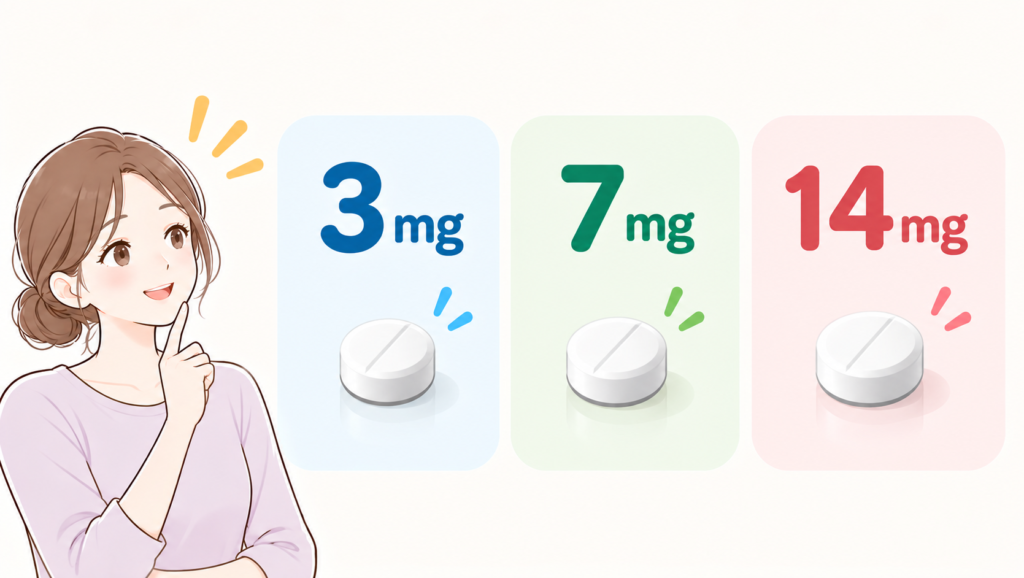
This is the most commonly misunderstood point. 3 mg is a dose “to get your body used to the medication” and is not a dose expected to produce weight loss. Starting suddenly at a high dose causes strong nausea that makes it hard to continue, so the dose is set to be increased step by step from a low dose.
| Dose | Role | Typical duration | What to expect at this stage |
|---|---|---|---|
| 3mg | Starting dose. The stage for getting your body used to digestive symptoms | About 4 weeks | Being able to keep taking it without side effects |
| 7mg | Maintenance dose. Many people start to notice a change in appetite from here | 4 weeks or longer | Eating less, snacking less |
| 14mg | Maximum dose. Considered if 7 mg is not effective enough | At the doctor’s discretion | An option when weight loss stalls |
Most consultations along the lines of “I took it for a month and nothing changed” are judgments made at the 3 mg stage. Evaluating the effect while still on 3 mg is too early. We assess at a consultation whether you can move up to 7 mg, while watching how side effects appear.
How we decide whether you can increase the dose
If you are in the following situation, we will consider increasing the dose. Conversely, if strong nausea persists, we will decide to continue the same dose or temporarily go back down. Being able to keep taking it leads to results more than rushing to increase the dose.
- Nausea, diarrhea and similar symptoms have settled down
- You are following the prescribed dosing rules every day
- Your appetite has changed, but your weight isn’t moving as much as you’d like
- It is not interfering with your daily life
How long it takes to see results
Many people tend to notice a change in appetite about 2–4 weeks after moving up to 7 mg. It shows up as weight even later than that; a realistic outlook is a gradual change over 2–3 months from the start.
| Period | What is likely to happen | What to check at this stage |
|---|---|---|
| Weeks 1–4 (3 mg) | Nausea, a heavy stomach, etc. Little change in weight | Whether side effects stay at a level that doesn’t interfere with daily life |
| Weeks 5–8 (7 mg) | Feeling full partway through meals, snacking less | Whether you are actually eating less |
| Month 3 onward | Changes begin to show on the scale | Whether you are getting enough protein |
| Month 6 onward | A period when changes slow down | Whether the new eating habits have taken hold |
Just because your weight hasn’t moved in a few days doesn’t mean it isn’t working. Your eating changes first, and your weight follows later. Don’t judge after 1–2 weeks; look first at changes in how much you eat and how often you snack.
Not sure if it suits you? Start with a consultation.
A doctor decides whether you can use it and which dose is appropriate, based on your consultation and questionnaire.
No consultation fee (first & follow-up visits)Online consultation available
Costs
Our medication costs are as follows (tax incl.). The consultation fee is free for both first and follow-up visits, and a separate shipping fee applies if you would like delivery.
| Dose | Contents | Price (tax incl.) |
|---|---|---|
| 3mg | 30 tablets (1 month’s supply) | ¥8,980 |
| 7mg | 30 tablets (1 month’s supply) | ¥19,980 |
| 14mg | 30 tablets (1 month’s supply) | ¥39,800 |
*The Japanese original is authoritative.
Most people start at 3 mg and move on to 7 mg, so the first month costs the least, and the cost rises as the dose goes up. If you continue for 3 months with 3 mg × 1 month + 7 mg × 2 months, the guideline total is about ¥48,940. Please check the price list for the latest prices and shipping fees.
It won’t work unless you follow the dosing rules
Rybelsus is a medication whose dosing conditions are considerably stricter than those of other medications. Semaglutide on its own is poorly absorbed in the stomach, so it is made into a tablet together with an ingredient that helps absorption. For this mechanism to work, your stomach needs to be empty. If you don’t meet the conditions, it may not simply work less well — it may be barely absorbed at all.
- Take it right after waking up, on an empty stomach
- Use no more than half a glass of water (120 mL). Too much water also reduces absorption
- For 30 minutes after taking it, avoid food, other drinks and other medications
- Do not split, crush or chew it
Among people who feel “it doesn’t work,” it is not uncommon to find they were taking it with breakfast, washing it down with coffee or tea, or taking it before bed. This leaves you paying for a medication that isn’t working, so please check this first and foremost. For details, see 3 rules for taking Rybelsus.
If it doesn’t fit your lifestyle
If your morning schedule varies from day to day, you leave home right after waking up, or you can’t skip breakfast, sticking to these conditions every day can itself be a burden. In that case, Mounjaro, which needs only one injection a week, may end up being easier to continue.
Not losing muscle determines what happens after you stop
As you lose weight, you lose not only fat but also muscle. When you lose muscle, your basal metabolism drops and your body gains weight more easily even on the same amount of food. Whether you are likely to regain weight after stopping the medication is largely determined by whether you protected your muscle while losing weight.
When your appetite is low, protein intake falls along with your total intake if you leave it unchecked. Instead of “I can’t eat, so I won’t,” switch to the approach of shifting what you do eat toward protein.
- Include protein at every meal (meat, fish, eggs, soy products, dairy)
- Since you can eat less, eat protein first, before carbohydrates and fats
- Keep up light strength training or brisk walking — about twice a week is enough
- Don’t add extreme carbohydrate restriction on top. When you’re short of energy, muscle is broken down first
If you only chase the number on the scale, you won’t notice a “failure that looks like success” where you have simply lost muscle. If possible, record your waist measurement along with your weight so you can see what is actually changing.
Side effects and when to see a doctor
The most common are nausea, diarrhea, constipation and loss of appetite. They tend to appear when you first start or right after a dose increase, and most become milder as your body adjusts.
On the other hand, there are symptoms that are rare but require caution. If severe abdominal pain persists, it may be acute pancreatitis, so stop taking the medication and see a doctor. People also taking diabetes medications need to watch for hypoglycemia as well. For details, see 8 side effects of Rybelsus.
Who cannot use it
We cannot prescribe it if any of the following apply to you. Please be sure to tell us at your consultation.
- People who are pregnant or breastfeeding, or planning a pregnancy
- People with type 1 diabetes or diabetic ketoacidosis
- People with a history of pancreatitis
- People with a history of medullary thyroid cancer, or a family history of multiple endocrine neoplasia type 2
- People with a serious gastrointestinal disease that has reduced stomach motility
- People with a low BMI who have no medical need to lose weight
FAQ
QWill I lose weight if I stay on 3 mg?
3 mg is a dose for getting your body used to the medication, and its weight-loss effect is limited. If you want to see results, we will consider increasing to 7 mg or higher. However, side effects vary from person to person, so whether you can increase is decided at a consultation.
QWill the weight come back if I stop?
When you stop the medication, the appetite it was holding down returns. This means the effect has worn off — it is not a failure. How much you regain afterward depends on whether you improved your eating habits and maintained your muscle mass while taking it. Instead of stopping suddenly, you can also transition by gradually lowering the dose.
QWhich is better, Rybelsus or Mounjaro?
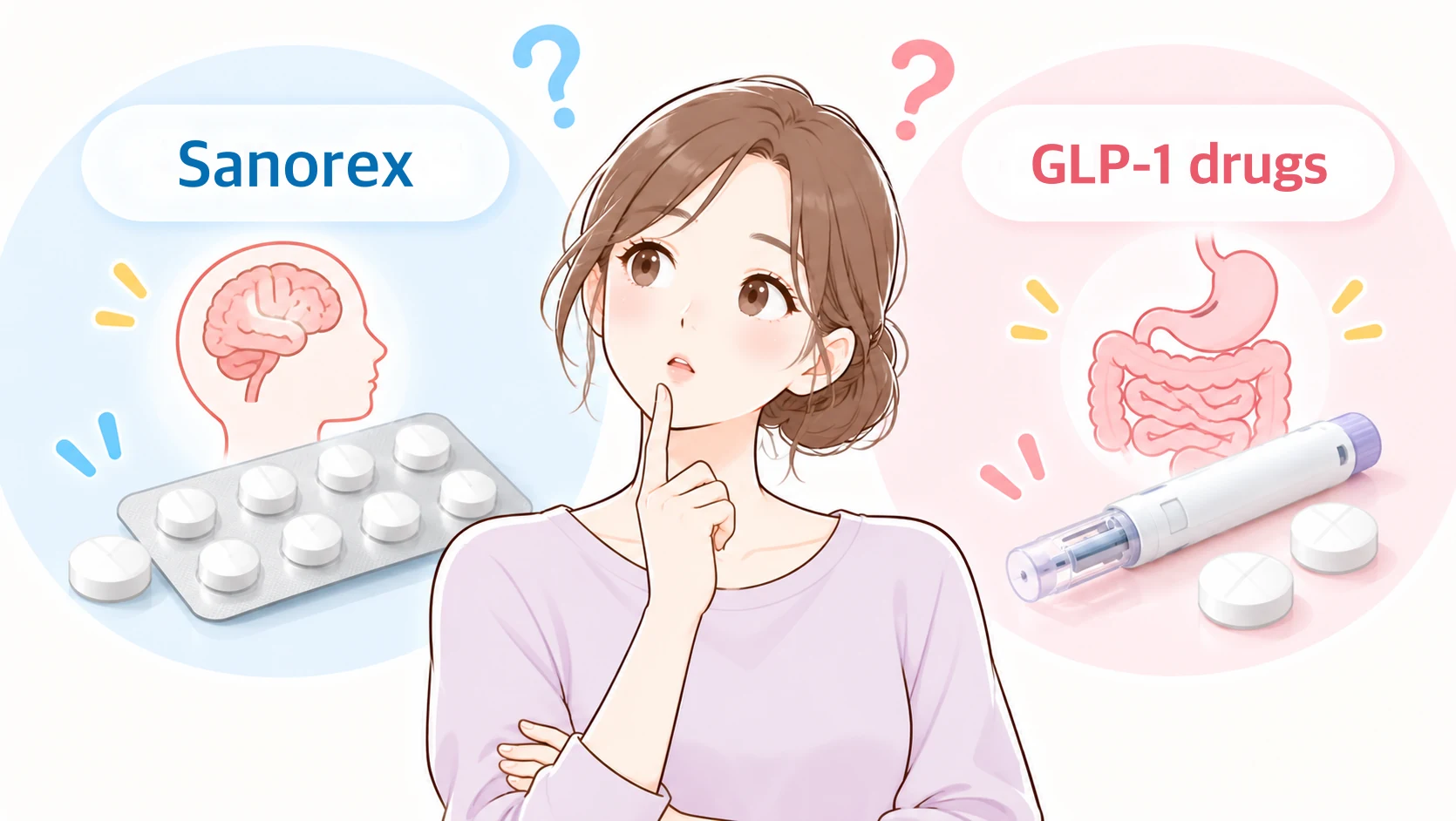
If you don’t mind injections, Mounjaro can be expected to have a greater weight-loss effect. Rybelsus is an option if you prefer an oral medication or find injections difficult. We compare them in The differences between Rybelsus and Mounjaro.
QCan I drink alcohol?
It is not prohibited, but drinking too much may cause strong nausea. Please drink in moderation, especially right after a dose increase.
QWhat if I forget to take a dose?
Skip that day and resume as usual the next morning. Do not take two doses at once.
QDo I need to exercise?
You can lose weight without exercise, but you are also more likely to lose muscle along with it. A lower basal metabolism makes it easier to regain weight after stopping, so we recommend combining it with light strength training or a walking habit.
QCan I use it if I’m taking other medications?
Some combinations require caution. In particular, people using diabetes medications are at risk of hypoglycemia. Also, because you cannot take other medications for 30 minutes after taking Rybelsus, if you have medications you take in the morning, we will adjust the order in which you take them at your consultation.
QWill it affect my health checkup?
Your blood sugar and HbA1c may go down. When you have a health checkup or see another clinic, please let them know you are taking Rybelsus.
Not sure? Talk to us
Which medication suits you depends on your constitution, existing conditions, current medications, lifestyle and goals. At our clinic, the consultation fee is free for both first and follow-up visits, and we also offer online consultations. If you have an existing condition or take other medications, bringing your medication record book (okusuri techo) helps us decide more quickly.
For bookings and inquiries, call our toll-free number 0120-241-929 (free call, 9:00–18:00) or contact us via our official LINE. You can check prices on the price list.
*This article is intended to provide general information and does not indicate an individual diagnosis or treatment plan. Using Rybelsus, Mounjaro or metformin for weight loss is off-label use, and medical weight loss is self-pay treatment (you pay the full cost). Whether each person can use these medications and which dose is appropriate is decided by a doctor after a consultation and questionnaire. Please also see What is medical weight loss?.
No consultation fee (first & follow-up visits)Online consultation available
Toll-free 0120-241-929 (toll-free in Japan, 9:00–18:00 JST, Japanese only)


 Free consultation on LINE
