

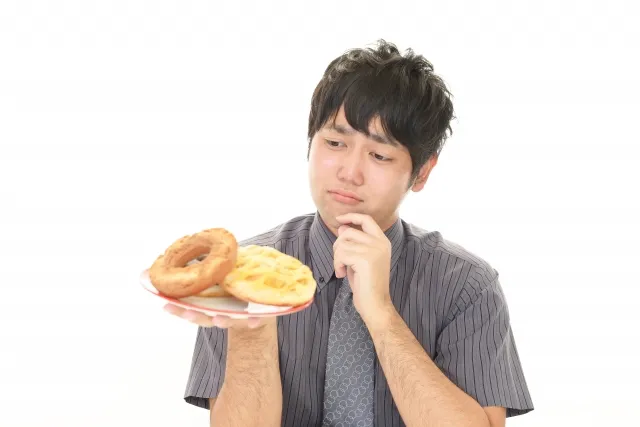
Are you convinced that “I’m on a diet, so I have to give up snacks”?
When I cut out snacking completely, I got so hungry before dinner that I ended up bingeing anyway.
In fact, if you include snacks with the right knowledge and a little planning, it becomes easier to manage your weight while reducing stress and preventing rebound weight gain.
In this article, I explain how to choose and eat snacks that won’t make you gain weight, based on nutrition science and information from public agencies. Results vary from person to person, so try incorporating these tips at a pace that suits you.
Key points firstShort on time? Just read this
- “Snacks that won’t make you gain weight” are those that are low in energy density and high in nutritional value
- A good guide is around 3 p.m., before your blood sugar drops too low
- Snacking while dieting is not the enemy; with the right knowledge and planning, it can actually work in your favor
What you will learn in this article
- What makes a snack “non-fattening,” with concrete examples you can buy even at a convenience store
- Guidelines on when and how much to snack, and points to watch on a low-carb diet
- A way of thinking that lets you live with snacking long term, without relying on willpower alone
Why do people so strongly associate snacking with weight gain?
Many people think of snacking as “the enemy of dieting.”
This is because the habit of mindlessly eating sweets and snacks high in sugar and fat tends to lead directly to weight gain.
The Japan Society for the Study of Obesity’s “Guidelines for the Management of Obesity Disease 2016” also states that total energy intake exceeding energy expenditure is the main cause of obesity (*1).
In recent years, however, it has been reported that snacks chosen with nutritional balance in mind can actually help diets succeed.
This is because they may prevent bingeing caused by hunger and help keep blood sugar stable.
What makes a snack non-fattening?
“Snacks that won’t make you gain weight” are those that are low in energy density and high in nutritional value.
Ideally, they meet the following conditions.
- Low-GI foods
- Curb sharp rises in blood sugar and help prevent fat storage.
- Examples: nuts (unsalted), yogurt, berries.
- Curb sharp rises in blood sugar and help prevent fat storage.
- High in protein and dietary fiber
- Keep you feeling full and make it easier to control how much you snack.
- Examples: protein bars (low in carbs), boiled eggs, cheese.
- Keep you feeling full and make it easier to control how much you snack.
- Satisfying even in small amounts
- Take the edge off hunger while keeping calories down.
- Example: individually packed dried fruit (no added sugar).
- Take the edge off hunger while keeping calories down.
Choosing snacks like these lets you control your energy intake while still feeling satisfied.
When to fit in snacks
Along with choosing non-fattening snacks, “when you eat” also affects weight management.
A good guide is around 3 p.m., before your blood sugar drops too low.
At this time of day you are usually more active, so the calories are thought to be less likely to be stored as fat (*2). However, body clocks and daily routines vary from person to person, so treat this only as a guide.
Having a light snack before dinner can naturally reduce how much you eat at the meal.
However, eating just before bed tends to promote fat storage, so avoid it.
Non-fattening snacks you can buy at a convenience store
For busy people, being able to buy snacks easily at a convenience store matters too.
Here are some examples of snacks that are relatively unlikely to cause weight gain.
- Unsweetened yogurt
- Its lactic acid bacteria may also help improve your gut environment.
- Its lactic acid bacteria may also help improve your gut environment.
- Ready-to-eat chicken breast (“salad chicken”)
- High in protein, low in fat.
- High in protein, low in fat.
- Plain roasted nuts
- Contain vitamin E and good-quality fats.
- Contain vitamin E and good-quality fats.
- Individually packed cheese
- Also a source of calcium.
- Also a source of calcium.
- High-cacao chocolate (70% or more)
- Antioxidant effect of polyphenols.
- Antioxidant effect of polyphenols.
When choosing, check the “carbohydrate,” “fat” and “additives” on the label.
What research says about snack quality and obesity risk
There is research showing that the quality of snacks does affect obesity.
On social media, too, you can find people who have found smart ways to deal with snacking. In a post on X (formerly Twitter) checked by our editorial team, @zuborakeizoku shared an experience to the effect that “wanting to snack means you’re not getting enough nutrition. If you eat a proper breakfast and lunch first, you can snack less.” The idea of reviewing the nutritional balance of your meals as a whole, rather than trying to get by on willpower alone, also matches the research findings introduced next.
- A study published in “Nutrients” in 2020 reported that low-GI, high-protein snacks curbed weight gain (*3).
- In addition, a study in the “British Journal of Nutrition” concluded that moderate nut consumption may lower BMI (*4).
In other words, what matters is not whether you snack, but the “quality and quantity”.
How to eat: chew well and savor slowly
Even with the same snack, how satisfied you feel depends on how you eat it.
- Chewing well stimulates the brain’s “satiety center,” so a small amount can satisfy you.
- Being mindful of how fast you eat helps prevent sharp rises in blood sugar.
The American Heart Association also points out that “eating quickly increases the risk of obesity” and recommends that chewing more helps with weight management (*5).
Tips for keeping up a “non-fattening snack” habit
With “non-fattening snacks,” thinking not only about what you choose but also about how you keep it up makes it easier to notice results.
Try to keep the following five points in mind.
- Be aware of your total calorie intake for the day
- On days you have a snack, make your meals a little lighter.
- On days you have a snack, make your meals a little lighter.
- Prepare snacks in advance
- Avoid impulse buying when you are hungry.
- Avoid impulse buying when you are hungry.
- Have them with a drink
- Helps you feel full more easily.
- Helps you feel full more easily.
- Use social media or a tracking app
- “Seeing” how much you eat helps prevent overeating.
- “Seeing” how much you eat helps prevent overeating.
- Switch from “banning” to “choosing”
- Less psychological stress makes it easier to stick with.
- Less psychological stress makes it easier to stick with.
Not sure if it suits you? Start with a consultation.
A doctor decides whether you can use it and which dose is appropriate, based on your consultation and questionnaire.
No consultation fee (first & follow-up visits)Online consultation available
Using snacks to make up for nutrients you may be lacking
When dieting, you limit your total calorie intake, so your nutritional balance can easily become skewed.
“Non-fattening snacks” can also be used to make up for nutrients that tend to run short.
1. Protein
To keep the muscle mass that sustains your metabolism, getting enough protein is the top priority.
If you lack it, your basal metabolism drops and your body becomes harder to slim down.
Recommended options are Greek yogurt, low-carb protein bars and ready-to-eat chicken breast.
2. Dietary fiber
Fiber helps you feel fuller and curbs sharp rises in blood sugar.
Improving your gut environment may also support fat burning and immunity.
Dried fruit (no added sugar), nuts and oatmeal are ideal.
3. Calcium and vitamin D
These nutrients matter not only for bone health but are also involved in fat metabolism.
It has been pointed out that a deficiency may encourage the build-up of body fat.
Choose foods such as cheese, small whole fish and vitamin D-fortified yogurt.
How much to eat: a guide for “non-fattening snacks”
A common question when snacking is the right amount each time.
The Japan Society for the Study of Obesity recommends keeping snack calories to “within 200 kcal a day.”
Within this range, it is easy to balance your nutrition with your meals.
For example,
- 20 almonds (about 120 kcal)
- 100 g of unsweetened yogurt (about 60 kcal)
- 2 squares of high-cacao chocolate (about 60 kcal)
A combination like this lets you feel satisfied while avoiding excess calories.
Snacking on a low-carb diet: points to watch
With carbohydrate restriction (low-carb), which has become popular in recent years, you need to pay particular attention to the carbohydrate content of snacks.
Snacks recommended while restricting carbs include the following.
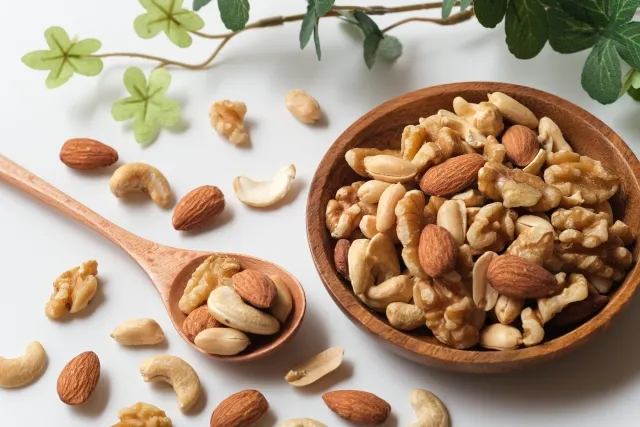
- Nuts (almonds, walnuts)
- Cheese
- Unsweetened yogurt
- Boiled eggs
- Raw vegetable sticks (with miso dip)
On the other hand, be careful with dried fruit and rice crackers, which are high in carbohydrates.
Aiming for 20 g of carbohydrate or less per eating occasion helps with blood sugar control.
Related reading: Is a low-carb diet safe? How to do it properly: a doctor’s tips for losing weight efficiently while keeping risks low
The role of snacks from a mental health perspective
One of the most common reasons diets fail is binge eating caused by psychological stress.
Banning snacks leads quite a few people into the vicious cycle of “restraint → backlash → overeating.”
A report by the Academy of Nutrition and Dietetics (*6) also points out that moderate snacking may “suppress the secretion of stress hormones and make it easier to sustain control over eating.”
So rather than aiming for “zero snacks,”
- deciding in advance how much and when you will eat
- enjoying snacks in a relaxing setting
- counting them as part of your meals
are more effective approaches for long-term weight management.
The right mindset to avoid diet failure: a practical approach to success
It is not unusual for people to think “This year I’ll finally suc...If you would like to lose weight with a doctor’s help, including help controlling snacking, why not start with a consultation?
See our price plans
*Medical weight loss is self-pay treatment (not covered by health insurance), so you pay the full cost. Results vary from person to person.
Practical tips recommended by diet experts
Based on everything above, here is a summary of practical “non-fattening snack” tips you can start using right away.
- Work backward from your total daily calories
- Example: if you want to keep to 1,600 kcal a day, allow 1,400 kcal for meals and up to 200 kcal for snacks.
- Example: if you want to keep to 1,600 kcal a day, allow 1,400 kcal for meals and up to 200 kcal for snacks.
- Choose what you stock up on wisely
- When buying in bulk, always check “carbohydrate,” “fat” and “calories.”
- When buying in bulk, always check “carbohydrate,” “fat” and “calories.”
- Stop eating while doing other things
- Eating while watching TV or looking at your phone makes overeating more likely.
- Eating while watching TV or looking at your phone makes overeating more likely.
- Have water or tea with your snack
- Helps you feel full and is also effective in curbing appetite.
- Helps you feel full and is also effective in curbing appetite.
- Set a “favorite snack day” once a week
- Instead of banning snacks completely, enjoy them in a planned way.
- Instead of banning snacks completely, enjoy them in a planned way.
If you make these into habits, it is quite possible to “enjoy snacks and still succeed at dieting.”
About self-pay treatment and off-label use
Frequently asked questions about snacking
Here we have collected questions readers often ask about snacking. Please use them as a prompt to review your everyday eating habits, not as a basis for self-diagnosis.
QWhat is the best time to have a snack?
Around 3 p.m., when blood sugar tends to drop, is considered a good guide. However, body clocks and daily routines vary from person to person, so treat this only as a guide and try a time that works for you without strain.
QDo I have to give up sweets completely?
There is no need to ban them completely. By adjusting the amount and timing, you can keep them within the range of “non-fattening snacks.” However, eat foods high in carbohydrate and fat less often.
QWhat snacks do you recommend buying at a convenience store?
High-protein, low-carb options such as unsweetened yogurt, ready-to-eat chicken breast and plain roasted nuts tend to be easy choices. When buying, check the carbohydrate, fat and additives.
QI can’t stop snacking. What should I do?
Switching from “banning” to “choosing” and deciding the amount and timing in advance makes it easier to keep going. If your eating habits still don’t improve, consider talking to a doctor or other professional before you reach the limit of your willpower.
QI’m on a medical weight-loss program. Can I have snacks?
The appropriate amount of snacking depends on your treatment plan, so do not adjust it on your own; discuss what you eat with your doctor. Medical weight loss is self-pay treatment, so you pay the cost yourself, and results and the appropriate amount of snacking vary from person to person.
Conclusion
Snacking while dieting is not the enemy; with the right knowledge and planning, it can actually work in your favor.
By choosing “non-fattening snacks,” paying attention to amount and timing, and making it a habit you can keep up without strain, you can enjoy many benefits:
- less stress
- better nutritional balance
- prevention of rebound weight gain
and more.
Instead of a diet based only on willpower, start a snacking habit that balances satisfaction and health today.
Note that the right amount of snacking and whether it suits you vary with your constitution and daily routine. If you have an existing condition or are on a medical weight-loss program, do not make extreme dietary restrictions or calorie cuts on your own; adjust your snacking after discussing your diet with your doctor.
If you want to lose weight without strain, with a doctor’s support and without depriving yourself of snacks, why not check out our price plans?
See our price plans
*Medical weight loss is self-pay treatment (not covered by health insurance), so you pay the full cost. Results and side effects vary from person to person.
References and research links
*1: Japan Society for the Study of Obesity, “Guidelines for the Management of Obesity Disease 2016”
https://www.jstage.jst.go.jp/article/jjphcs/46/1/46_1_77/_pdf
*2: Ministry of Health, Labour and Welfare Japan, “Meal timing and metabolism”
https://www.mhlw.go.jp/stf/seisakunitsuite/bunya/0000173321.html
※3:Nutrients, 2020「Effects of Low Glycemic Index Snacks on Weight Control」
https://www.ncbi.nlm.nih.gov/pmc/articles/PMC7468763/
※4:British Journal of Nutrition「Nut Consumption and Body Weight」
https://www.cambridge.org/core/journals/british-journal-of-nutrition/article/nut-consumption-and-body-weight/
※5:American Heart Association「Eating Quickly Linked to Obesity」
https://www.heart.org/en/news/2017/11/14/eating-quickly-linked-to-obesity
※6:Academy of Nutrition and Dietetics「Healthy Snacking」
https://www.eatright.org/food/nutrition/dietary-guidelines-and-myplate/healthy-snacking



 Free consultation on LINE
