


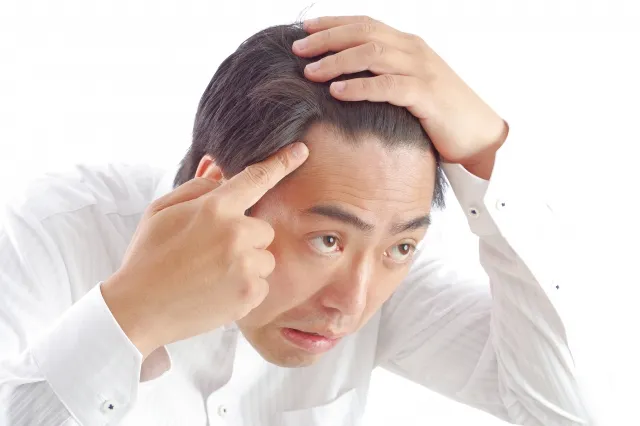
In recent years, the term “AGA (androgenetic alopecia)” has become widely known among men troubled by hair loss. AGA is a progressive form of hair loss, and it is said that about one in three Japanese men develops it. However, not many people correctly understand why hair becomes thin or what kinds of treatments exist.
This article explains the causes and mechanisms of AGA from a medical perspective and provides detailed information on the latest available treatments and lifestyle improvements. It summarizes evidence-based knowledge to help those suffering from thinning hair feel confident in considering treatment.
1. What is AGA? Basic Knowledge and Characteristics
AGA stands for Androgenetic Alopecia, a condition where hair on the crown and frontal scalp gradually becomes thinner under the influence of male hormones, eventually leading to hair loss.
Key characteristics:
- Often develops after puberty
- Thinning begins at the frontal hairline or crown
- Progresses gradually and does not heal naturally
- Strongly influenced by genetic factors
2. Causes of AGA: Hormones, Genetics, and Environmental Factors
The onset of AGA is not simple. It arises from a complex interplay of hormonal balance, genetic predisposition, and lifestyle/environmental influences. Below is a detailed explanation of each factor.
2-1. Male Hormones and the Role of DHT
The biggest factor in AGA is dihydrotestosterone (DHT), a derivative of testosterone produced by the enzyme 5α-reductase.
Effects of DHT
DHT strongly affects the prostate and hair follicles. When it binds to androgen receptors in hair follicles, it suppresses the activity of hair matrix cells and shortens the hair growth phase. As a result, hair sheds before it grows long and thick, leading to the increase of thin, soft “vellus hair.”
Why only the crown and hairline?
Hair follicles at the back and sides of the head are resistant to DHT, while those on the crown and frontal scalp are highly sensitive, leading to localized thinning.
Types of 5α-reductase
- Type I: Mainly found in sebaceous glands and skin
- Type II: Abundant in hair follicles and the prostate
Finasteride inhibits Type II, while dutasteride inhibits both Type I and II, resulting in broader action.
2-2. Genetic Factors
AGA is also a hereditary condition. Studies show that if the father or maternal grandfather has hair loss, descendants are at higher risk.
- Androgen receptor gene
A polymorphism on the X chromosome’s androgen receptor gene is linked to AGA development. This explains why maternal inheritance is considered significant.
- 5α-reductase gene
People with high enzyme activity variants tend to produce more DHT and are more prone to AGA.
- Polygenic inheritance
AGA does not result from a single gene but multiple genetic factors, meaning even those without family history may develop it.
2-3. Environmental Factors and Stress
Lifestyle environment greatly affects the speed and onset of AGA.
- Psychological stress disrupts the autonomic nervous and hormonal balance, reduces scalp blood flow, and increases oxidative stress, damaging hair matrix cells.
- Sleep deprivation interferes with growth hormone secretion, which is crucial for hair growth, thus disturbing the hair cycle.
2-4. Lifestyle Influences
- Unbalanced diet: High-fat, high-sugar diets increase sebum secretion and may inflame hair follicles. Deficiencies in zinc, iron, vitamin B, and protein hinder hair synthesis.
- Smoking and alcohol: Smoking constricts blood vessels and worsens scalp circulation. Excessive drinking stresses the liver and disrupts hormone metabolism.
- Lack of exercise: Poor circulation limits oxygen and nutrient delivery to the hair papilla.
2-5. Scalp Environment
Excessive sebum, dandruff, or inflammation negatively affect follicles.
- Sebum clogs pores and fosters bacterial growth
- Chronic inflammation around follicles inhibits hair growth
- Both insufficient washing and over-washing worsen scalp condition
3. AGA Progression Patterns and Classification
The Hamilton-Norwood scale is used internationally to classify AGA.
- Type I: Very mild recession at the hairline
- Type III: M-shaped hairline recession
- Type V: Thinning at the crown and hairline meet
- Type VII: Only hair at the sides and back remain
4. Diagnostic Methods and Self-Check
Diagnosis of AGA is primarily through medical history and visual examination.
Self-check indicators:
- Many family members with hair loss
- Noticeable thinning at hairline or crown
- Increased shedding
- Hair becoming finer and softer
5. Oral Treatments
Finasteride
- Type II 5α-reductase inhibitor
- Suppresses DHT production, preventing progression
Dutasteride
- Inhibits both Type I and II
- Stronger action compared to finasteride
6. Topical Treatments
Topical Minoxidil
- Vasodilator that improves follicle blood flow
- Proven to stimulate hair regrowth
- Typically 5% concentration for men, 1–2% for women
7. Latest Treatments and Advanced Approaches
Recent AGA treatments go beyond oral medications (finasteride, dutasteride) and topical minoxidil, with regenerative medicine and device therapies expanding patient options. Below are the most notable latest treatments.
7-1. HARG Therapy
Overview: Uses growth factors and proteins derived from human stem cells, injected into the scalp to reactivate dormant follicles and promote regrowth.
Features
- Direct stimulation of follicular cells
- Aims for natural regrowth without drugs
- Low risk of side effects
Challenges
- Not covered by insurance; costly (tens of thousands of yen per session)
- Significant individual variability in results
7-2. Hair Transplantation (FUT/FUE)
Overview: Relocates DHT-resistant hair follicles from the back or sides of the head. Transplanted hair retains its properties and grows permanently.
Techniques
- FUT: Strips of scalp are removed and dissected for transplant
- FUE: Follicles individually extracted with small punches
Latest Trends
- Robotic-assisted FUE (ARTAS system) improves precision and reduces burden
- High-density transplants allow more natural design
7-3. PRP Therapy (Platelet-Rich Plasma)
Overview: Blood is drawn, centrifuged, and the platelet-rich plasma is injected into the scalp. Growth factors in platelets are thought to stimulate follicle activity.
Features
- Derived from patient’s own blood, no allergy risk
- Minimal side effects
- Can be combined with medications for synergistic effect
7-4. Low-Level Laser Therapy (LLLT)
Overview: Uses low-output laser or LED light to activate hair follicle cells and encourage regrowth.
Examples
- At-home laser caps
- In-clinic laser devices
Mechanism
- Stimulates mitochondria in cells to increase ATP production
- Improves scalp blood flow
- Promotes transition from resting to growth phase
7-5. Stem Cell Conditioned Media Therapy
Overview: Culture supernatants from human adipose-derived or bone marrow stem cells, rich in growth factors, cytokines, and exosomes, are injected into the scalp.
Features
- Activates follicle stem cells
- Rapidly advancing regenerative research
- Often combined with aesthetic medicine
7-6. Exosome Therapy
Overview: Utilizes tiny vesicles (exosomes) secreted by cells that carry growth factors and microRNAs to improve follicle environment and signaling.
Latest Research
- Clinical application for AGA has started overseas
- Hot topic in regenerative medicine, promising future
7-7. Novel Drug Research
Beyond conventional drugs, new medications are under study.
- JAK inhibitors: Originally for alopecia areata, now being explored for AGA
- Topical anti-androgens: Aim to suppress DHT locally, avoiding systemic side effects
- Prostaglandin-related drugs: Inspired by bimatoprost (eyelash regrowth drug), with trials for scalp hair
7-8. Combination Therapy Evolution
The trend is toward combining multiple treatments for synergistic effects.
Examples:
- Finasteride (progression control) + Minoxidil (regrowth)
- Oral drug + PRP
- Hair transplantation + LLLT for maintenance
8. Lifestyle Improvements and Self-Care
- Balanced diet (zinc, protein, vitamins)
- Regular sleep patterns
- Quit smoking, reduce alcohol
- Scalp massage and proper shampooing techniques
9. Female Hair Loss and FAGA
Women can also suffer from FAGA (female androgenetic alopecia).
- Diffuse thinning across the scalp rather than specific areas
- Frontal hairline often preserved
- Treatments center on low-dose minoxidil and hormone therapy
10. Latest Research and Future Perspectives
- New drug development with JAK inhibitors
- iPS cell-based follicle regeneration therapy
- Personalized medicine through genetic analysis
11. Treatment Precautions and Side Effect Risks
- Finasteride: Possible decreased libido, liver dysfunction
- Dutasteride: Erectile dysfunction, breast tenderness
- Minoxidil: Scalp irritation, palpitations, itching
12. Frequently Asked Questions (Q&A)
Q1. Does AGA cure naturally?
A. No. It requires treatment or lifestyle adjustments.
Q2. From what age can treatment start?
A. Generally from 20 years old. Not recommended for minors.
Q3. What happens if I stop treatment?
A. Benefits are sustained only during treatment; hair loss resumes if discontinued.
13. Conclusion: The Importance of Early Treatment
AGA is progressive; left untreated, hair follicles can disappear, making recovery difficult. Today, there are effective oral, topical, and regenerative options available. The key is to “take action early when you notice the signs.” Consulting a specialist and choosing the most suitable treatment is the first step toward improving hair loss.