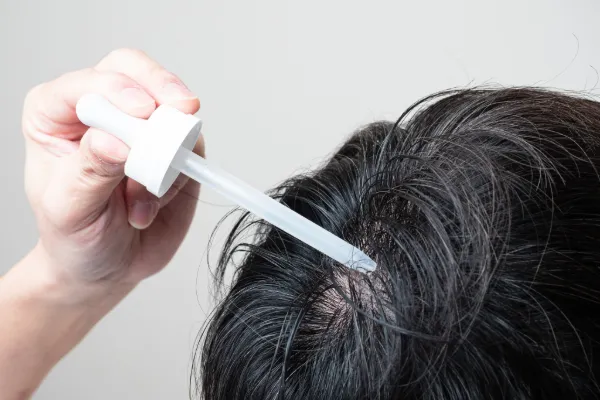
Anesthesia during hair transplant surgery is described in detail below.
Types of anesthesia
Local anesthesia
Overview : This is the most commonly used anesthesia method for hair transplant surgery. Anesthesia is injected directly into specific areas of the scalp to prevent pain during the procedure.
Advantages : Patient is conscious and able to communicate during surgery, there are fewer risks and a faster recovery compared to general anesthesia.
Cons : The anesthetic injection itself may be temporarily painful, but the pain will subside within a few minutes.
Combined with sedatives
Overview : In addition to local anesthesia, a mild sedative may also be used to help relax the patient and reduce anxiety and stress during the procedure.
Benefits : This helps patients relax and makes the procedure go more smoothly.
Cons : Due to the use of sedatives, some patients may experience mild side effects.
General anesthesia
Summary : Although not commonly used in hair transplant surgery, general anesthesia may be an option in certain circumstances. The patient is completely unconscious during the procedure.
Pros : You will feel absolutely no pain during the procedure and you will be extremely relaxed.
Disadvantages : General anesthesia carries higher risks and requires longer recovery time, so local anesthesia is usually recommended.
Anesthesia Procedure
Advance counseling
Before surgery, you will have a detailed consultation with your doctor and will receive instructions on the anesthesia method, which will take into consideration your health condition and past anesthesia experience.
Administration of anesthesia
Before surgery, a local anesthetic is injected into the surgical area on your scalp. It usually takes just a few injections to numb the entire surgical area.
If necessary, sedatives will be given orally or intravenously.
Intraoperative monitoring
During surgery, the patient’s vital signs (heart rate, blood pressure, oxygen saturation, etc.) are continuously monitored to ensure safety.
Post-operative precautions
Pain Management : After the local anesthetic wears off after surgery, you may experience mild pain or discomfort. Your doctor will usually prescribe pain medication to help manage post-operative pain.
Monitoring for side effects : Monitor your reaction to the anesthesia and any side effects (e.g. headache, nausea, dizziness, etc.) and respond as necessary.
Recovery follow-up : We will follow up with you after your surgery and help you recover until the effects of anesthesia have completely worn off.