
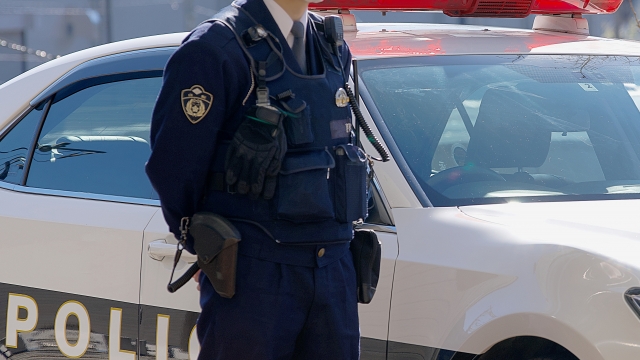
DNA identification by the police is a technique that plays an important role in criminal investigations and identification: DNA analysis compares and analyses DNA from remains (blood, hair, skin fragments, etc.) left at crime scenes, victims and suspects to identify individuals and clarify relationships. Below are details on the specific situations in which the police use DNA analysis and its methods.
1. The role of DNA testing in criminal investigations
DNA testing is used in criminal investigations, in particular for
a. Individual Specific
DNA is extracted from evidence left at crime scenes (bloodstains, saliva, skin tissue, hair, etc.) and matched to suspects and victims to identify those involved in the crime DNA is almost unique to each individual and therefore can be identified with extremely high accuracy.
- Examples: used in serious offences where remains are left at the scene, e . g. murder, sexual assault, etc.
b. Past unsolved cases.
As DNA technology has evolved, DNA may be analysed again from evidence from previous unsolved cases and used as new evidence.This technique is called ‘cold case investigation’ and the results of DNA analysis can sometimes lead to new suspects.
- Example: cases from decades ago that could not be solved due to lack of technology at the time may be investigated again through DNA testing.
c. Matching against offender databases.
DNA information from the offender’s DNA database is also matched with DNA obtained from the crime scene. This makes it possible to identify those with a past criminal record or those who are wanted.
- Example: In Japan, DNA databases are being used to investigate recidivists and their links to other cases.
2. The DNA testing process
The process of DNA testing by the police is as follows.
- Collecting evidence
Collects evidence from the crime scene, such as blood, hair, saliva, semen, skin and other remains. These pieces of evidence provide material for DNA analysis. - DNA extraction
Extract DNA from evidence. Modern technology allows analysis of even very small amounts of DNA. - Amplification of DNA
A technique called PCR (polymerase chain reaction) is used to amplify small amounts of DNA in large quantities, sufficient for analysis. - DNA analysis
Using amplified DNA, the DNA sequences (STR: Short Tandem Repeat) that differ from individual to individual are analyzed. This produces an individual-specific DNA profile. - Match and compare
Match DNA from the scene with DNA from the suspect or information from the DNA database to see if there is a match. - Reporting results
The results of an expert opinion are reported as evidence to aid the investigation and can be used to further the investigation or as evidence in court.
3. Areas of application of DNA testing
a. Sex crime investigations
DNA identification plays a particularly important role in sex crime investigations. DNA is collected from semen or skin fragments left on the victim’s body or clothing to identify suspects.
b. Murders and assaults.
In murder and assault cases, the DNA of the perpetrator can be extracted and identified from bloodstains and skin fragments left under the nails. When the victim resists, skin fragments of the perpetrator may be left between the fingernails, which can be decisive evidence.
c. Identification of unidentified bodies.
If an unidentified body is found after an accident, disaster or incident, DNA analysis is also used to identify the body by matching it with the DNA of the surviving family members.
- Example: in the event of a disaster or major accident, DNA identification may be used to identify a large number of victims.
d. Clarification of false accusations
Advances in DNA testing technology mean that some cases that were wrongly convicted in the past can be resolved through DNA testing. In some cases, past evidence can be re-examined and the true culprit identified as a result of DNA testing.
4. Legal aspects and credibility
DNA testing is highly reliable scientific evidence, but the following legal aspects and issues should also be noted
- Reliability: the match rate for DNA analysis is very high, usually identifying individuals with an accuracy of 99.9% or better. However, caution should be exercised if the sample used for identification is very small or contains a mixture of multiple DNA strands.
- Privacy issues: there is also a privacy argument for DNA information being included in criminal databases: DNA data is highly personal information and therefore needs to be strictly regulated in terms of its handling.
- Treatment as evidence: DNA test results are treated as important evidence in court, but if errors in evidence collection or storage occur, innocent persons can be wrongly prosecuted. The handling and storage of evidence is therefore very strictly controlled.
Summary
DNA testing by the police plays a very important role in criminal investigations, where DNA can be used to identify individuals with a high degree of accuracy, which can lead to solving cases, confirming identities and uncovering false accusations. On the other hand, the protection of privacy and the proper handling of evidence is required, and legal procedures must be very careful.
略歴
- 1996年 慶應義塾大学医学部 卒業
- 2004年 慶應義塾大学 医学博士号 取得
- 2005年 慶應義塾大学 皮膚科学教室 助手
- 2008年 ヒロ皮フ形成クリニック 開業
- 2009年 医療法人社団福美会 理事長
- 2015年 医療法人社団福美会 理事
資格・所属
- CAPラボディレクター
- 日本皮膚科学会 皮膚科専門医
- 日本医師会 産業医
- 東京衛生検査所 指導監督医
この記事は、 ヒロクリニックNIPPTの編集・監修体制 にもとづき、資格を持つ医師が内容を確認しています。
堤 修一 (つつみ しゅういち)
医師・医学博士 / ヒロクリニック博多駅前院 院長
略歴
- 1993年 東京大学医学部医学科 卒業
- 2016〜2019年 東京大学先端科学技術研究センター 准教授
発信・関連リンク
この記事は、 ヒロクリニックNIPPTの編集・監修体制 にもとづき、資格を持つ医師が内容を確認しています。
参考文献
- Butler JM. Forensic DNA Typing: Biology, Technology, and Genetics of STR Markers. 2nd ed. San Diego: Academic Press; 2005.
- Jobling MA, Gill P. Encoded evidence: DNA in forensic analysis. Nat Rev Genet. 2004 Oct;5(10):739-51.
- Roewer L. Y-chromosome STR typing in forensics. Forensic Sci Med Pathol. 2009 Jun;5(2):77-84.
- National Research Council (US) Committee on DNA Technology in Forensic Science. DNA Technology in Forensic Science. Washington (DC): National Academies Press (US); 1992.
- National Police Agency (Japan). Current Status and Issues of DNA Typing in the Police. Tokyo: National Police Agency; 2021.
Latest Articles




Supervisor of the article

Dr. Hiroshi Oka
Graduated from Keio University, Faculty of Medicine
Doctor of Medicine
Medical Doctor