
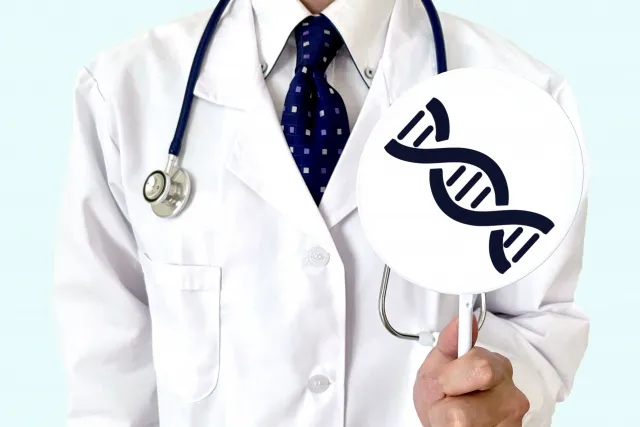
Paternity testing when the fathers are identical twins also presents unique challenges. Because identical twins have genetically identical DNA, it is not possible to determine which twin is the biological father of the child by DNA testing alone. The following explains why and how to deal with this.
Challenges in paternity testing when the fathers are identical twins.
- DNA identity:
Identical twins share all their genetic information.Therefore, normal DNA testing cannot distinguish which twin is the actual father.DNA test results will indicate that both twins are potential fathers.Identical twins are born when a single fertilised egg splits to form two embryos and therefore have identical DNA.This means that they share the same genetic information.Specifically, the basic genetic information is identical, as the chromosomes and gene sequences are almost exactly the same. - Interpretation of test results:
In this case, it is not possible to name a specific father, as the DNA test indicates the same likelihood for both identical twin brothers as potential fathers.This means that the DNA is a perfect match and cannot be determined solely on the basis of genetic evidence.
Possible measures
- Use of non-genetic evidence:
In order to identify the father, information and evidence other than DNA testing may be required. For example, the biological likelihood of the conception period, evidence of the prospective father’s behavior and other eyewitness testimony may be considered.
Conclusion
Paternity testing in cases where the fathers are identical twins involves complex issues that cannot be resolved by DNA testing alone.In such situations, additional evidence and information is required and the final identification of the father requires a comprehensive consideration of other evidence and circumstantial evidence.
略歴
- 1996年 慶應義塾大学医学部 卒業
- 2004年 慶應義塾大学 医学博士号 取得
- 2005年 慶應義塾大学 皮膚科学教室 助手
- 2008年 ヒロ皮フ形成クリニック 開業
- 2009年 医療法人社団福美会 理事長
- 2015年 医療法人社団福美会 理事
資格・所属
- CAPラボディレクター
- 日本皮膚科学会 皮膚科専門医
- 日本医師会 産業医
- 東京衛生検査所 指導監督医
この記事は、 ヒロクリニックNIPPTの編集・監修体制 にもとづき、資格を持つ医師が内容を確認しています。
堤 修一 (つつみ しゅういち)
医師・医学博士 / ヒロクリニック博多駅前院 院長
略歴
- 1993年 東京大学医学部医学科 卒業
- 2016〜2019年 東京大学先端科学技術研究センター 准教授
発信・関連リンク
この記事は、 ヒロクリニックNIPPTの編集・監修体制 にもとづき、資格を持つ医師が内容を確認しています。
参考文献
- Wang W, Shi M, Jin S, et al. Non-invasive prenatal paternity testing in cases where the alleged fathers are close relatives. Forensic Sci Int Genet. 2020 Jan;44:102206. doi: 10.1016/j.fsigen.2019.102206.
- Zhang J, Shen H, Wang L, et al. Non-invasive prenatal paternity testing when the alleged fathers are biological brothers. Legal Med (Tokyo). 2021 Mar;49:101836. doi: 10.1016/j.legalmed.2020.101836.
- Qu S, Li J, Shen H, et al. Non-invasive prenatal paternity testing when the alleged fathers are close relatives: a simulation study and case report. Int J Legal Med. 2021 Jul;135(4):1199-1205. doi: 10.1007/s00414-021-02517-8.
- Hall AL, Demko Z, Goranson ED, et al. Noninvasive prenatal paternity testing. Genet Med. 2013 Jun;15(6):488-491. doi: 10.1038/gim.2012.164.
Latest Articles


Supervisor of the article
Dr. Hiroshi Oka
Graduated from Keio University, Faculty of Medicine
Doctor of Medicine
Medical Doctor