
The Forensic Sequence STRucture Guide (FSSG) refers to guidelines and guidelines specific to DNA analysis in forensic science, specifically focusing on specific DNA sequences called Short Tandem Repeats (STRs ).STRs are short DNA sequences repeated in the genome that vary widely from person to person and are used for personal identification in forensic applications such as criminal investigations and paternity testing.
Below are details on how the FSSG is understood.
1. What are Short Tandem Repeats (STRs)?
- STRs are short sequences of DNA (usually two to six base pairs) that are repeated in succession and are found in specific genomic regions. The number of these repeats varies from person to person, making them very useful for personal identification。
Reliable domestic inspections
Available at a clinic near you nationwide
2. Use of STRs in Forensic Science
- In forensic analysis, multiple STR loci are analyzed from DNA samples. For example, DNA samples from a crime scene are compared to a suspect’s DNA profile to see if there is a match.
- STR analysis is the basis for forensic DNA databases in many countries, and in the United States, the Combined DNA Index System CODIS database is used to match DNA profiles with unsolved cases and suspects.
Reliable domestic inspections
Available at a clinic near you nationwide
3. The Role of Sequencing in Forensic Science.
- Conventional STR analysis is based on measuring the length of repeated sequences, but sequencing (sequence determination) provides more detailed information, such as base-level variations (sequence polymorphisms) within repeated portions. This may further improve the ability to identify individual
- Sequencing is useful in identifying differences between individuals with similar STR profiles because it can detect more subtle STR region variations.
Reliable domestic inspections
Available at a clinic near you nationwide
4. Forensic Sequence STRucture Guide (FSSG) の役割
- The FSSG will likely provide structured guidelines for the analysis and interpretation of STR sequence data in forensic science. Specifically, it may include the following
- Protocols for DNA extraction, amplification, and sequencing of the STR locus.
- Guidelines for comparing and interpreting sequence data.
- Best practices to ensure the accuracy and reliability of sequencing used in forensic science.
- This guide will serve as a comprehensive reference for forensic scientists working with STR sequence data to ensure consistency, reproducibility, and reliability of DNA evidence for legal use.
Reliable domestic inspections
Available at a clinic near you nationwide
5. Advanced Forensic Applications.
- As sequencing technology evolves, the application of STR sequencing in forensic science will become more sophisticated, allowing for higher resolution in cases where traditional STR analysis has limitations. For example:
- Degraded samples (even if fragment analysis is difficult, sequencing may provide information).
- Complex mixtures (sequencing may help distinguish between multiple DNA contributors).
Reliable domestic inspections
Available at a clinic near you nationwide
Summary
The Forensic Sequence STRucture Guide (FSSG) could possibly provide detailed procedures and guidelines for the application of STR sequencing techniques to forensic investigations to enhance the accuracy and reliability of DNA evidence. The FSSG may be used as a guide to improve the accuracy and reliability of DNA evidence.
Reliable domestic inspections
Available at a clinic near you nationwide
引用
https://helda.helsinki.fi/server/api/core/bitstreams/ba53dc8a-bf5c-4490-a149-9cf82c41bf49/content
略歴
- 1996年 慶應義塾大学医学部 卒業
- 2004年 慶應義塾大学 医学博士号 取得
- 2005年 慶應義塾大学 皮膚科学教室 助手
- 2008年 ヒロ皮フ形成クリニック 開業
- 2009年 医療法人社団福美会 理事長
- 2015年 医療法人社団福美会 理事
資格・所属
- CAPラボディレクター
- 日本皮膚科学会 皮膚科専門医
- 日本医師会 産業医
- 東京衛生検査所 指導監督医
この記事は、 ヒロクリニックNIPPTの編集・監修体制 にもとづき、資格を持つ医師が内容を確認しています。
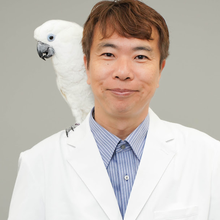
堤 修一 (つつみ しゅういち)
医師・医学博士 / ヒロクリニック博多駅前院 院長
略歴
- 1993年 東京大学医学部医学科 卒業
- 2016〜2019年 東京大学先端科学技術研究センター 准教授
発信・関連リンク
この記事は、 ヒロクリニックNIPPTの編集・監修体制 にもとづき、資格を持つ医師が内容を確認しています。
Latest Articles




Supervisor of the article
Dr. Hiroshi Oka
Graduated from Keio University, Faculty of Medicine
Doctor of Medicine
Medical Doctor