
Summary of this article
There are several reasons why it is difficult to read short tandem repeats (STRs) on the MiniSeq: STRs are repetitive sequences, especially used in forensics and paternity testing, that usually consist of two to six base pair repeats and are found at specific locations on the genome. Several factors affect the accuracy of this analysis, and the MiSeq can take reads up to 600 bps. This makes it ideal for STR analysis. There are different types of next generation sequencers.
Other companies do not support STR because they are MiniSeq (small sequencers).
Main reason:
- Read length limitations:
MiniSeq supports relatively short read lengths (the length of the DNA fragments read during sequencing).Short reads can make it difficult to analyze the exact number and order of repetitive sequences. In particular, if the STR region is long, short reads may not be able to read the sequence accurately. - Error rate:
STRs are highly repetitive sequences and NGS (Next Generation Sequencing) technology can be particularly error prone for repetitive sequences. MiniSeq is designed for targeted sequencing and may be error-prone in STR analyses that require very high sequence accuracy. - Special library preparation for analysis is required:
STR analysis usually requires specialized library preparation and analysis tools. Preparation and analysis software required for STR analysis. - Data output limitations:
MiniSeq has lower data throughput than other models such as MiSeq, so it can be difficult to generate enough data to cover large amounts of repeat sequences or complex STR regions. STR analysis requires large amounts of sequence data and high coverage is often required, the performance of the MiniSeq may not be sufficient.

Substitute case:
For accurate STR reads, the MiSeq or more capable sequencers are better suited. These models have longer read lengths and better error correction capabilities, allowing you to obtain the highly accurate data needed for STR analysis. The MiSeq provides read lengths of up to 600 bps, while the MiniSeq only provides up to 300 bps and can only calculate SNPs. Many laboratories use MiniSeq and are not able to use STR. Only Tokyo Hygienic Laboratory can do this.
In short, the MiniSeq is a suitable instrument for relatively small-scale targeted sequencing and may not be adequate for advanced requirements such as STR analysis.
略歴
- 1996年 慶應義塾大学医学部 卒業
- 2004年 慶應義塾大学 医学博士号 取得
- 2005年 慶應義塾大学 皮膚科学教室 助手
- 2008年 ヒロ皮フ形成クリニック 開業
- 2009年 医療法人社団福美会 理事長
- 2015年 医療法人社団福美会 理事
資格・所属
- CAPラボディレクター
- 日本皮膚科学会 皮膚科専門医
- 日本医師会 産業医
- 東京衛生検査所 指導監督医
この記事は、 ヒロクリニックNIPPTの編集・監修体制 にもとづき、資格を持つ医師が内容を確認しています。
堤 修一 (つつみ しゅういち)
医師・医学博士 / ヒロクリニック博多駅前院 院長
略歴
- 1993年 東京大学医学部医学科 卒業
- 2016〜2019年 東京大学先端科学技術研究センター 准教授
発信・関連リンク
この記事は、 ヒロクリニックNIPPTの編集・監修体制 にもとづき、資格を持つ医師が内容を確認しています。
Latest Articles



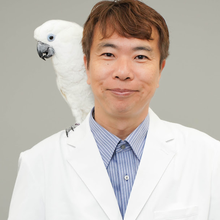
Supervisor of the article

Dr. Hiroshi Oka
Graduated from Keio University, Faculty of Medicine
Doctor of Medicine
Medical Doctor