Summary of this article
A detailed explanation of how to extract DNA from bones. The latest techniques for extracting DNA from bones and ancient artifacts, as well as the procedures and examples of their use, will be introduced.
The method of extracting DNA from bones is mainly used for ancient remains and forensic examination. This process needs to be carried out very carefully and the following steps are common
1. Sample preparation
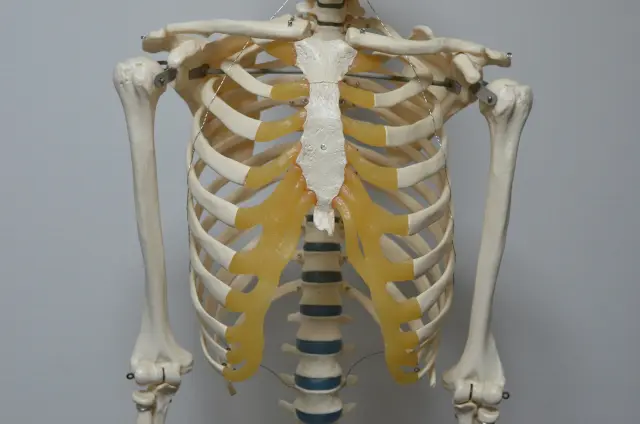
Bone DNA extraction is usually performed from relatively well preserved bone. The bone site chosen is generally a hard site (e.g. femur or tooth).This increases the likelihood of good DNA preservation.
2. Bone cleaning
It is important to clean the bone surface as the sample may be contaminated from external sources. This involves a process of scraping or cleaning the bone surface to remove external tissue and contaminants. Scraping the surface usually removes external contaminants.
3. Bone crushing
To extract the DNA, the bones are ground into a fine powder. This is done using a specialized grinder or mill. Crushing the bone makes it easier to access the inner tissue of the bone, which contains DNA.
4. Demineralization process
Bone contains high levels of calcium, which must be removed in order to extract DNA. In the demineralization process, bone powder is soaked in an acidic solution (e.g. EDTA solution) to dissolve and remove the calcium. This facilitates the extraction of organic components (i.e. DNA) from the bone.
5. DNA extraction
After demineralization, a common DNA extraction protocol is used to extract DNA. This is a process in which the bone powder is soaked in lysis buffer (a solution that destroys cells and releases DNA) to elute the DNA. Phenol-chloroform extraction or commercial DNA extraction kits are then used to recover the DNA in solution.
6. purification of DNA
Extracted DNA may contain proteins and other impurities. To remove these impurities, the DNA is purified. Ethanol precipitation and silica-based columns are common methods of purification.
7. Amplification and analysis of DNA
As the DNA obtained is often fragmented in minute quantities, PCR (polymerase chain reaction) is used to amplify specific DNA regions to an analyzable quantity. DNA sequencing and STR analysis are then used to identify individuals and confirm genetic relationships.
Summary
The process of extracting DNA from bone requires a multi-step, careful process. This includes proper preparation of the sample, demineralization, extraction and purification of the DNA. The technique is widely used in archaeology, forensic science and even evolutionary biology.
略歴
- 1996年 慶應義塾大学医学部 卒業
- 2004年 慶應義塾大学 医学博士号 取得
- 2005年 慶應義塾大学 皮膚科学教室 助手
- 2008年 ヒロ皮フ形成クリニック 開業
- 2009年 医療法人社団福美会 理事長
- 2015年 医療法人社団福美会 理事
資格・所属
- CAPラボディレクター
- 日本皮膚科学会 皮膚科専門医
- 日本医師会 産業医
- 東京衛生検査所 指導監督医
この記事は、 ヒロクリニックNIPPTの編集・監修体制 にもとづき、資格を持つ医師が内容を確認しています。
堤 修一 (つつみ しゅういち)
医師・医学博士 / ヒロクリニック博多駅前院 院長
略歴
- 1993年 東京大学医学部医学科 卒業
- 2016〜2019年 東京大学先端科学技術研究センター 准教授
発信・関連リンク
この記事は、 ヒロクリニックNIPPTの編集・監修体制 にもとづき、資格を持つ医師が内容を確認しています。
参考文献
- Chitty LS, Khalil A, Barrett AN, et al. Non-invasive prenatal diagnosis for achondroplasia using cell-free fetal DNA in maternal plasma: development, validation and clinical implementation of a test. PLoS One. 2015;10(10):e0141189.
- Chandler N, Best S, Jenkins L, et al. Non-invasive prenatal diagnosis for FGFR2-associated craniosynostosis syndromes. Prenat Diagn. 2016;36(11):1017-1022.
Latest Articles




Supervisor of the article
Dr. Hiroshi Oka
Graduated from Keio University, Faculty of Medicine
Doctor of Medicine
Medical Doctor