




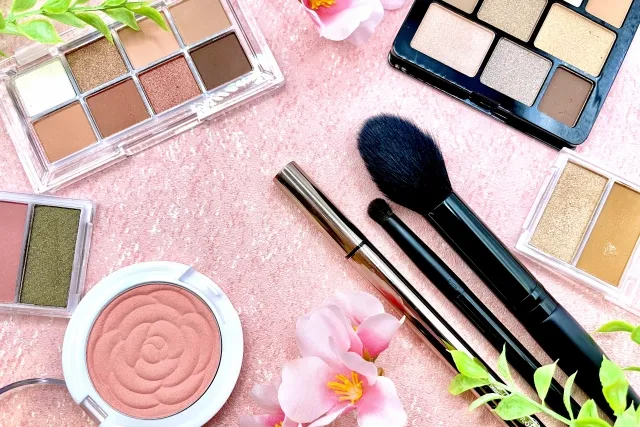
Makeup that was perfect in the morning can be ruined by shine, smudging, and pore settling by early afternoon — such “makeup breakdown” is determined not just by the quality of products, but 90% by skin preparation and process management. This article breaks down the causes of makeup breakdown such as sebum, sweat, humidity, and friction, and covers the theory and steps for creating long-lasting skin as practised by professionals, the optimal choices for primers, foundations, powders, and mists, as well as recipes tailored to season and skin type. It will elevate your finish and longevity starting tomorrow.
1. Understanding the mechanism behind makeup breakdown
Makeup breakdown is not a single phenomenon, but a “materials science inconsistency” in which multiple symptoms — oiliness, shine, smudging, pore settling, flaking, and colour fading — occur in a chain at different times. The main factors are largely a multiplication of “external conditions × skin condition × product compatibility × application method.” Even if only one factor is strong, makeup can break down, and multiple weaker factors can also accumulate to cause it. The key is the balance of moisture and oil, and layer-by-layer adherence management (drying and adhesion).
First, external conditions. Stressors such as temperature, humidity, wind, ultraviolet rays, and friction (from masks, hair, or hands) affect the plasticity and viscoelasticity of the base layer. In high temperature and high humidity, sebum and sweat secretion increase, causing plasticisation of the foundation’s binding phase (binder) and making it overly soft → leading to more movement and transfer. Conversely, in low humidity and windy environments, moisture is drawn from the stratum corneum, increasing transepidermal water loss (TEWL), and powders settle into the skin’s fine cracks, becoming visible as pore settling and flaking. When the viscosity and polarity of sebum change due to ultraviolet light or oxidation, previously adherent layers are more likely to smudge, starting from the T-zone and progressing from shine to smudging.
Next, skin condition. When the stratum corneum’s water content is low, the bonds between corneocytes harden, increasing surface “irregularities.” These micro-uneven areas not only scatter light but also become “pockets” where pigments and powders accumulate, emphasising uneven colour and pore settling over time. Additionally, dryness triggers sebum rebound (compensatory secretion), creating a vicious cycle: dryness → sebum production → breakdown due to oil. Conversely, when oil is excessive but moisture is lacking, the sebum layer may be thick while the water phase, which serves as the foundation, is thin, making slippage from poor adhesion more likely. Ultimately, what matters is the sequence and ratio of “adding water and sealing with an appropriate amount of oil.”
The issue of product compatibility cannot be overlooked. Base makeup functions through layers of water phase, oil phase (oil/silicone), and powders, but if the binders, evaporation rates, or polarities of primers, sunscreens, foundations, concealers, and powders do not align, separation, friction, or peeling can occur at the interfaces. For example, applying a heavy silicone layer over a water-based layer can create a “lid” before the moisture has fully evaporated, causing trapped water inside and leading to unevenness or pilling. If a highly hygroscopic layer (such as a moisturizing gel or hyaluronic acid-based product) is applied thickly along with a layer that sets by evaporation (like a film-forming primer or mist), the difference in drying times can cause the surface to shrink first → resulting in cracking or smudging. Conversely, applying a powdery product with high powder content directly onto an oil-rich skincare layer causes the powder to absorb the oil and clump, creating patchiness over time.
Finally, “application method.” Even with excellent products, uneven thickness, friction, or insufficient drying time can cause breakdown. The basic principle for base makeup is not to drag over the face, but to place product in points and press like a stamp. This allows powders to settle uniformly into the valleys of the skin texture, forming a thin, continuous pigment film. After each layer, let it rest for 30–60 seconds to “settle.” Whether this time-lagged adhesion is observed or not can change longevity by several hours. Tool choice is also physical: fingers can melt the oil phase with body heat, useful for adhesion and shine. For broad, even coverage, sponges work well, as their fine air pockets absorb excess oil and water, automatically “evening out” the layer thickness. Finish brushes should feel like placing, not dragging; rubbing disrupts pigment alignment, creating uneven brightness (dull appearance).
Summarising the mechanism, breakdown occurs as one or a combination of: “insufficient or excessive water → stratum corneum hardens → fewer adhesion points → smudging and pore settling,” “excess or altered oil → film slips → movement and shine,” or “layer incompatibility or mismatched drying timing → interfacial peeling → flaking and lifting.” The principle for dealing with this is simple: “thin multilayers, zoning, and time-lagged adhesion.” In other words, place the intended formulation thinly only where needed, let each layer’s surface dry before proceeding, and vary formulations between the T-zone and U-zone. This is the most reliable way to keep the base layer flexible against daily changes in temperature, humidity, and friction, and to prevent makeup breakdown in advance.
In practice, lightly pressing a tissue over the surface after application to lift excess water or oil reduces moving material and suppresses early breakdown. Areas with more movement, such as smile lines, mouth corners, and the sides of the nose, should be finished as thinly as possible, with fine powder used at the end for pinpoint fixation. Conversely, leaving a subtle sheen on the high points of the cheeks and the centre of the forehead creates a visually fresh effect, so that even if sebum appears, it is perceived as “glow” rather than “breakdown.” This kind of optical design is another sophisticated way to make breakdown less noticeable.
In conclusion, makeup breakdown is not accidental but a design challenge of material (your skin) × ingredients (cosmetics) × technique (application method). By adding moisture, sealing with oil, layering thinly and evenly, and allowing each layer to dry, the finish and longevity of the same products can be dramatically improved. A clear understanding of the mechanism is the shortest route to “preventing breakdown” rather than “fixing it.”
2. Morning skin prep: Long-lasting skin is determined within three minutes after cleansing
2-1 Remove the excess, retain what is necessary
The goal in the morning is not “reset” but “tune.” Gently remove only the sebum and night sweat produced or transferred overnight, along with any excess oil from night-time skincare, while preserving the stratum corneum’s moisture and natural moisturizing factors (NMF) as much as possible. The target texture is non-tight, non-gritty, yet free of surface stickiness.
Choose cleansers according to skin condition. On days with low sebum or in winter, rinsing with lukewarm water plus micellar water or a mild amino-acid-based cleanser is sufficient. On mornings when T-zone shine is strong, switch to “spot cleansing” with a low-irritation gel or foam on the nose and between the brows to prevent cheek dryness.
The water temperature should be 32–34°C. Hot water can wash away sebum and ceramides, inducing fine cracks in the stratum corneum, where foundation powders and pigments can settle, causing pore settling and unevenness. Rinse the whole face around 20 times, and blot with a towel without rubbing. At this point, the skin should feel “soft and moisturised”—this is your cue.
2-2 Three-layer structure: moisture, hydration, and emollient
For a long-lasting base, the key is the sequence: introduce water into the stratum corneum, retain it, and prevent its loss.
1)Moisturising: Apply toner by pressing it gently with the palms for full contact. Follow the order: cheeks → forehead → around the mouth → eye area. For dry areas (above the cheekbones, beside the mouth corners), apply a second layer to ensure even absorption. If using a cotton pad, avoid friction; do not slide it—simply place it on the skin.
2)Hydration (humectants): Apply water-binding ingredients such as hyaluronic acid, glycerin, or PCA-Na thinly over the entire face. On days when the texture feels heavy, warm it in your palms for 10 seconds and spread it as a thin layer to reduce unevenness. Let it rest for 30–40 seconds after application so the surface feels smooth while the interior remains moisturised—this allows the next layer to apply evenly.
3)Emollient: Use light ester oils or silicones to “seal” the layer and block evaporation. Zoning is crucial here: apply extremely thinly on the T-zone, and slightly thicker on the U-zone (cheeks to jawline). Spread the product between both hands before placing it on the face as a “veil” to avoid uneven thickness.
Immediately after these three layers are established, the stratum corneum is highly hydrated and ideal for adhesion—this is the “golden three minutes.” Proceeding to the base makeup within three minutes after cleansing suppresses TEWL (transepidermal water loss) and increases the adhesion points for foundation.
2-3 Skin preparation for sebum-prone skin
Sebum is more a lubricant than a “culprit” of breakdown. Over-stripping it causes the skin to compensate by producing more sebum, accelerating shine a few hours later. In morning skin prep, the key is balancing rather than removing.
On days when sebum is a concern, using a light gel containing niacinamide or Zinc PCA helps regulate sebum production and water retention. Apply thinly only on the triangular area of the nose, between the brows, and chin; avoid or apply very lightly on the cheeks to prevent rebound. Using a strong astringent toner over the entire face can trigger the dryness → sebum rebound → breakdown loop, so restrict it to necessary areas for a short time. Finish by gently pressing half a tissue over the surface to remove excess—this stabilises the glide of the primer applied on top.
2-4 Compatibility with sunscreen
The polarity and evaporation design of sunscreen significantly affect foundation adhesion.
When pairing with water-based primers or water-based foundations, a water-based gel sunscreen blends more easily and helps avoid pilling. For silicone-based liquids or cushions, a light silicone-emulsion sunscreen offers optimal interfacial compatibility.
Use about two fingertip amounts for the whole face: “place in five points → smooth over the surface → let rest for 1 minute.” During this rest, surface moisture and volatile components align, allowing the next layers of primer or foundation to adhere evenly.
On hot or humid days, choose water-resistant formulas; on dry days, select sunscreens with hydrating polymers. Testing combinations in advance on the inner arm (UV → primer → foundation in small amounts, observe for 30 minutes) can prevent incompatibility issues such as lifting or flaking.
Tip: Before moving to the next step over sunscreen, lightly press a tissue on the sides of the nose to remove excess water and oil, stabilising pore settling and foundation glide. Leave the cheeks untouched to preserve the core of the glow.
Following this sequence—“gentle cleansing without over-stripping → three-layer water introduction, retention, and thin sealing → balance sebum only → choose compatible UV and let rest for 1 minute”—dramatically improves adhesion, evenness, and longevity, even with the same products. Once the base is set, primers and foundation can be applied thinly—that is the morning ritual of those whose makeup doesn’t break down.
3. Primer design: The foundation depends on “surface” and “friction coefficient.”
Whether a base lasts depends on creating a uniform “surface” on the skin and calibrating the friction coefficient so that the foundation layered on top neither slips too much nor catches excessively—a balance of slip and grip. Primers should be viewed not merely as “moisturising” or “colour-correcting,” but as tools of surface engineering and optical correction, which makes selection far more precise.
3-1 Choosing by purpose (formulation perspective + design intent)
■ Pore and texture correction (texture primer)
The ideal combination is a silicone elastic gel (e.g., Dimethicone/Vinyl Dimethicone Crosspolymer) plus spherical powders (silica, polymethylsilsesquioxane, boron nitride). The elastic gel forms “bridges” over fine depressions, while the spherical powders diffuse incoming light, softening the appearance of pore shadows.
Application should follow the rule: place dots only on the “pore triangle” from the centre of the cheeks to the sides of the nose, then blend outward until it disappears. Spreading over the entire face can create excessive slip, preventing subsequent layers from adhering properly. Create surfaces only where needed—this is the winning strategy.
■ Colour correction (control colour)
Professionals apply complementary colours in minimal amounts for optical correction.
- Yellow: Evens out redness and light blue under-eye tones.
- Green: Redness across the cheeks and around the sides of the nose.
- Lavender: Dullness and yellowish sallowness.
- Peach/Orange: Dark blue under-eye circles and shadows at the mouth corners.
In all cases, apply tiny amounts only where needed. Using it over the entire face risks whitening or graying. The goal is not to “erase” the colour but to neutralise it visually, with seamless edges.
■ Long-lasting grip (long-lasting primer)
In sweaty or humid conditions, water-based film formers (Acrylates Copolymer, PVP-based, polyurethane-based) are effective. Once dry, they form a thin transparent film that increases adhesion points for the foundation above. Limit application to the T-zone, leaving the cheeks with a moisturising layer to maintain flexibility, creating a composite film that resists cracking even under mask friction.
For dry skin, choose a hydrating type containing moisturizing polymers (glycerin, panthenol). Oil-rich primers tend to cause excessive slip, so zoning is essential.
Compatibility guideline: water-based primers pair with water-based or water–silicone hybrid foundations, and silicone-based primers pair with silicone-based foundations. Matching polarity reduces interfacial peeling. When in doubt, test a small patch on the wrist with UV → primer → foundation and check for lifting or pilling after 30 minutes.
3-2 Application technique (layer thickness design and friction control)
Proper amount design
A guideline is two rice-grain-sized amounts for the whole face. Do not spread it across the face at once; the correct method is “place on needed areas first, then blend outward.” Too much thickness is a “warning sign for breakdown.”
Placement = “surface” creation
1)Dot rice-grain-sized amounts on the forehead, inner cheeks, chin, and sides of the nose.
2)Using the pads of your fingers, smooth in place with gentle circular motions—do not drag.
3)Press with a clean sponge to stamp and absorb excess. The sponge’s fine pores take up surplus water and oil, helping to standardise layer thickness.
Friction coefficient calibration (slip × grip)
- Too much slip = foundation “runs.” → Limit texture primer to the minimum necessary area and apply long-lasting primer only on the T-zone.
- Excessive grip = uneven application. → Wait for the moisturising layer to reach “moderately hydrated,” then apply primer, warming it in the palms for 10 seconds and spreading as a thin layer.
- Finishing “smoothing”: Lightly roll the sponge edge over the sides of the nose and nasolabial folds once in the direction opposite to the hair growth, then once in the natural direction. This prevents powder from accumulating.
Time-lagged adhesion
After each layer, let it rest for 30–60 seconds. Surface evaporation stabilises, allowing the next layer to “adhere” evenly. Rushing can easily cause smudging or pilling at the interfaces.
Edge blending for colour correction
The goal with control colours is a 0 mm boundary. Tap only along the edges with a sponge until it’s impossible to tell where it was applied. When foundation is layered on top, a thin, continuous film forms.
Tips (up to 3)
- Half-tissue “surface blot”: After primer, lightly press only on the sides of the nose to remove excess, preventing pore settling.
- Powder sandwich: On the T-zone only, apply an extremely small amount of loose powder after primer, then a thin layer of liquid. Effective on humid days.
- Reverse-roll pressing on the sides of the nose: Stamp against the direction of the pores, then smooth in the natural direction to evenly fill the depressions with primer.
Summary
The role of primer is to create a uniform “surface” on the skin and optimise the friction coefficient for layers above. By selecting formulations according to purpose, practising zoning, applying thin layers, and allowing time-lagged adhesion, foundation adheres evenly with minimal product, visibly reducing shine, smudging, and pore settling throughout the day. Primer is not meant to be applied liberally; use the right type, in the right place, in the right amount. This is the golden rule for designing a long-lasting base.
4. Foundation: thin multilayers and “time-lagged adhesion”
4-1 Choosing the right product for the right area based on formulation
Foundation becomes more long-lasting when selected according to formulation (base) × environment (temperature and humidity) × skin type (oil–water balance). Consider not only texture and coverage, but also evaporation behaviour, film formation speed, and oil-phase weight.
Liquid foundation
A versatile option that balances coverage and glow. Use 0.5 pump as a “thin single layer,” applying from the high points of the face (centre of the cheeks) outward. Reapply only on necessary areas for “dot layering.” Avoid thick application in one go—this allows drying → adhesion → additional layers, enabling “time-lagged adhesion.” Glow formulas may feel oil-heavy and prone to breakdown, but applying thin layers and pressing with a sponge increases adhesion points, greatly improving longevity.
Cushion foundation
Quick and adherent, forming a film immediately with tapping. Use the puff’s edges rather than the broad surface, stamping carefully in the order: centre of the cheeks → sides of the nose → corners of the mouth to avoid uneven thickness. For extra longevity, layer small dots of a similar-formulation thin liquid foundation on top. For hygiene and to prevent “running” from transferred oils, clean the puff frequently.
Stick/Cream foundation
High coverage and strong adhesion. Applying over large areas can cause breakdown, so use it like a concealer in targeted spots. Place only on necessary areas—blemishes, central cheek redness, colour unevenness along the jawline—and blend edges to zero with a sponge. If used across the whole face, warm it slightly on the back of the hand before spreading thinly, and finish the T-zone with a separate, lighter formulation for balance.
Powder foundation
Formulated to withstand oily skin days and high humidity. If the primer has created a uniform “surface” and ensured adhesion, powder is less likely to cake. Apply with a brush, then press only key areas with a puff in a two-step “baking” method for stability. For dry skin, a hybrid approach—thin liquid layers on the cheeks and powder only on the T-zone—is effective. Avoid fully powdering the entire face in the morning to prevent fine cracks with facial expressions.
When in doubt: match polarity—water-based primer with water-based foundation, or silicone-based with silicone-based. Choose colour by observing the oxidised shade 3–5 minutes after application, accounting for individual darkening over time.
4-2 Do not spread over the surface—build in dots.
The key to long-lasting makeup is layering thin films in “dots” and allowing each layer time to dry.
- Placement: Dot one rice-grain-sized amount on the centre of the cheek. Tap outward with a fine-pored sponge to create a “surface,” taking care not to drag.
- Thin on mobile areas: corners of the mouth, sides of the nose, and outer eyes move a lot—thickness directly causes smudging. Use only the amount left on the sponge and tap without dragging.
- Nose: apply in sections. First, an ultra-thin layer → let rest for 30 seconds to blend with primer, UV, and sebum. Tap against the direction of the pores, then tap in the natural direction to fill depressions. Afterwards, add only 1/4 of a rice-grain amount where needed and tap again. This greatly reduces pore settling and sebum shine.
- Time-lagged adhesion: After applying foundation to the whole face, wait 30–60 seconds. Let surface evaporation stabilise, then reapply only where needed. Whether you wait or not can change longevity by several hours.
- Optical correction: Leave an extremely thin glow on the high points of the cheekbones so that sebum appears as “sheen” rather than breakdown. Conversely, finish the sides of the nose and between the brows with a matte effect to maintain a clean-texture contrast.
Tool choice is also important. Fingers = body heat enhances adhesion and glow; sponge = removes excess and evens layer thickness; flat brush = spreads thinly and evenly. For finishing, always stamp the entire face with a sponge to smooth fine irregularities and remove excess oil and water.
4-3 Concealer application order
The principle is to apply after foundation. Cover about 70% with foundation first, then spot-apply concealer on the remaining areas—this keeps overall layer thickness thin and more resistant to breakdown.
- Colour unevenness (redness/dullness): After foundation, place less than a rice-grain-sized amount of thin liquid or creamy concealer. Let it sit for 30 seconds to soften, then tap only along the edges until the application is imperceptible.
- Acne scars / pinpoint coverage: Dot-apply → wait 30 seconds to enhance adhesion. Do not spread; use the tip of a needle to blend only the edges. Finally, add about 1/10 of a rice-grain amount in the centre to secure.
- Under-eye circles: Use peach/orange for bluish tones, yellow for brownish dullness. Apply the minimum amount only to the triangular zone from the inner corner to under the pupil. The outer-eye area should be extremely thin due to high movement.
For finishing, secure with an extremely small amount of loose powder by simply “placing” it. Moving the powder can shift layers and cause fine-line smudging. Finally, mist from 30 cm away in an X → T motion with 2 sprays, then lightly stamp with a sponge to even out the polymer layer—this boosts longevity while keeping layers thin.
Key points
- Thin multilayers: Do not apply thickly at once; reapply only on necessary areas.
- Time-lag retention: A “pause” of 30–60 seconds after each process.
- Stacking by points: From the centre outward, movable parts only with the “remaining amount.”
Simply following these three principles makes the same foundation adhere better, appear more even, and last longer. Pore settling, creasing, and colour dulling by evening are noticeably reduced.
5. Powder: “Physically sets” through oil absorption and diffusion.
The role of powder is not just to create the finished texture. It is the process of absorbing sebum and optically blurring the fine unevenness on the surface while “physically setting” the base layer. When this is done correctly, daytime shine, pore settling, and transfer (to masks) are visibly reduced.
5-1 The principle of powder: oil absorption and soft focus.
Porous silica and plate-shaped mica absorb sebum through capillary action, while the particles scatter light in multiple directions to create a soft focus (softening shadows from unevenness). If the particle surfaces are treated with silicone or amino acids to be hydrophobic, they are less likely to clump from humidity or sweat, preventing unevenness.
Points to note are the amount and particle size. Applying too thickly increases oil absorption but can lead to powderiness, fine-line creasing, and white cast (flashback). The professional standard is thin, even application only where necessary.
5-2 Loose vs pressed: how to differentiate their use.
- Loose powder: The particles are light and excel at airy diffusion. Suitable for a morning all-over set. If the formulation does not overly dull the glow (more mica, minimal pearl), it can set the makeup while maintaining dimension.
- Pressed powder: Ideal for carrying around and targeted touch-ups. Because the particles are bound together with a binder, they are easier to keep in place on specific spots. Strong for “re-setting” areas like the sides of the nose and the space between the brows.
Translucent (colourless) powders are convenient because they do not alter colour, but high silica content × strong flash can cause white cast. On days with many photos, choose a lightly tinted type or a formulation that is less affected by light.
5-3 Proper amount and tools: place, do not carry.
The recommended basic routine is as follows — under the eyes → sides of the nose → between the brows → chin, placing a “very small amount” with a slightly larger brush. The key here is “do not carry the powder.”
Load a small amount onto the brush and always tap off the excess.
Place the brush perpendicular to the skin, building the surface with only small stamping motions.
For the T-zone, press with a puff to set. Do not “buff” by rubbing; press straight down to increase fixing power.
With this “pressing” motion, the powder lightly interlocks mechanically with the underlying film former, reducing transfer. Keep the cheeks thin with brush placement, and deliberately leave the glow on the high points; this optical design makes any breakdown appear as a “glow” rather than a flaw.
5-4 Design by area.
- Under the eyes: apply the thinnest layer. Because movement is large and dryness is common, use an extremely small amount of fine loose powder and simply “place” it. This prevents emphasising fine lines.Under the eyes: apply the thinnest layer. Because movement is large and dryness is common, use an extremely small amount of fine loose powder and simply “place” it. This prevents emphasising fine lines.
- Sides of the nose and between the brows: intersections of sebum and friction. Physically set with pressed powder and pressing with a puff. For the nose wings, press once against the direction of the pores, then smooth in the natural direction to fill the hollows evenly.
- Chin: prone to breakdown from talking and mask contact. Apply with a brush, then lightly press just the corners with a puff in a two-step process.
- Cheeks: zone for preserving glow and dimension. Use minimal powder, applying only to specific areas where pores are a concern, if necessary.
5-5 Touch-up technique: “prepare” before adding more.
During the day, the first rule is to remove sebum and sweat. Blot the surface with oil blotting paper or tissue → press pressed powder onto the T-zone with a puff. Adding powder over sebum can cause clumping and unevenness. Leave the cheeks untouched unless shine is a concern; in that case, sweep lightly with a brush.
5-6 Common mistakes and how to avoid them.
- Rubbing immediately after application: the powder shifts, layers misalign, causing fine-line creasing. Complete the process with a one-way motion of “place → press.”
- Too much: oil absorption increases, but the powder layer becomes thick and prone to cracking. The proper amount is reached when you stop thinking “maybe it’s not enough.”
- Full-face matte: causes expression line cracking and an aged appearance. Leave areas for natural glow.
Little tricks (just three)
- Powder sandwich (T-zone only): primer → tiny amount of loose powder → thin layer of liquid. Delays early breakdown on humid days.
- “Set the powder” with a mist: finish by misting from 30 cm → lightly stamp with a sponge. The powderiness disappears, and the layer unifies.
- Brush hygiene: brushes with sebum cause the powder to clump and create unevenness. Wash weekly and blot with tissue daily to keep particles even.
Key points: powder works through oil absorption (silica, mica) × light scattering (soft focus) × pressing (physical setting). Apply in the order under the eyes → sides of the nose → between the brows → chin, “placing” powder, pressing only the T-zone. Leave glow on the cheeks. Thin, even application only where needed — these three principles are the shortcut to maximising longevity without creating a powdery look.
6. Setting mist: the “final adhesive” that unifies the layers.
The essence of setting mist is to loosely re-adhere the base powders/pigments and the primer/foundation polymer layers on the surface, unifying them (cohesion). As the volatile solvents evaporate after spraying, film formers such as acrylates, PVP, and polyurethane create a “thin transparent layer,” eliminating powderiness, improving transfer resistance, and delaying shine. Formulations for dry skin include moisturising polymers like glycerin, BG, or hyaluronic acid to maintain film flexibility and prevent expression line cracking.
6-1 Correct spraying technique: distance, trajectory, amount.
Spray about 30 cm from the face, following an X → T motion, 2–3 pushes as a standard. Spraying too close and aiming directly creates local wet spots, causing pigment to shift and leading to unevenness or pore settling. After spraying, allow 10–15 seconds of “waiting” without moving the face for natural drying, then lightly stamp with a clean sponge. This evens out fine droplet irregularities and unifies the polymer layer. Lightly fanning the face helps solvent evaporation evenly, stabilising the setting.
6-2 Choosing a formulation: decide based on finish and environment.
- High-alcohol formulations excel in quick drying and adhesion, extending longevity under high heat, humidity, or mask friction. However, they rapidly remove moisture, so for dry skin it is safer to use them locally (mainly on the T-zone) or layer a moisturising base underneath using the BSS loop, as described later.
- Moisturising-polymer–rich formulations have a soft film, excelling at reducing powderiness and restoring glow. They are effective in dry seasons or air-conditioned offices to prevent fine-line creasing around the cheeks and eyes.
- For the desired finish, choose a formulation with sebum-absorbing fine particles for a matte effect, or one centred on light-diffusing polymers to add glow. Large pearl particles are unsuitable for base-setting purposes, as they emphasise pores.
6-3 Improving the precision of the BSS loop.
The recommended BSS loop (Blot → Set → Spray) is a three-step approach: first remove mobile elements (sebum, sweat, excess moisture), then even out the surface with powder, and finally adhere the layers with a mist.
1)Blot: Tear a tissue in half and gently press with the surface to remove excess sebum and sweat. Do not rub.
2)Set: Place an extremely small amount of loose powder in the order under the eyes → sides of the nose → between the brows → chin. Press the T-zone with a puff to physically set.
3)Spray: Mist from 30 cm following an X → T motion, then stamp lightly with a sponge.
The thinner and quicker these three steps are performed, the longer the makeup lasts without a layered look. For daytime touch-ups, a shortened version — “B → S (small amount of pressed powder) → S (one spray)” — is sufficient. For the cheeks, finishing with just a mist to preserve glow is also fine.
6-4 Daytime refresh “re-adhesion” protocol.
For mask marks or creasing around the mouth, first smooth the lines once with a cotton swab → mist once from close range into the air, letting a fine spray fall onto the area → stamp lightly with a sponge. This lightly rehydrates the underlying layer, allowing the powder and polymers to recombine and eliminate unevenness. Any additional powder should be applied in a very small amount, limited to the T-zone, to avoid thickness irregularities.
6-5 Optical design of the finish.
After misting, the restored glow can mix with sebum over time, resulting in either “pleasant glow” or shine. Allow glow on the high zones — cheekbones to brow tails — while lightly pressing the T-zone (sides of the nose, between brows, chin) with a sponge to lift moisture and maintain a clean contrast in texture. Before photography, blot just the tip of the nose with a tissue after spraying to reduce white cast or shine from the flash.
6-6 Common mistakes and troubleshooting.
Spraying too close, with too much product, keeping eyes open, or over-wetting the lashes causes colour unevenness and bleeding. Ensure lashes are fully dry, eyes closed, and bangs lightly out of the way before misting. If spots appear, press them down with a sponge before drying to create an even surface. Once dry, lightly re-mist and stamp to correct. If strong fragrance or high-alcohol formulas cause irritation, zone the face: moisturising mist for the cheeks, fast-drying for the T-zone, balancing comfort and longevity.
6-7 Seasonal, environmental, and mask-wear adjustments.
In summer or high humidity, favour fast-drying films and thin powder, keeping the mist minimal. In winter or air-conditioned environments, use moisturising films with 2 sprays → sponge stamp to melt any powderiness. On mask days, perform a shortened BSS routine just before putting it on to reduce transfer and rubbing. After removing the mask, follow with mist → stamp to quickly blend and restore the area.
Key points recap: “30 cm / X → T / 2–3 pushes → lightly stamp with a sponge → 10–15 seconds of ‘waiting’.” Then use the BSS loop to “Blot, Set, Spray.” If this sequence is performed thinly, quickly, and evenly, the mist functions as the final adhesive that unifies the layers, eliminating powderiness while simultaneously boosting longevity, transfer resistance, and visual uniformity.
7. Environmental stress countermeasures: sweat, humidity, friction, masks.
7-1 High humidity and sweat.
Breakdown in high humidity comes from a triple assault: “plasticisation by liquid (sweat),” “increased sebum secretion from trapped heat,” and “local sauna effects from bangs or collars.” Countermeasures follow the order: keep sweat sources away → prevent trapping heat → re-coagulate the film.
First, the nape, neck, and hairline are key for heat release. If they retain heat, facial sweating is triggered. Apply a rice-grain–sized amount of cooling gel thinly, limited to the area from behind the ears → nape → collarline. Avoid spreading near mucous membranes or the face (choose low-stimulation gels; high-menthol products can irritate). Sweat-blocking primers are effective applied as dots along “sweat paths” at the hairline, above the brows, and along the nose bridge. Strong body antiperspirants should never be used on the face.
Hair design is often overlooked: the thickness and placement of bangs affect T-zone humidity. Ensure bangs don’t cling to the centre of the forehead; direct volume toward the crown and back of the head, and slightly shift the part to create “air passages” that slow base softening. Before styling, fully dry the roots with a hair dryer as a preventive measure against trapped moisture.
Final steps before going out: blot the T-zone with a tissue → spray setting mist from 30 cm with X → T motion. This sequence — “remove mobile sebum → re-coagulate with the film” — significantly delays early breakdown. On days when sweat persists, cool the back of the neck for 30 seconds (use an ice pack over a towel) to reduce facial sweating.
For emergency care outdoors: first blot sweat → wait 10 seconds until the area is dry → pass the face under one mist push → stamp lightly with a sponge. Do not rub the droplets; restore the surface instead.
7-2 Friction and transfer.
The main cause of breakdown is friction. Masks, in particular, disturb the base layer through a threefold effect: “rubbing against the fabric,” “pulling from putting on and taking off,” and “moisture from breath.” Design the foundation with thinner coverage on moving areas and stronger coverage on stable areas.
First, before putting on the mask: press-set fine loose or pressed powder from the cheekbones to the temples to fix the particles. For the mouth area, apply a thin layer plus two mist passes to create a soft film. Hard matte layers crack easily, so moving areas (corners of the mouth, nasolabial folds) are better served with thin, glow-oriented layers for durability. For the mist, the first pass unifies the entire face → wait 30 seconds → second pass reinforces only the movable areas, employing “time-lag setting.”
To reduce mask friction, insert a layer of silk or ultra-fine fibre on the inside; this lowers the surface friction and dramatically reduces transfer. The mask should fit snugly at the nose wire without leaving excess on the cheeks. Vertical movement of the fabric increases rubbing. Always wait until makeup is completely dry before putting on the mask—if it’s damp, fibres absorb pigment and colour transfer is more likely.
Immediately after removing the mask, the rule is “tap it back.” Use a clean sponge to stamp the disrupted areas without rubbing → if needed, mist once into the air so only a thin spray lands on the face, then stamp again. For linear creasing, erase the line once with a cotton swab → smooth the surrounding area with the pads of your fingers to eliminate unevenness. Apply any additional powder only to the sides of the nose, between brows, and chin, leaving the high points of the cheeks glossy to maintain a clean, luminous look. This restores the makeup without making it look like a touch-up.
On days requiring long wear, it’s effective to design from the start with a “two-material, zone-specific” approach. T-zone: long-lasting primer → thin liquid layer → press-set. U-zone: moisturising-focused thin liquid layer → very thin powder → moisturising mist. Fix only the mask boundary (ridge of the cheekbones) with pressed powder in a narrow band to prevent disruption from the mask edge.
――汗・湿度には温度管理と再凝集、摩擦・マスクにはゾーニングと薄膜+押さえ焼き。環境ストレスは避けられませんが、**“動く所を薄く・乾かしてから接触・乱れたら叩き戻す”**の3原則を徹底すれば、夕方の清潔感は着脱や天候の影響をほとんど受けません。
8. Long-wear recipe for point makeup.
8-1 Brows: shadow → surface → seal for a long-lasting arch.
Preparation: leftover oils from skincare make it fade more easily. Blot only the brow area with a tissue → place an extremely thin layer of colourless loose powder to create a surface for the pencil to adhere. On days with heavy sweat or sebum, apply less than a rice-grain–sized amount of sebum-controlling, colourless eye primer thinly on the brow bone (underlayer for the brow).
Shadow (pencil): instead of drawing the outline immediately, place the “shadows” of the hairs as dotted lines. At the brow head, add short strokes from bottom to top; for the middle to tail, fill sparse areas with 45° strokes following the hair direction. Use a slightly firm, oval-shaped pencil tip to avoid unevenness. Immediately after drawing, comb once with a spoolie to soften edges and blend with the skin.
Surface (powder): use an angled brush to softly apply only to the middle of the brow. The density gradient should be brow head < middle < tail. Creating the “surface” here prevents the shadow (lines) from standing out over time.
Seal (coat): finish with a film-type brow mascara. First, stroke once against the hair direction to the roots so the film wraps around the hairs, then comb along the hair direction to shape. This greatly increases longevity. Choose a shade half to one tone lighter than your natural hair to create uniformity of the surface. For those whose bangs touch the brows, apply a double coat of clear mascara only on the brow head to increase friction resistance and reduce transfer.
Touch-up: if sweat causes gaps, first blot the surface with a tissue → reshape with a spoolie. Then dot in the pencil where needed → swipe clear coat once. Do not rub; avoiding friction is the key to restoring the look.
8-2 Eyes: control the “moving parts” with abundant sebaceous glands using surface coverage.
Base surface: the upper eyelid has many sebaceous glands and is the most prone to breakdown. Dot less than a rice-grain–sized amount of eye primer across the entire lid → smooth in place with the pads of your fingers. Let it sit 20–30 seconds until semi-dry, then place an extremely thin layer of colourless loose powder. This creates a surface for the powder to adhere to.
Shadow design: first, apply a matte transition shade (skin tone to one tone darker) broadly to create a “base.” When layering textures, use shimmer or glitter only on target points (e.g., slightly above the centre of the iris, rice-grain–sized highlight at the inner corner). Applying pearl widely on moving areas causes crease accumulation, leading to line creasing. On the lower lid, use a subtle warm brown shadow with minimal grey for the shadow, and define the tear bag with brightness contrast rather than shine to increase longevity.
Line setting: fill the lash gaps (tightline) with gel or pencil, then immediately “set” with a similarly coloured eyeshadow using a fine brush for mechanical fixation. If using liquid liner, apply it after shadowing and keep eyes closed for 5–10 seconds until dry to drastically reduce transfer.
Lashes & humidity: tube (film) mascaras resist humidity, remove with warm water, and are less prone to smudging. For long-lasting lift, place the wand at the roots for 1 second before sweeping up (“root-insertion method”). For lower lashes, create a clear coat layer before adding colour to resist smudging from sebum. Use eyelash curlers only after mist and primer are fully dry; curling when damp causes breakage and creasing.
Dark circles & fine lines: apply concealer thinly in a triangular zone, wait 30 seconds → tap only the edges. Then place an extremely small amount of loose powder. Rubbing will shift the layers. Pearls on the lower lid highlight pores and fine lines, so for non-photography situations, use ultra-fine soft-focus particles for safety.
8-3 Cheek & highlight: create the core of colour, then fix it with surface application.
The double-layer method is fundamental: “cream for the core” → “powder to fix the surface.”
1)Place three rice-grain–sized dots of cream (or liquid) slightly inward from the cheekbone and outside the vertical line of the outer iris. Tap out with a sponge and let sit for 30 seconds. This “waiting” allows the pigment to set in the film
2)Place a very thin layer of colourless loose powder, then veil a similarly toned powder blush very lightly. This so-called blush “sandwich” balances longevity and blendability.
Placement tips: for round faces, angle toward the “outer upper” cheekbone; for long faces, position slightly higher on the inner cheek with a more horizontal orientation. Place with a neutral expression, then smile to check, as colour tends to drop when smiling—this is the professional method.
Highlight: use ultra-fine micro-pearls only on target points. Apply less than a rice-grain–sized dot to the outer cheek C-zone, the bridge of the nose (between the eyes), and the cupid’s bow. Avoid the centre of the cheeks and sides of the nose where pores are visible; this prevents flaws from showing over time. Excessive shine can mix with sebum and create a garish look = visible breakdown, so limit glossy areas to a maximum of 2–3 spots.
Touch-up: first blot the surface with a tissue → tap only the edge of the blush back into place with a sponge → add powder blush with a single light sweep if needed. For highlights, mist → stamp with a sponge to “remelt” the glow; this restores it elegantly without adding bulk.
8-4 60-second quick “long-wear recipe” (3 steps).
- Brows: blot with a tissue → pencil for “shadow” → powder for “surface” → one swipe of clear coat.
- Eyes: less than a rice-grain of eye primer → place colourless loose powder → matte shadow → shimmer only on points → tube mascara.
- Cheeks: three dots of cream → wait 30 seconds → very thin layer of colourless loose powder → one veil of powder blush.
— For point makeup: “create the surface → add depth with points → fix thinly.” Simply following this order and using time-lag setting ensures colour, dimension, and a clean appearance remain intact through the evening.
9. How to touch up effectively: “prepare before adding.”
The principle is simple — “remove before adding.” Shine and creasing occur when “mobile elements” (sebum, sweat, excess moisture) remain on top and you layer over them, doubling thickness and colour unevenness. First lift off → smooth → set, restoring a flat layer before adding only the minimum needed.
9-1 Resetting shine (sebum & sweat).
For shine touch-ups, the rule is to remove oil and water before setting.
1)Surface blot: tear oil blotting paper or a thin tissue in half and gently press onto the T-zone to lift sebum. Do not rub. If sweat remains, wait 10 seconds to allow natural evaporation, then blot again.
2)Point fixation: take a very small amount of pressed powder on a puff and press down in order: sides of the nose → between brows → centre of forehead. Imagine placing the powder without moving it; leave the cheek high points untouched to preserve glow.
3)Finish: if needed, mist from 30 cm with one push → lightly stamp with a sponge to re-coagulate the powder and underlying film. Adding foundation is a last resort; if absolutely necessary, use only the residual amount on the sponge to sweep lightly over the nose wings and corners of the mouth.
9-2 Restoring creasing and line cracking (nasolabial folds, outer eye corners).
Creasing is restored by resetting the pigment accumulated in the lines before redistributing it.
1)Line reset: use a cotton swab to wipe along the creased line once. Do not pull; treat only the line like an “eraser.”
2)Surface smoothing: stamp the surrounding area with a clean sponge to even out any unevenness. If needed, apply an extremely thin layer of moisturising mist and stamp again to fuse micro-cracks.
3)Point repair: dot concealer less than a rice-grain–sized amount → wait 20–30 seconds (time-lag setting) → tap only the edges. Finally, place an extremely small amount of colourless loose powder to fix. Sliding powder directly over the line itself will cause it to crease again.
9-3 Instant restoration for the mouth area and mask marks.
The mouth moves a lot, so a thin layer plus rehydration works best. First blot the surface with a tissue → mist once into the air, letting the fine spray fall over the area → stamp lightly with a sponge to press and set. If colour is needed, apply a very thin layer of tinted balm. For mask marks, similarly mist → stamp to restore the surface, then press a tiny amount of pressed powder only on the sides of the nose and between the brows to finish.
9-4 Pore settling and powder accumulation on the sides of the nose.
First, blot the surface with a tissue. Next, use the corner of a puff to press pressed powder against the direction of the pores → smooth in the natural direction, inserting the powder evenly into the hollows. If small dots remain, place about 1/10 of a rice-grain of silicone-based gel → tap with a sponge. Finally, place colourless loose powder on top to seal. Adding liquid over the surface at this stage will trigger renewed breakdown.
9-5 Smudging and fallout around the eyes.
For lower-lash smudging, first wrap a cotton swab with tissue to make it dry, then lift only the smudge. Next, place an extremely small amount of colourless loose powder → if needed, reform the film with clear mascara. For crease lines on the upper lid, dot a tiny amount of eye primer → wait 30 seconds → set with a similarly coloured shadow. Do not add shimmer; restore the surface with matte to regain longevity.
9-6 Evening “full check” 60-second routine.
1)Blot: surface-blot only the T-zone and sides of the nose.
2)Set: press-set pressed powder only on the T-zone.
3)Spray: mist once from 30 cm → stamp the entire face lightly with a sponge.
This shortened BSS routine restores a clean look without adding thickness.
9-7 Incorrect actions and recovery.
Rubbing, layering, and rushing are the three main no-gos. Unevenness from rubbing should be “erased with points”; if thickness builds, lightly rehydrate with mist → stamp. When pressed for time, limit corrections to the T-zone. Keep tools clean at all times (use different sides of the sponge; do not restamp with a dirty side). Following this alone removes the “touched-up” look, restoring a thin, even finish.
Key points: for shine, remove → point-fix; for creasing, reset the line to zero → restore the surface → point repair. Adding foundation is the last resort. The thinner, point-based, and time-lagged the process, the less trace the touch-up leaves, while longevity is reliably extended.
10. Practical recipes by skin type and season.
Even for “long-wear” makeup, the optimal approach changes with sebum levels, stratum corneum moisture, and environmental conditions. Here, we specify formulation choice, film thickness design, and time-lag setting for each combination of season and skin type. The common foundation for all is the previously explained “thin multilayer” + “zoning” + “waiting time.”
10-1 Oily skin (spring/summer) — lightweight multilayer to combat “humidity, sweat, and sebum.”
Design principle: use thin layers on moving areas, strengthen grip on the T-zone. Rather than “removing” oil, capture and fix the mobile sebum.
Morning routine (spring/summer version).
For cleansing, focus only on the T-zone; use lukewarm water mainly on the cheeks to avoid over-stripping. Apply toner evenly → thin layer of hydrating polymer, emollient zoned very thin on the T-zone, slightly thicker on the U-zone. Use a skin-prepping gel with niacinamide/Zinc PCA primarily on the T-zone as “point application.”
Primer: apply a two-step layer for sebum control + pore filling (limited to the T-zone). Fill hollows from the sides of the nose to between the brows with silicone elastic gel, then apply a very thin layer of water-based film former evenly on top.
Foundation: apply one very thin layer of liquid, tapping from a high point to spread, with a second layer only on the T-zone. On sweaty days or during commuting, a hybrid powder-liquid approach (cheeks = thin liquid layer, T-zone = powder) delays early breakdown.
Powder: place in order from under the eyes (thinnest) → sides of the nose → between brows → chin, pressing only the T-zone with a puff. Leave cheek glow intact, using an optical design that makes shine appear as radiance.
Mist: use a fast-drying, alcohol-based formula, spraying 2 pushes from 30 cm in an X → T motion. After 10–15 seconds of “waiting,” lightly stamp with a sponge to unify the transparent film.
Pre-flight before going out: briefly cool the back of the neck → blot the T-zone → mist to re-coagulate. Dry the roots of the bangs to create an airflow path on the forehead. This prevents breakdown triggered by trapped moisture.
Daytime touch-up: first blot the surface → dot-press pressed powder only on the T-zone → mist once, letting the fine spray fall over the area → stamp with a sponge. Leave the cheeks untouched to maintain a clean glow.
Things to avoid: full-face matte finish (the film cracks easily once oil spreads) / widespread use of strong astringent toner (causes sebum rebound).
10-2 Dry/sensitive skin (autumn/winter) — flexible film that “adds water, retains it, and prevents loss.”
Design concept: Fill the corner layer with water, hold it in the water-retaining layer, and seal it with a soft lid. For moving parts, choose a flexible membrane so they “do not crack.”
Morning routine (autumn-winter version)
For face washing, use an amino acid-based cleanser with lukewarm water, keeping it minimal. Apply toner with full-surface contact → twice, then lightly cover the whole face with water-retention ingredients (hyaluronic acid, glycerin, PCA-Na). Wait 30–40 seconds for medium-level hydration. Prioritise emollient on the U-zone, reducing the amount on the T-zone to form a light veil.
For primer, use a moisturizing primer overall and apply a pore-focused product only on targeted areas. For cheeks prone to redness, use a small amount of yellow-toned colour corrector to even out the tone.
Apply a luminous liquid foundation in a thin layer. Spread it by tapping rather than dragging, and for movable areas like the outer eyes and corners of the mouth, use only the remaining product on the sponge to “lightly glide” over.
Apply powder only on targeted areas like pores and the sides of the nose. Avoid powder on the high points of the cheeks to preserve shine, which helps prevent fine lines from dryness.
Use a mist containing moisturizing polymers to dissolve powdery texture. Apply two sprays from X to T, then stamp with a sponge to unify the powder and the moisture layer.
Irregular routine for sensitive days
On days when irritation is likely, unify the polarity of UV protection, primer, and foundation (use water-based) to reduce chemical friction between layers. Even if you skip the base on the cheeks, using tinted primer plus spot-concealing, the finish appears “well-adjusted” in the light.
Daytime retouch
Dryness around the mouth can often be restored simply with a moisturizing mist → pressing with a sponge. Add powder only to the sides of the nose and between the eyebrows, and on the cheeks, focus on “restoring the shine.”
Things to avoid: Using high-alcohol mist all over the face repeatedly, and rubbing matte powder over a wide area.
10-3 Combination skin — zoning with “two materials, two textures” approach
Design concept: For the T-zone, focus on weather resistance and oil absorption; for the U-zone, focus on water retention and flexibility. Assign different tools and thicknesses to each, and never apply the same primer across the entire face.
Morning routine (hybrid)
For prep, apply moisture and water-retention evenly over the whole face, then distribute emollient with a very thin layer on the T-zone and a thin layer on the U-zone to create a difference in coverage.
For primer: T-zone = sebum control + pore product, U-zone = moisturizing primer. Set the boundary along the cheekbone ridge and outside the nasolabial fold, and create an overlap of just 5 mm to form a gradient, preventing a visible step at the interface.
Foundation: U-zone first, T-zone after. Apply a thin layer of luminous liquid to the U-zone (cheeks to jawline) → wait 30 seconds → apply a thin layer of the same formula to the T-zone (forehead, between eyebrows, around the nose), using powder only for partial replacement if needed. For the nose, apply an ultra-thin first layer → wait → add only what’s necessary in a “two-step” application to minimise settling into pores.
Powder: Press the T-zone evenly to set it, and apply only on visible pores in the U-zone. Leave shine on the high points of the cheeks to create a texture contrast, making the matte T-zone appear “clean” by comparison.
Mist: Using two mists—T-zone = quick-dry, U-zone = moisturizing—can be effective. First, spray one pump of the moisturizing type over the whole face → wait 10 seconds → spray one pump of quick-dry on the T-zone only for “two-layer adhesion.” If using just one mist, apply the moisturizing type to the whole face → press the T-zone once with a sponge to lift moisture and adjust the matte effect.
Daytime management
Shine appears only on the T-zone, dryness only on the U-zone—retouching works best with two materials. For the T-zone: blot evenly → press with a sponge in points → apply a small amount of quick-dry mist. For the U-zone: use moisturizing mist → stamp with a sponge to reattach the glow. Avoid applying the same steps to the whole face, as this prevents uneven thickness and an aged appearance.
Things to avoid: powdering the entire face (causes lines in the U-zone) / full-face shine finish (leads to transfer and shine on the T-zone) / mismatched polarity between primer, UV protection, and foundation.
Mini summary (just three key points)
- Do not apply the same formula to the whole face: vary materials, thickness, and mist between the T- and U-zones.
- Staggered setting: wait 30–60 seconds after each layer to stabilise the interfaces.
- Remove first, then add: for touch-ups, blot the area → fix points → unify with mist.
By fine-tuning materials, thickness, and wait time according to skin type and season, even the same cosmetics can achieve better adhesion, uniformity, and longevity. A long-lasting finish comes not from layering, but from designing thinly and optimising each zone.
11. Common mistakes to avoid (just three points to remember)

- Jumping into base makeup with a thick layer of oil from skincare (a hotbed for poor adhesion and creasing).
If the oil layer is too thick, the primer and foundation layered on top float on the oil phase, causing slippage → creasing → pore settling in a chain reaction. When formulas of differing polarity overlap (e.g., water-based primer over a thick oil layer), interface separation is more likely. The solution is to stop at “water → water retention → thin oil.” Blend until the skin feels “plump” (medium hydration), blot only the T-zone with half a tissue, then proceed to base. On rushed mornings, zone emollient “thin on T, thin on U” and insert a 30–60 second wait before applying primer. This alone greatly improves adhesion. - Applying too much finishing powder (dryness → sebum rebound → accelerated shine).
Even if a thick layer of powder creates temporary matte effect, it depletes moisture from the stratum corneum, accelerating sebum production. By afternoon, the powder layer cracks, emphasising pore shadows. The rule is to “place and press,” not spread. Under the eyes, use an ultra-thin layer; stamp the sides of the nose, between the eyebrows, and chin with a larger brush; press-set the T-zone with a puff for physical fixation. Leave shine on the cheeks and treat shine as “glow” to maintain a clean appearance. If powderiness appears, spray mist from 30 cm → lightly stamp with a sponge to recombine the powder and polymer layer, unifying the film. - Simply adding foundation over a broken base (leads to uneven thickness and hardened areas).
Layering over shine or sweat multiplies colour unevenness, steps, and fine-line creasing, creating an “irreparably thick” look. The principle is “remove → smooth → lightly replenish.” First, blot the area (blotting paper or thin tissue) to remove excess → stamp and smooth with a sponge → apply less than a rice-grain of concealer only where needed and wait 20–30 seconds → tap just the edges. Fix by pressing once on the T-zone; it’s sufficient. Around the mouth or mask marks, simply misting with a hydrating spray and pressing with a sponge often restores the area—adding foundation should be the “last resort” for professional touch-ups.
The motto is “remove → smooth → lightly replenish.” Before adding, lift the excess, flatten the layers, and make minimal repairs “in points.” This alone erases touch-up marks, maintaining a thin, even, and clean finish all day.
12. Five-minute morning “long-lasting base” routine (written timeline)
0:00 Immediately after cleansing, charge the skin with toner → apply a thin layer of water-retention serum over the entire face.
1:00 Apply a light emollient in zones: thin on the T-zone, thicker on the U-zone.
1:30 Apply UV protection evenly over the entire face → let sit for 1 minute.
2:30 Apply primer only where needed. For pores, dot the product → press with a sponge.
3:00 Use a rice-grain amount of foundation → tap outwards from the centre. Add only to the sides of the nose and corners of the mouth.
4:00 Spot-correct with concealer → blend the edges with a sponge.
4:30 Apply loose powder to the eyes → sides of the nose → between the eyebrows, and press-set the T-zone only with a puff.
5:00 Spray mist from 30 cm, X → T, then lightly stamp with a sponge to finish.
13. Summary
Makeup wear is not a matter of “luck” but of “design.” The key pillars are skin prep, formula compatibility, thin multilayers, and process management. In the first few minutes of the morning, quickly add moisture → lock it with water retention → seal with a thin layer of oil, then smooth the surface with a primer of matched polarity. Apply foundation by building in points rather than dragging across the face, leaving a 30–60 second “wait” after each layer. Finish by physically fixing oil and diffusion with powder → unify the layers with mist as the final bond. When this sequence is followed, most shine, creasing, pore settling, and dullness during the day are neutralised at the preventative stage.
Moreover, zoning the T- and U-zones determines a “thin yet long-lasting” finish. The T-zone gains durability through sebum control and press-setting, while the U-zone resists cracking through hydration and allowance for natural glow. Adjust for the season: spring-summer prioritises quick-drying and adhesion, autumn-winter prioritises moisture and flexibility. Layer external measures against environmental stress (sweat, humidity, friction, masks) such as temperature control, ventilation, and reducing friction with inner layers. This is the multiplication of base design × environmental design.
Touch-ups break down more the more you “blindly add.” The motto is “remove → smooth → lightly replenish.” First, blot to remove mobile substances (sebum, sweat), even out unevenness by stamping with a sponge, and spot-repair only necessary areas with less than a rice-grain of concealer. Fix by pressing once on the T-zone → re-bond layers with mist. This restores cleanliness without leaving “touch-up traces.” Avoid common mistakes—thick oil layer from skincare, too much powder, or adding foundation over a broken base—to keep the finish fresh until evening.
Makeup is about order, not thickness.
- Wh ere, what, how
- much, i n which order, and how long t
- o wait. Prep: moisture → water retention → thin oil; smooth with a primer of matched polarity. Apply thinner layers on movable areas, thicker layers on stationary areas. Foundation: build in points, leaving 30–60 seconds between layers. Shine only on targeted spots, matte only on the T-zone.
Follow this “blueprint,” and even when your expressions move, the layers won’t crack, and sebum appears not as “breakdown” but as intentional glow. The result is that gestures and expressions feel lighter—this is the common trait of those whose makeup stays intact.
Finally, here’s a simple three-step action plan for tomorrow morning.
- 3-minute prep: moisture → water retention → thin oil (T-zone thin / U-zone thin) → proceed immediately to base.
- Thin multilayers: primer “placed” → liquid foundation “built in points” → press-set T-zone only → mist X → T.
- On-the-go touch-up: blotting paper + press (T-zone only) + one mist spray “under the mist” → stamp with sponge.



 Toll-free