





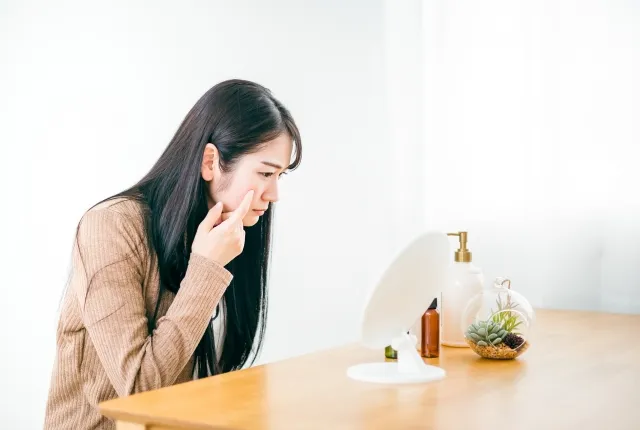
“Even though acne has healed, the scars do not disappear,” “Even when covered with makeup, the redness or brown spots still stand out”—many people struggle with such concerns. Acne scars significantly affect appearance and are one of the symptoms that can easily lead to complex feelings. Moreover, once they remain, it can take a long time for them to fade naturally, and in some cases, they may become permanent.
However, by adopting proper brightening skincare, it is entirely possible to make acne scars less noticeable. Furthermore, combining not only skincare but also lifestyle habits and medical treatments can be expected to achieve even greater improvement.
This article provides a thorough explanation of the types and causes of acne scars, the ingredients effective for brightening, how to choose skincare items, at-home care methods, and even treatments available at dermatology clinics and cosmetic clinics. It includes many tips that you can start applying today, so please use it as a reference.
Chapter 1: What Are Acne Scars? A Thorough Explanation of Their Types and Causes
1-1. Types of Acne Scars
Although we refer to them collectively as acne scars, their forms vary. Generally, they can be divided into the following three types.
- Redness-remaining type (post-inflammatory erythema)
Even after the inflammation from acne has healed, the capillaries remain dilated, leaving redness on the skin. - Type that remains as brown or dark spots (post-inflammatory hyperpigmentation)
Excess melanin is produced due to the irritation from inflammation, leaving pigmentation on the skin like spots. - Indented (crater-like) scars
The inflammation from acne damages the collagen in the dermis, leaving sunken marks.
Each type differs not only in appearance but also in the methods of improvement and the care required.
1-2. The Mechanism of Acne Scar Formation
Acne scars remain as a result of the skin’s repair process not proceeding smoothly after inflammation.
- Redness: dilation of capillaries and the persistence of inflammatory cells.
- Hyperpigmentation: melanocytes overreact due to ultraviolet rays and inflammatory stimuli.
- Indented scars: destruction of collagen fibres and incomplete repair.
The skin naturally has the ability to regenerate through turnover. However, strong inflammation or recurring acne can overwhelm its repair capacity, causing scars to remain for a long time.
1-3. Cases Where Acne Scars Fade Naturally and Cases Where They Persist
If the redness or light hyperpigmentation is mild, it may naturally fade over several months to about a year. In particular, during periods of active metabolism, such as the early twenties, the skin’s recovery ability is high, making improvement easier.
On the other hand, indented scars and deep hyperpigmentation are difficult to heal naturally, and there are limits to what self-care alone can achieve. Therefore, “starting care early once scars become noticeable” is the quickest way to improve acne scars.
1-2. The Mechanism of Acne Scar Formation
Acne is inflammation of the pores, and the stronger the inflammation, the more severe the damage to the skin tissue.
- Redness: even after the inflammation subsides, the blood vessels remain dilated.
- Hyperpigmentation: melanocytes are stimulated by inflammation, causing melanin to deposit. Ultraviolet rays can worsen it.
- Indented scars: the inflammation reaches the dermis, and after collagen is destroyed, repair occurs incompletely.
Understanding these mechanisms is the first step toward improvement.
Chapter 2: Lifestyle Habits That Worsen Acne Scars
Acne scars can worsen if they are “neglected” or “treated incorrectly.”
- Effects of Ultraviolet Rays: UV rays promote melanin production, deepening hyperpigmentation.
- Friction and irritation: harsh cleansing, scrubs, or rubbing with a towel can damage the skin.
- Disrupted lifestyle habits: lack of sleep and stress disturb skin turnover, making scars more likely to remain.
Daily small efforts directly influence the speed of improvement.
Chapter 3: Brightening Ingredients Effective for Acne Scars
To lighten acne scars, proper knowledge of brightening ingredients is essential.
- Vitamin C derivatives
They suppress melanin production and, through their antioxidant effects, help keep the skin bright. They are also effective for improving redness. - Vitamin C derivatives
They suppress melanin production and, through their antioxidant effects, help keep the skin bright. They are also effective for improving redness. - Niacinamide
It inhibits the transfer of melanin while strengthening the skin’s barrier function. It is relatively easy to use even on sensitive skin.
Continuous use is essential, and it is ideal to assess the effects over a period of several weeks to several months.
Chapter 4: Brightening Skincare You Can Practice at Home
Daily efforts at home form the foundation for improving acne scars.
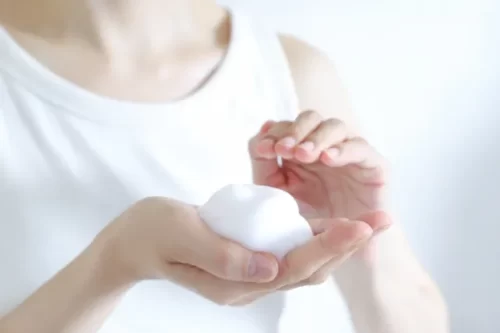
- Gentle cleansing
Use a mild cleanser that removes only excess sebum rather than a strong one. - Thorough moisturisation
Maintains the skin’s barrier function and aids the penetration of active ingredients. Formulations containing ceramides or hyaluronic acid are effective. - UV protection
Ultraviolet rays are the biggest enemy of scars. Choose SPF and PA levels according to your skin type and lifestyle, and be sure to reapply throughout the day.
Chapter 5: Recommended Categories of Brightening Skincare Products
Brightening serums
Those containing vitamin C derivatives or niacinamide are recommended. They are expected to enhance the skin’s brightness.
Retinol creams
They promote skin turnover and help eliminate melanin. They also improve wrinkles, making them suitable for adult skin concerns.
UV protection products
Sunscreen is an essential item. Using different products for daily use and outdoor activities is effective.
Chapter 6: Acne Scar Treatments at Dermatology and Cosmetic Clinics and Common Questions

At-home care to lighten acne scars can be highly effective through daily consistency. However, in cases such as “deep hyperpigmentation” or “pronounced indents,” self-care alone may be insufficient. In such situations, professional treatments available at dermatology or cosmetic clinics can be relied upon. Here, we provide a detailed introduction to representative treatments and also address common questions readers often have.
6-1. Major Treatments at Dermatology and Cosmetic Clinics
Laser treatments
There are several types of lasers, which are used according to the specific condition.
- Laser toning: uses low-power lasers to gradually break down melanin, improving hyperpigmentation. Effective for redness and brown marks.
- Fractional laser: creates tiny pinpoint damage in the skin, stimulating self-repair to regenerate collagen. Effective for improving indents and crater-like scars.
Chemical peels
Using salicylic acid or glycolic acid to exfoliate the stratum corneum and promote skin turnover. It has relatively little downtime, making it accessible for first-time users.
Dermapen / Microneedle RF
Uses ultra-fine needles to create microchannels in the skin, promoting collagen production. Simultaneous introduction of active agents can also enhance brightening effects.
Topical treatments
- Topical hydroquinone: a prescription medication with strong brightening effects.
- Topical tretinoin: strongly promotes skin turnover and helps eliminate melanin.
These must be used under a physician’s supervision, and it is important to start only after receiving an explanation of potential side effects.
6-2. Key Points for Choosing a Treatment
The choice of treatment depends on the type of acne scars.
- Predominantly redness → Laser toning or light-based treatments (IPL) are effective.
- Brown or dark spots → Topical hydroquinone or tranexamic acid, and laser treatments.
- Indents → Fractional lasers or Dermapen are the first-choice treatments.
Cost, downtime, and number of sessions are also important factors to consider. For example, laser toning requires multiple sessions costing several tens of thousands of yen, while fractional lasers have a higher burden per session but tend to show more noticeable results.
6-3. Frequently Asked Questions (Thoroughly Explained in Q&A Format)
Q1. How long does it take to notice results?
→ For hyperpigmentation, you may notice a slight fading after just a few sessions. However, completely eliminating it typically takes about three to six months. For indents, since collagen production in the skin requires time, treatment is generally continued over a period of six months to a year.
Q2. Is the procedure painful?
→ Laser treatments and Dermapen procedures can cause a tingling or stinging sensation during the session, but most clinics use numbing creams, making it tolerable. Peels and light-based treatments usually cause only mild stinging.
Q3. How long is the downtime?
→ Laser toning has almost no downtime. Fractional lasers and Dermapen treatments may cause redness for several days. It is recommended to avoid these procedures just before important events.
Q4. Can people with sensitive skin undergo these treatments?
→ Yes. The physician will examine your skin condition and choose a gentler method. For sensitive skin, peels or laser treatments are usually started at a lower intensity, gradually increasing while monitoring the skin’s response.
Q5. How much does it cost?
→ Costs vary depending on the type of treatment.
- Laser toning: 10,000–30,000 yen per session.
- Fractional laser: 30,000–80,000 yen per session.
- Dermapen: 20,000–50,000 yen per session.
Since multiple sessions are usually required, the total cost can amount to several hundred thousand yen.
Q6. Can at-home care and clinic treatments be used together?
→ Absolutely. In fact, combining them is recommended to enhance effectiveness. Undergo intensive treatments at the clinic while protecting your skin at home with vitamin C derivatives, sunscreen, and other care.
Q7. Can acne scars be completely eliminated?
→ Redness and hyperpigmentation can improve significantly and often become barely noticeable. However, deep indents or keloid-like scars can be difficult to eliminate completely. Even in such cases, it is usually possible to make them much less noticeable.
6-4. Precautions When Undergoing Professional Treatments
- Always receive a physician’s diagnosis (using strong medications on your own carries a risk of worsening the condition).
- After treatment, thoroughly protect your skin from UV rays (to prevent hyperpigmentation).
- Do not rush the process; focus on “continuing” the treatment consistently.
Cosmetic treatments are not “magical procedures with instant effects” but rather “treatments that support the skin’s natural regeneration.” Therefore, instead of expecting dramatic results in the short term, approaching it with a long-term perspective is the key to success.
Combine at-home care with professional treatments to steadily improve acne scars.
Improving acne scars is more effective when daily brightening skincare is combined with clinic treatments.
- Redness and hyperpigmentation improve more quickly with a combination of at-home care and laser toning.
- Indented, crater-like scars can be addressed at the root with Dermapen or fractional laser treatments.
- At home, consistently using sunscreen and brightening serums forms the foundation for all care.
“Continuing at-home care while incorporating professional treatments as needed” is the quickest way to lighten acne scars. By approaching it patiently with the right knowledge and methods, you can achieve brighter, smoother skin.
Summary
Once acne scars form, they can take a long time to fade naturally, but with proper care, they can be reliably lightened. The key points are:
- Thoroughly protecting your skin from UV rays.
- Choosing brightening ingredients suited to your skin type and using them consistently.
- If improvement is difficult, seek treatments at dermatology or cosmetic clinics.
These are the three key points.
By incorporating “skincare you can start today” and gradually building up small changes, you can regain bright, smooth skin.




 Toll-free