

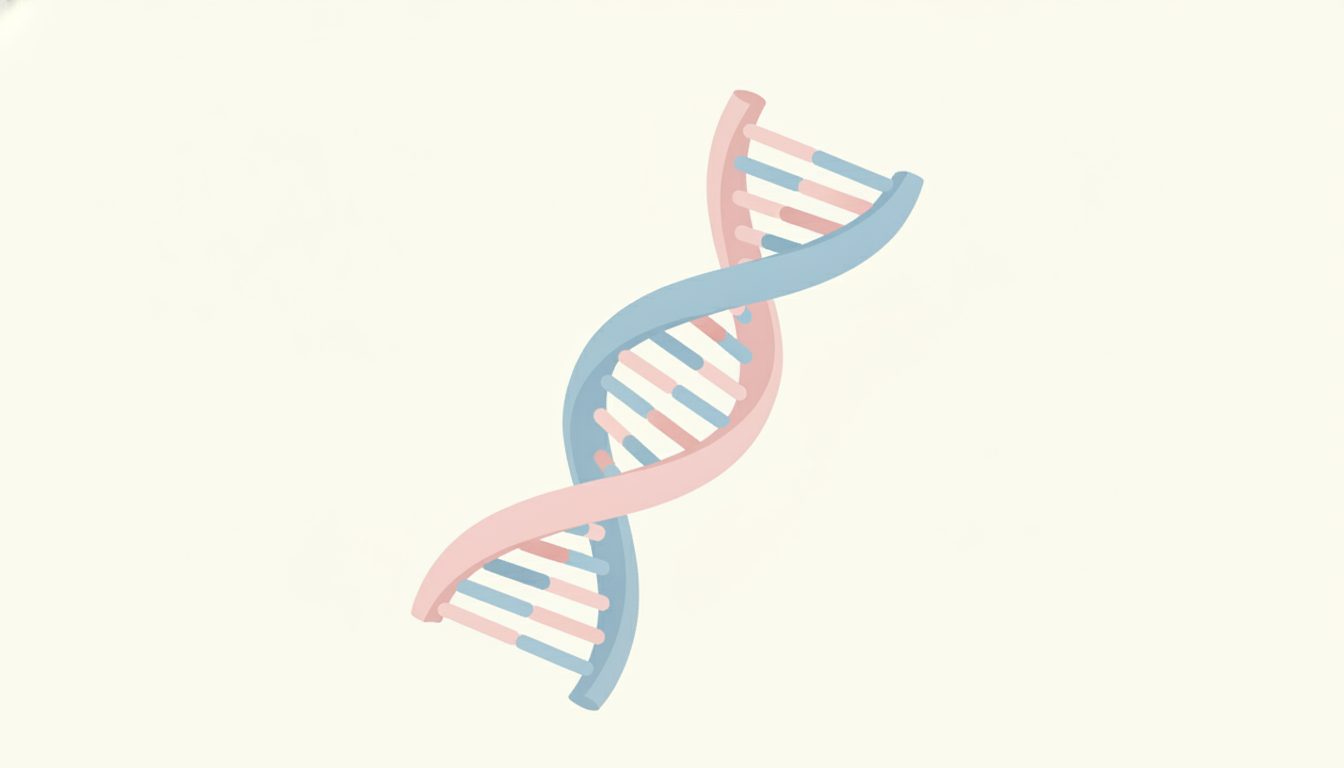
「DNAとRNA、名前は似ているけれど何が違うの?」——学校の生物やニュースのmRNAワクチンの話題で、そんな疑問を持った方は多いはずです。どちらも遺伝にかかわる分子ですが、糖や塩基の種類、鎖の構造、体の中での役割まで、はっきりとした違いがあります。この記事では、DNAとRNAの違いを比較表で一目で整理しながら、それぞれの構造・役割・働きを、専門用語をかみくだいてわかりやすく解説します。
📌 この記事でわかること
- DNAとRNAの違いを「糖・塩基・構造・役割・存在場所」で比べた早見表
- DNAが遺伝情報の設計図として働くしくみと二重らせんの意味
- RNAの種類(mRNA・tRNA・rRNA)とそれぞれの役割
- 転写と翻訳で情報が流れる「セントラルドグマ」の全体像
- mRNAワクチンやDNAの書き換えをめぐる、よくある誤解の正しい理解
DNAとRNAの違いを一覧で比較
DNAとRNAの最大の違いは、DNAが遺伝情報を長期保存する二本鎖の分子であるのに対し、RNAはその情報を写し取って使う一本鎖の分子だという点です。細かな違いは、含まれる糖・塩基・構造・役割・存在する場所に分かれます。まずは全体像を早見表で押さえておきましょう。
| 項目 | DNA(デオキシリボ核酸) | RNA(リボ核酸) |
|---|---|---|
| 糖 | デオキシリボース | リボース |
| 塩基 | A・T・G・C(チミンを使う) | A・U・G・C(チミンの代わりにウラシル) |
| 構造 | 二本鎖の二重らせん | 基本は一本鎖 |
| おもな役割 | 遺伝情報の長期保存 | 情報の伝達とタンパク質合成 |
| 存在する場所 | おもに細胞核 | 核・細胞質の両方 |
| 安定性 | 安定して壊れにくい | 分解されやすく短命 |
ポイントは、DNAとRNAが「対立する存在」ではなく「役割分担するパートナー」だという点です。DNAが金庫にしまった原本の設計図なら、RNAはその日必要なページだけをコピーして現場へ届けるメモ。この関係を頭に入れておくと、以降の説明がすっと入ってきます。
DNAとは?遺伝情報を保存する設計図

DNAは、体をつくるための全遺伝情報を保存している、生命の設計図にあたる分子です。正式名称はデオキシリボ核酸(Deoxyribonucleic Acid)。細胞のひとつひとつに、同じ設計図がていねいにしまわれています。
二重らせんという構造の意味
DNAは2本の鎖がねじれ合った二重らせんという形をしています。鎖の内側では、アデニン(A)はチミン(T)と、グアニン(G)はシトシン(C)と、決まった相手同士でくっつきます。この「相補性」があるおかげで、片方の鎖の情報からもう片方を正確に復元できます。細胞が分裂して増えても遺伝情報がコピーされ続けるのは、この構造のおかげです。
DNAが壊れにくく長持ちする理由
DNAが糖として持つのはデオキシリボースです。RNAのリボースより酸素がひとつ少なく、そのぶん化学的に安定します。二本鎖でお互いを守り合う構造も相まって、DNAは損傷に強く、長期保存に向いた分子になりました。大切な原本を金庫にしまうように、遺伝情報を安全に守る役目を担っています。DNAが親から子へどう受け継がれるかは、ミトコンドリアDNAと母系遺伝を解説した記事もあわせてご覧ください。
RNAとは?情報を伝えてタンパク質をつくる

RNAは、DNAに保存された情報を写し取り、タンパク質をつくる現場へ届ける「働き手」の分子です。正式名称はリボ核酸(Ribonucleic Acid)。基本は一本鎖で、必要なときにつくられ、役目を終えるとすぐに分解されます。
RNAがDNAと大きく違うのは塩基です。DNAで使われるチミン(T)の代わりに、RNAはウラシル(U)を使います。私自身、学生のころは「なぜ似た分子なのにわざわざ塩基を変えるのか」と不思議でした。X上でも生物学に詳しい@gaoyuanshe34721さんが「塩基が違う。チミンがなくてウラシルがRNA」と、DNAとRNAの見分け方を端的にまとめていました。この一点を覚えておくだけでも、両者を取り違えにくくなります。
mRNA(メッセンジャーRNA)とは
mRNAは、DNAから写し取った遺伝情報を運ぶ設計図のコピーです。核の中でDNAの必要な部分だけをうつし取り、タンパク質をつくるリボソームへ届けます。ニュースで話題になったmRNAワクチンは、この「設計図のコピーを届ける」性質を応用し、体の中でウイルスの一部だけをつくらせて免疫の準備を促すしくみです。
tRNAとrRNAの役割
RNAにはmRNA以外にも種類があり、それぞれ分担して働きます。おもな3種類を表で整理します。
| RNAの種類 | 正式名称 | おもな役割 |
|---|---|---|
| mRNA | メッセンジャーRNA | DNAの情報を写し取り、リボソームへ運ぶ指令書 |
| tRNA | トランスファーRNA | 指令に合ったアミノ酸を運び、タンパク質の材料をそろえる |
| rRNA | リボソームRNA | リボソームを構成し、翻訳が進む作業台になる |
mRNAが「指令書」、tRNAが「材料を運ぶ配達員」、rRNAが「組み立ての作業台」。3者が息を合わせることで、はじめてタンパク質が完成します。遺伝子のしくみをもっと基礎から知りたい方は、遺伝子の基礎知識をまとめた記事も参考になります。
DNAとRNAの働きの違い:転写と翻訳で情報が流れる
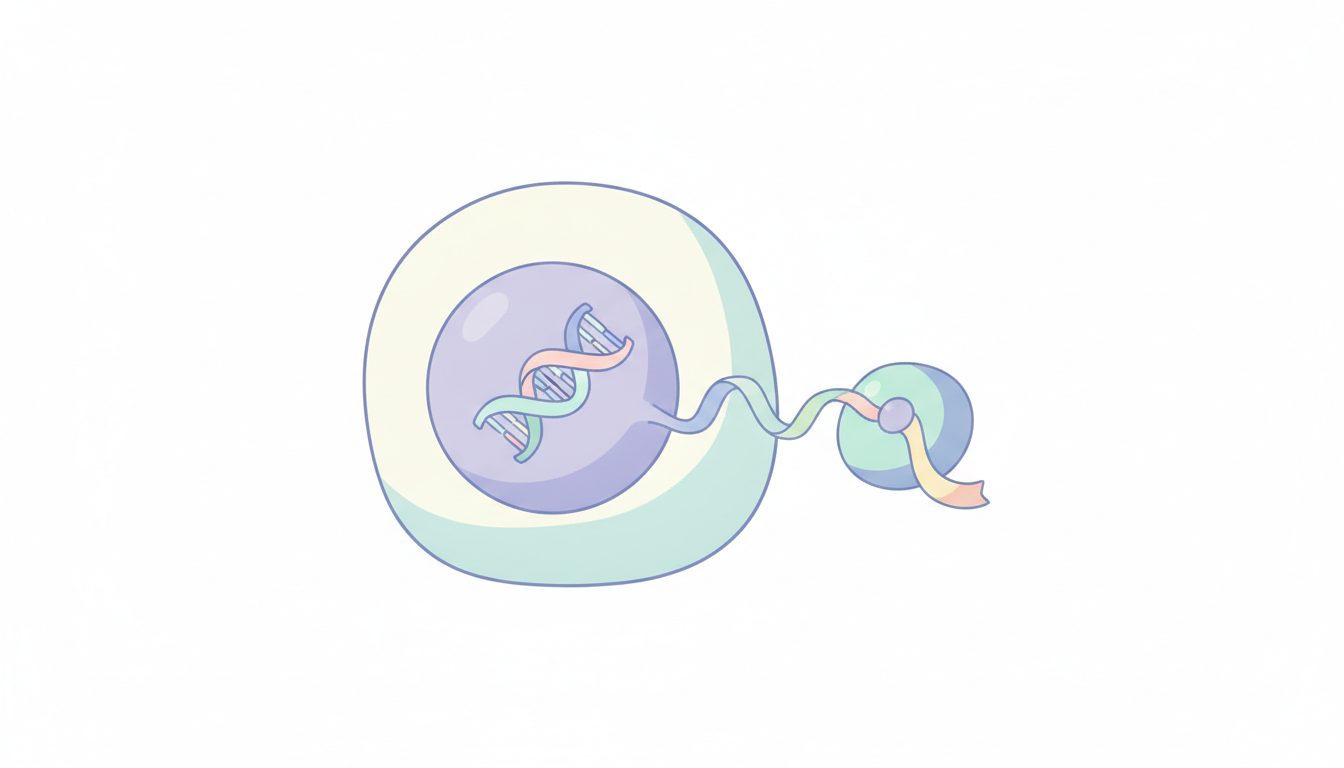
DNAとRNAは、遺伝情報が「DNA→RNA→タンパク質」と一方向に流れる中で、それぞれ役割を分けて働きます。この情報の流れはセントラルドグマと呼ばれ、生命のもっとも基本的なしくみのひとつです。流れは大きく2つの段階に分かれます。
転写:DNAの情報をRNAに写し取る
転写は、DNAの必要な部分をmRNAに写し取る段階です。RNAポリメラーゼという酵素が、DNAの塩基配列を読み取りながら対応するmRNAを合成します。私はこの段階を、原本の設計図を金庫に残したまま必要なページだけコピーして持ち出す作業として、いつも思い浮かべています。
翻訳:RNAの情報からタンパク質をつくる
翻訳は、mRNAの情報をもとにタンパク質を組み立てる段階です。塩基3つの並び(コドン)がひとつのアミノ酸を指定し、tRNAがそのアミノ酸を運んできます。指定どおりにアミノ酸がつながっていくことで、体を動かす無数のタンパク質が生まれます。DNAが保存、RNAが伝達と生産。役割分担がはっきりしていますね。
DNAとRNAをめぐるよくある誤解
「食べ物のRNAで自分のDNAが書き換わる」といった心配は、通常の生活では起こりません。口から入ったDNAやRNAは消化の過程で細かく分解され、そのまま遺伝情報として取り込まれることはないためです。SNSでも高校生物の知識をもとに、この種の誤解をやんわり指摘する投稿を見かけます。
mRNAワクチンについても同じ考え方が当てはまります。ワクチンのmRNAは細胞質で短期間だけ働き、役目を終えると分解されます。mRNAが核内のDNAに入り込んで書き換える、という流れは起こりにくいと説明されています。DNAとRNAが「保存」と「使い捨てのコピー」に役割分担していることを思い出すと、こうした誤解も整理しやすくなります。遺伝と体質の関係をさらに知りたい方は、劣性遺伝(潜性遺伝)のしくみを解説した記事もどうぞ。
DNAとRNAの違いに関するよくある質問
DNAとRNAの一番の違いは何ですか?
役割の違いが最大のポイントです。DNAは遺伝情報を長期保存する二本鎖の分子で、RNAはその情報を写し取って使う一本鎖の分子です。構造の面では、糖がデオキシリボースかリボースか、塩基にチミンを使うかウラシルを使うかでも見分けられます。
DNAとRNAで塩基はどう違いますか?
4種類のうち3つ(アデニン・グアニン・シトシン)は共通です。違うのは残りのひとつで、DNAはチミン(T)、RNAはウラシル(U)を使います。「チミンがなければRNA」と覚えると、両者を取り違えにくくなります。
mRNAとは何ですか?
mRNA(メッセンジャーRNA)は、DNAの遺伝情報を写し取ってタンパク質合成の現場へ運ぶ、いわば設計図のコピーです。核の中でDNAの必要な部分だけをうつし取り、リボソームへ届けて、そこでタンパク質がつくられます。
DNAとRNAはどちらが先にできたのですか?
生命の起源では、RNAが先に働いていたとする「RNAワールド仮説」が有力とされています。RNAは情報を保存する役目と、化学反応を助ける役目の両方をこなせるためです。その後、より安定なDNAが情報保存の役割を引き継いだと考えられています。
食べ物のDNAやRNAで自分の遺伝子は変わりますか?
通常は変わりません。食品に含まれるDNAやRNAは、消化の過程で細かく分解され、そのまま自分の遺伝情報に組み込まれることはないためです。安心して食事を楽しんでください。
まとめ:DNAは設計図、RNAはその情報を運ぶ働き手
DNAとRNAは、遺伝情報を「保存する側」と「使う側」に役割を分けたパートナーです。DNAはデオキシリボースと二重らせんで情報を安定して守り、RNAはリボースと一本鎖でその情報をすばやく運び、タンパク質づくりを担います。塩基の違いは、DNAがチミン、RNAがウラシルという一点。
転写でDNAからRNAへ、翻訳でRNAからタンパク質へ。この流れを一度つかんでしまえば、mRNAワクチンのニュースも、DNA検査でわかることも、ぐっと理解しやすくなります。自分の体の設計図を知る第一歩として、遺伝子検査を活用してみてはいかがでしょうか。先天的な体質や病気のリスクについては、遺伝子検査でわかることをまとめた記事もご覧ください。
参考文献
- MedlinePlus Genetics(米国国立医学図書館)「What is DNA?」https://medlineplus.gov/genetics/understanding/basics/dna/
- National Human Genome Research Institute「Deoxyribonucleic Acid (DNA)」https://www.genome.gov/genetics-glossary/Deoxyribonucleic-Acid
- National Human Genome Research Institute「RNA (Ribonucleic Acid)」https://www.genome.gov/genetics-glossary/RNA-Ribonucleic-Acid