

遺伝子検査と腸内フローラの関係性

Posted on 2024年 11月 14日

この記事の概要

腸内フローラは健康維持に重要な役割を果たします。ヒロクリニックの遺伝子検査で腸内フローラの特性を把握し、個別化された健康改善を目指しましょう。


はじめに

近年、遺伝子検査の技術が進化し、個々の体質や疾患リスクを詳しく知ることが可能になりました。同時に、腸内フローラ(腸内細菌叢)が健康や病気に及ぼす影響についての研究も急速に進んでいます。特に、遺伝子と腸内フローラの関係性に注目が集まり、「自分の遺伝子によって、腸内フローラの構成が決まるのか?」 あるいは 「腸内フローラが遺伝子の発現に影響を及ぼすのか?」 という疑問が浮上しています。

本記事では、遺伝子検査の基本から腸内フローラとの関連性までを詳しく解説し、最新の研究結果を交えて科学的な視点から深掘りします。


遺伝子検査とは?

1. 遺伝子の基本的な役割

DNA(デオキシリボ核酸)は、生物の設計図とも言える分子で、私たちの体のあらゆる特徴を決定づけます。DNAは約30億塩基対から構成され、その中の特定の配列(遺伝子)がタンパク質をコードすることで、私たちの体の機能を調整しています。

2. 遺伝子検査の仕組み

遺伝子検査では、唾液や血液などのサンプルからDNAを抽出し、特定の遺伝子の塩基配列を解析します。この解析によって、個人の体質や疾患リスク、代謝の特徴などを知ることができます。

3. 遺伝子検査でわかること

遺伝子検査を活用すると、以下のような情報を得ることが可能です。

  • 病気のリスク(糖尿病、がん、アルツハイマー病など)
  • 体質(太りやすさ、筋肉のつきやすさ、アルコール耐性など)
  • 栄養素の代謝(カフェイン、ビタミンD、脂質代謝など)
  • 薬の効きやすさ(特定の薬剤の代謝速度)

これにより、個々に最適な健康管理や食生活の改善が可能となります。


腸内フローラとは?

1. 腸内フローラの構成

腸内には100兆個以上の細菌が生息しており、それらは「腸内フローラ(腸内細菌叢)」と呼ばれています。腸内フローラは、大きく以下の3つのグループに分類されます。

  • 善玉菌(ビフィズス菌、乳酸菌など):腸内環境を整え、免疫を強化
  • 悪玉菌(ウェルシュ菌、大腸菌など):有害物質を作り出し、腸内環境を悪化
  • 日和見菌(バクテロイデス、クロストリジウムなど):環境によって善玉菌・悪玉菌のどちらにもなる

2. 腸内フローラの役割

腸内フローラは、以下のような健康への影響を持っています。

  • 消化吸収の促進(食物繊維の分解、短鎖脂肪酸の産生)
  • 免疫機能の調整(病原菌の抑制、腸管免疫の活性化)
  • 脳との相互作用(腸脳相関によるメンタルヘルスの影響)
  • 代謝と体重管理(肥満との関連性)

腸内フローラは、食事や生活習慣によって変化し、個々の健康状態に大きく影響を与えます。


遺伝子と腸内フローラの関係性

1. 遺伝子が腸内フローラの構成に与える影響

近年の研究では、腸内フローラの構成が遺伝的要因によってある程度決まることが示唆されています。

・遺伝子多型と腸内細菌の関連
特定の遺伝子変異(SNPs:一塩基多型)が腸内フローラの多様性や特定の菌の存在に影響を与えることがわかっています。例えば、FUT2遺伝子の変異がビフィズス菌の定着に影響を与えることが知られています(参考:https://www.ncbi.nlm.nih.gov/pmc/articles/PMC5571975/)。

・遺伝性疾患と腸内フローラ
潰瘍性大腸炎やクローン病といった腸の疾患は、遺伝的要因と腸内フローラの変化が関与していることが明らかになっています。

2. 腸内フローラが遺伝子の発現に与える影響

一方で、腸内フローラがエピジェネティクス(遺伝子の発現制御) に影響を与える可能性も示唆されています。

・短鎖脂肪酸の影響
腸内細菌が作り出す短鎖脂肪酸(酪酸、酢酸、プロピオン酸など)は、DNAメチル化やヒストン修飾といったエピジェネティックな変化を引き起こし、炎症や代謝に関わる遺伝子の発現を調整すると考えられています(参考:https://www.nature.com/articles/s41575-018-0061-2)。

・腸内フローラと神経伝達物質
腸内細菌は、セロトニンやドーパミンといった神経伝達物質の生成にも関与しており、これが精神疾患やストレス応答に影響を及ぼすことが示唆されています。


遺伝子検査と腸内フローラ解析の活用
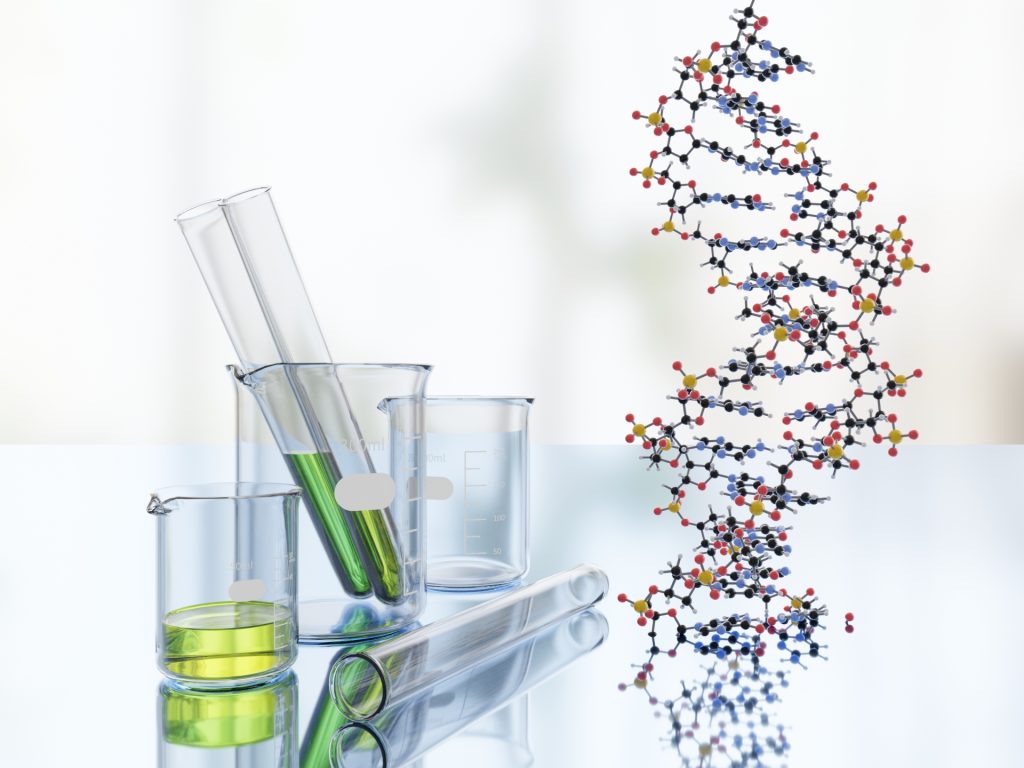
近年、遺伝子検査と腸内フローラ解析を組み合わせることで、よりパーソナライズされた健康管理が可能になっています。例えば:

  • 個人の遺伝情報を基に、最適な腸活を提案(食事指導、プロバイオティクスの選択)
  • 腸内フローラの解析結果から、将来的な疾患リスクを予測
  • 個人に適した栄養素の摂取バランスを提案

これにより、個別最適化された健康管理が可能となり、病気予防やウェルネス向上に貢献します。

腸内フローラの種類と個人差

腸内フローラの構成は個人によって大きく異なります。これは、遺伝的要因だけでなく、生活習慣や食生活、環境要因が関与しているためです。腸内フローラの組成は、生まれた直後から母親の産道や母乳を通じて細菌が移行することで決まり、成長するにつれて食生活や生活環境によって変化します。

1. 腸内フローラのタイプ別分類

最新の研究では、腸内フローラのパターンは大きく3つのタイプに分類されることが示されています。

  • エンテロタイプ1(バクテロイデス型)
    • 肉類や脂質を多く摂取する欧米型の食生活に多い
    • タンパク質や脂質の代謝が活発
    • 炎症性腸疾患や糖尿病との関連が示唆されている
  • エンテロタイプ2(プレボテラ型)
    • 植物性食品や炭水化物を多く摂取する人に多い
    • 短鎖脂肪酸を多く生成し、腸内環境を良好に保つ
    • 心血管疾患のリスク低下と関連
  • エンテロタイプ3(ルミノコッカス型)
    • バランスの取れた食生活をしている人に多い
    • 食物繊維の発酵に関与し、腸内のpHバランスを維持

これらのタイプはある程度遺伝的に決まる部分もあるものの、食生活やプロバイオティクスの摂取によってある程度変化させることが可能です。

2. 遺伝子が腸内フローラの多様性に与える影響

遺伝子が腸内フローラの多様性(菌の種類やバランス)に影響を与えることが、いくつかの研究で示されています。

例えば、ある双生児の研究では、一卵性双生児と二卵性双生児を比較したところ、一卵性双生児の方が腸内フローラの組成が似ていることが確認されました(参考:https://www.nature.com/articles/nature07540)。この結果から、遺伝子が腸内フローラの構成にある程度関与していることが示唆されています。

また、特定の遺伝子が腸内細菌の種類や多様性に影響を与えることも判明しています。例えば、LCT(ラクターゼ)遺伝子の多型が乳糖を分解できるかどうかを決定し、それによって腸内に存在する細菌の種類にも違いが生じることが分かっています(参考:https://www.cell.com/cell/pdf/S0092-8674(18)30155-2.pdf)。


腸内フローラと疾患の関連性

肥満 男性

1. 腸内フローラと肥満・糖尿病

腸内細菌の構成は、肥満や糖尿病と密接に関係しています。特に、フィルミクテス門(Firmicutes)とバクテロイデス門(Bacteroidetes)の比率が重要視されています。

  • フィルミクテス門が多い人:エネルギー吸収効率が高く、肥満になりやすい
  • バクテロイデス門が多い人:エネルギー吸収効率が低く、痩せやすい

この比率は、食生活の影響を受けるだけでなく、遺伝子によってもある程度決まることが研究で示されています。例えば、FTO遺伝子(肥満関連遺伝子)を持つ人は、フィルミクテス門の割合が高い傾向があることが報告されています(参考:https://www.ncbi.nlm.nih.gov/pmc/articles/PMC4270213/)。

また、糖尿病患者の腸内フローラを調べた研究では、健常者と比べて腸内の多様性が低下していることが確認されました。特に、酪酸を生成する細菌(Faecalibacterium prausnitzii)が少ないことが2型糖尿病のリスクと関連していると考えられています。

2. 腸内フローラと精神疾患

腸内フローラと脳は腸脳相関(gut-brain axis) を通じて密接に関係しており、腸内環境がメンタルヘルスにも影響を与えることが分かっています。

  • うつ病や不安障害の患者は腸内フローラの多様性が低い
  • 特定の乳酸菌(Lactobacillus)やビフィズス菌(Bifidobacterium)が減少している

特に、腸内細菌が生成する短鎖脂肪酸(酪酸)や神経伝達物質(GABA、セロトニン)の産生量が低下することで、ストレス耐性が低くなったり、うつ症状が悪化することが研究で示されています(参考:https://www.nature.com/articles/s41564-018-0337-x)。

興味深いことに、遺伝子と腸内フローラの相互作用によって、精神疾患のリスクが変わる可能性も指摘されています。例えば、BDNF遺伝子(脳由来神経栄養因子)と腸内細菌の組成が相互に影響を及ぼし、認知機能やストレス応答に関与することが分かっています。


パーソナライズド医療への応用
たくさんの新鮮な野菜

遺伝子検査と腸内フローラ解析を組み合わせることで、個別最適化された健康管理が可能になります。

  • 遺伝子型に基づいた食事療法の提案(例:LCT遺伝子の多型に応じた乳製品の摂取推奨)
  • 腸内フローラの状態に応じたプロバイオティクスの選択
  • 疾患リスクを予測し、個別の予防策を立案

このように、遺伝情報と腸内フローラの相互作用を考慮したアプローチにより、より精密なパーソナライズド医療が実現しつつあります。

腸内フローラの変化と加齢の関係

腸内フローラの構成は、生涯を通じて変化します。特に加齢に伴い腸内フローラの多様性が低下することが知られています。これは、免疫機能の低下や食生活の変化、運動量の減少などが影響していると考えられています。

1. 幼少期の腸内フローラ

生まれたばかりの赤ちゃんの腸内は無菌状態ですが、出産を通じて母親の産道や皮膚に存在する細菌が移行し、腸内フローラが形成されます。特に母乳に含まれるオリゴ糖はビフィズス菌を増やす作用があり、母乳育児の赤ちゃんではビフィズス菌が優勢になることが多いです。

また、出生方法が腸内フローラに影響を与えることも報告されています。自然分娩で生まれた赤ちゃんは母親の腸内細菌を受け継ぎやすいのに対し、帝王切開で生まれた赤ちゃんは皮膚由来の細菌が多く、腸内フローラの発達が異なる傾向にあります。この違いが免疫機能の発達やアレルギー発症リスクに関与する可能性が示唆されています(参考:https://www.nature.com/articles/s41586-019-1560-1)。

2. 成人期の腸内フローラ

成人の腸内フローラは比較的安定しており、食生活やストレス、運動習慣などの影響を受けながらも、ある程度のバランスを保ちます。

特に、腸内フローラのバランスは食事の内容によって大きく変わります。例えば:

  • 食物繊維が豊富な食事 → 善玉菌(ビフィズス菌やバクテロイデス)が増える
  • 高脂肪・高タンパクの食事 → 悪玉菌(クロストリジウム属など)が増える

3. 高齢期の腸内フローラ

加齢とともに腸内フローラの構成は変化し、多様性が低下していきます。特に、酪酸を生成する細菌(Faecalibacterium prausnitziiなど)が減少することが分かっています。

酪酸は腸のバリア機能を維持し、炎症を抑える役割を持っています。そのため、加齢による酪酸産生菌の減少は、大腸炎や過敏性腸症候群(IBS)、さらには認知機能低下にも関連すると考えられています(参考:https://www.ncbi.nlm.nih.gov/pmc/articles/PMC5641835/)。


遺伝子と腸内フローラの関係に関する最新の研究

研究室 女性

近年、腸内フローラの研究が急速に進んでおり、遺伝子と腸内細菌の相互作用に関する知見が増えています。以下はいくつかの注目すべき研究結果です。

1. 遺伝子が腸内細菌の定着を決定する可能性

ハーバード大学とマサチューセッツ工科大学(MIT)の研究では、特定の遺伝子が特定の腸内細菌の定着に影響を与えることが明らかになりました。

この研究では、数千人の被験者の遺伝子と腸内フローラを比較したところ、LCT遺伝子(ラクターゼ遺伝子)を持つ人は乳製品を摂取できるため、乳糖を分解する細菌が腸内に多く存在することが分かりました(参考:https://www.science.org/doi/10.1126/science.aar6231)。

また、FUT2遺伝子の変異を持つ人はビフィズス菌の定着が困難であることも報告されています。この遺伝子は腸内のムチン(粘液)を生成する働きがあり、ムチンの構成が変わることで特定の細菌が定着しやすくなると考えられています。

2. 腸内フローラがエピジェネティクスに与える影響

エピジェネティクス(遺伝子の発現制御)と腸内フローラの関係も注目されています。

例えば、腸内細菌が産生する短鎖脂肪酸(SCFA)が、DNAメチル化やヒストン修飾といったエピジェネティックな変化を誘導することが示唆されています。これにより、炎症関連遺伝子の発現が抑制される可能性があるのです。

また、腸内細菌が作る代謝物ががん抑制遺伝子(p53など)の活性を調整することも報告されています。特に、大腸がん患者では腸内フローラのバランスが崩れていることが多く、炎症を引き起こす細菌(Fusobacterium nucleatum など)の増加ががんの進行を促す可能性が指摘されています(参考:https://www.nature.com/articles/s41591-019-0637-7)。


腸内フローラの改善と遺伝的要因の活用
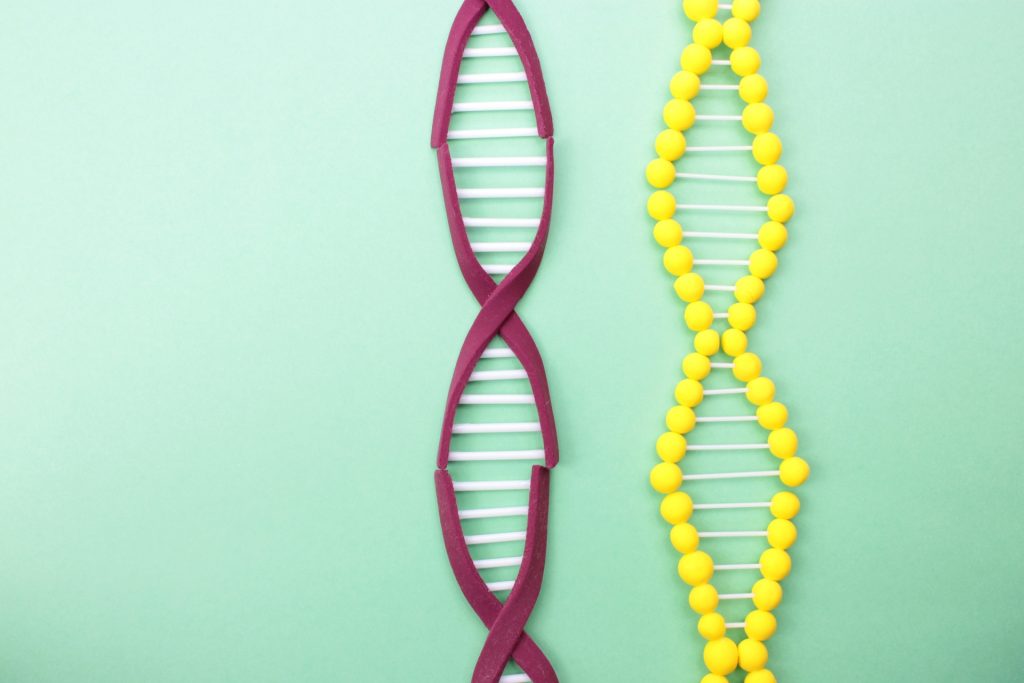
DNA45

遺伝子検査と腸内フローラ解析を組み合わせることで、より精密な健康管理が可能になります。特に、プロバイオティクスやプレバイオティクスを活用することで、遺伝的に不利な要素を補うことができる可能性があります。

例えば、FUT2遺伝子変異を持つ人はビフィズス菌の定着が難しいため、特定のプレバイオティクス(オリゴ糖など)を摂取することで菌の増殖を促進することができます。また、LCT遺伝子によって乳糖を分解できない人は、乳酸菌を多く含む発酵食品(ヨーグルト、キムチなど)を摂取することで腸内環境を改善することが可能です。

腸内フローラと免疫システムの相互作用

腸内フローラは、免疫システムと密接な関係を持っています。腸は「第二の脳」とも呼ばれるだけでなく、人体の免疫細胞の約70%が腸に存在しており、外部からの病原体に対する第一線の防御機構を担っています。腸内フローラが適切に機能することで、免疫バランスを維持し、自己免疫疾患やアレルギーの発症リスクを低減することができます。

1. 腸内フローラと自然免疫の関係

腸内細菌は、免疫システムにとって重要な信号を送り、免疫細胞の働きを調整します。特に、腸内フローラは自然免疫と適応免疫の両方に影響を与えることがわかっています。

  • 自然免疫(生まれつき備わっている免疫システム)
    • 腸内細菌は、腸管上皮細胞やマクロファージと相互作用し、炎症反応を制御する。
    • 免疫細胞の一種であるToll様受容体(TLR)が腸内細菌のパターンを認識し、適切な免疫応答を誘導する。
  • 適応免疫(後天的に獲得する免疫)
    • 腸内細菌の代謝産物(短鎖脂肪酸など)が制御性T細胞(Treg)の分化を促し、免疫の過剰反応を防ぐ。
    • 善玉菌の増加が、IgA抗体の分泌を促進し、腸内の病原菌の侵入を防ぐ。

2. 腸内フローラと自己免疫疾患

自己免疫疾患は、免疫システムが自分自身の細胞を攻撃することで発症する疾患であり、遺伝的要因と環境要因が複雑に絡み合っています。近年の研究では、腸内フローラが自己免疫疾患の発症リスクを左右することが明らかになっています。

  • 関節リウマチ(RA)
    • 関節リウマチ患者の腸内フローラには、Prevotella copri という細菌が異常に多いことが確認されている(参考:https://www.nature.com/articles/nm.3245)。
    • P. copri の増加は、腸管の透過性を高め、炎症性サイトカイン(IL-6やTNF-α)の分泌を促進し、免疫系の異常を引き起こす可能性がある。
  • 1型糖尿病
    • 1型糖尿病患者の腸内フローラは、酪酸産生菌が減少し、腸管バリア機能が低下している傾向がある。
    • 腸内フローラのバランスを改善することで、自己免疫反応を抑制できる可能性がある(参考:https://diabetesjournals.org/diabetes/article/65/8/2214/35144)。
  • 多発性硬化症(MS)

腸内フローラとがんの関係

腸内フローラとがんの関係についての研究も進んでいます。特に、大腸がんとの関連性が強く示唆されており、腸内環境を整えることががん予防に役立つ可能性があります。

1. 腸内フローラと大腸がん

大腸がん患者の腸内フローラを調査した研究では、特定の細菌が大腸がんの発症リスクと関連していることが判明しました。

  • Fusobacterium nucleatum(フソバクテリウム・ヌクレアタム)
  • Bacteroides fragilis(バクテロイデス・フラジリス)
    • 炎症性毒素を産生し、腸のバリア機能を破壊することでがんのリスクを高める。
    • この毒素が大腸粘膜に炎症を引き起こし、DNA損傷を誘発する可能性がある。

一方で、プロバイオティクス(乳酸菌やビフィズス菌など)を摂取することで大腸がんのリスクを低減できる可能性も示唆されています。例えば、乳酸菌が発酵によって産生する酪酸は、がん細胞の増殖を抑制する作用があることが報告されています(参考:https://www.nature.com/articles/s41575-018-0061-2)。

2. 腸内フローラと免疫療法

近年、がん治療において免疫チェックポイント阻害剤(例:PD-1阻害薬)が注目されていますが、その効果が腸内フローラによって左右される可能性が指摘されています。

フランスの研究チームは、免疫チェックポイント阻害剤の効果が高い患者と低い患者の腸内フローラを比較し、Akkermansia muciniphila(アッカーマンシア・ムシニフィラ)という細菌を多く持つ患者は、治療効果が高いことを発見しました(参考:https://science.sciencemag.org/content/359/6371/91)。

まとめ

遺伝子検査と腸内フローラの関係性は、近年の研究でますます明らかになっています。遺伝子は腸内フローラの構成に影響を与え、一方で腸内フローラは遺伝子の発現や免疫機能、代謝、さらには精神や神経疾患にも関与しています。腸内フローラのバランスが崩れると、肥満や糖尿病、自己免疫疾患、大腸がん、神経疾患のリスクが高まることが示されています。遺伝子検査と腸内フローラ解析を組み合わせることで、個別最適化された健康管理や予防医療の実現が期待されています。

Posted on 2024年 11月 14日

この記事の概要

腸内フローラは健康維持に重要な役割を果たします。ヒロクリニックの遺伝子検査で腸内フローラの特性を把握し、個別化された健康改善を目指しましょう。


介绍

近年来,基因检测技术不断发展,使得人们能够进一步了解个人的体质和疾病风险。与此同时,关于肠道菌群对健康和疾病的影响的研究也在快速进展。特别是基因与肠道菌群的关系受到广泛关注,诸如“一个人的基因是否决定了其肠道菌群的组成?”等问题。以及“肠道菌群是否影响基因表达?”

在本文中,我们将详细讲解从基因检测的基础到与肠道菌群的关系,并从科学的角度进行更深入的探讨,包括最新的研究成果。


什么是基因检测?

1. 基因的基本作用

DNA(脱氧核糖核酸)是一种可以被视为生命蓝图的分子,它决定了我们身体的所有特征。 DNA 由大约 30 亿个碱基对组成,其中的特定序列(基因)编码蛋白质,调节我们身体的功能。

2. 基因检测的工作原理

基因检测包括从唾液或血液等样本中提取 DNA,并分析特定基因的碱基序列。通过这种分析可以了解个人的身体状况、疾病风险、代谢特征等。

3. 基因检测能告诉你什么

基因检测可以提供以下信息:

  • 疾病风险(糖尿病、癌症、老年痴呆症等)
  • 体质(体重增加的难易程度、肌肉锻炼的难易程度、酒精耐受性等)
  • 营养代谢(咖啡因、维生素D、脂质代谢等)
  • 药物效果如何(特定药物代谢的速度有多快)

这将使每个人能够获得最佳的健康管理和饮食改善。


什么是肠道菌群?

1. 肠道菌群的组成

肠道内生活着超过100万亿个细菌,被称为“肠道菌群”。肠道菌群大致分为三类:

  • 好菌(双歧杆菌、乳酸菌等):改善肠道环境,增强免疫力
  • 坏细菌(产气荚膜梭菌、大肠杆菌等):产生有害物质,使肠道环境恶化
  • 机会性细菌(拟杆菌、梭菌等):根据环境的不同,可能是好细菌,也可能是坏细菌

2. 肠道菌群的作用

您的肠道菌群对您的健康有以下影响:

  • 促进消化吸收(分解膳食纤维,产生短链脂肪酸)
  • 调整免疫功能(抑制病原体、激活肠道免疫)
  • 与大脑的相互作用(肠脑轴影响心理健康)
  • 新陈代谢和体重管理(与肥胖有关)

肠道菌群会随着饮食和生活习惯而变化,对个人的健康状况有很大的影响。


基因与肠道菌群的关系

1. 基因对肠道菌群组成的影响

最近的研究表明,肠道菌群的组成在一定程度上是由遗传因素决定的。

– 基因多态性与肠道细菌的关系
已知某些基因突变(SNP:单核苷酸多态性)会影响肠道菌群的多样性和某些细菌的存在。例如,已知FUT2基因突变会影响双歧杆菌的定植(参考文献: https ://www.ncbi.nlm.nih.gov/pmc/articles/PMC5571975/ )。

– 遗传性疾病和肠道菌群
目前已发现溃疡性结肠炎、克罗恩氏病等肠道疾病与遗传因素和肠道菌群的变化有关。

2. 肠道菌群对基因表达的影响

另一方面,也有人认为肠道菌群可能影响表观遗传学(控制基因表达) 。

-短链脂肪酸的作用
肠道细菌产生的短链脂肪酸(丁酸、乙酸、丙酸等)被认为会引起DNA甲基化和组蛋白修饰等表观遗传变化,并调节参与炎症和代谢的基因表达(参考: https: //www.nature.com/articles/s41575-018-0061-2)。

– 肠道菌群和神经递质
肠道细菌也参与产生神经递质,如血清素和多巴胺,这些神经递质被认为会影响精神疾病和压力反应。


利用基因检测和肠道菌群分析

近年来,基因检测与肠道菌群分析的结合,使得更加个性化的健康管理成为可能。例如:

  • 根据个人基因信息,提出最佳肠道健康建议(饮食建议、益生菌选择)
  • 根据肠道菌群分析预测未来疾病风险
  • 建议适合每个人的营养摄入平衡

这将实现个性化优化的健康管理,有助于预防疾病和改善健康。

肠道菌群类型及个体差异

每个人的肠道菌群组成差异很大。这是因为不仅遗传因素,生活方式、饮食和环境因素也起着作用。我们的肠道菌群组成是在出生后通过母亲产道和母乳的细菌转移而确定的,并随着我们的成长而根据饮食和生活环境而发生变化。

1. 肠道菌群按类型分类

最近的研究表明,肠道菌群模式大致可分为三类:

  • 肠型 1(拟杆菌)
    • 在含有大量肉类和脂肪的西方饮食中很常见
    • 活化蛋白质和脂质代谢
    • 有研究表明炎症性肠病与糖尿病之间存在联系。
  • 肠道类型 2(普氏菌类型)
    • 常见于食用大量植物性食物和碳水化合物的人群
    • 产生大量短链脂肪酸,维持良好的肠道环境
    • 与降低心血管疾病风险相关
  • 肠道类型 3(瘤胃球菌)
    • 饮食均衡的人群中很常见
    • 参与膳食纤维的发酵,维持肠道酸碱平衡

虽然这些类型在某种程度上是由基因决定的,但可以通过饮食和服用益生菌在一定程度上进行改变。

2. 基因对肠道菌群多样性的影响

多项研究表明,基因影响肠道菌群的多样性(平衡)。

例如,一项双胞胎研究比较了同卵双胞胎和异卵双胞胎,发现同卵双胞胎的肠道菌群组成更为相似(参考文献: https: //www.nature.com/articles/nature07540)。这些结果表明基因在肠道菌群的组成中发挥了一定的作用。

研究还发现,某些基因会影响肠道细菌的类型和多样性。例如,已知LCT(乳糖酶)基因的多态性决定了人们是否能够分解乳糖,进而导致肠道中存在的细菌类型的差异(参考:https: //www.cell.com/cell/pdf/S0092-8674 (18) 30155-2.pdf )。


肠道菌群与疾病的关系

肥満 男性

1. 肠道菌群与肥胖/糖尿病

肠道细菌的组成与肥胖和糖尿病密切相关。特别是厚壁菌门与拟杆菌门的比例被认为很重要。

  • 厚壁菌门高的人:能量吸收效率高,容易肥胖
  • 拟杆菌多的人:能量吸收效率低,容易消瘦

研究表明,这一比例不仅受饮食的影响,而且部分由基因决定。例如,有报道称,携带FTO基因(一种肥胖相关基因)的人往往有较高比例的厚壁菌门(参考: https://www.ncbi.nlm.nih.gov/pmc/articles/PMC4270213/)。

此外,一项针对糖尿病患者肠道菌群的研究发现,与健康人相比,他们的肠道多样性减少了。尤其是产丁酸细菌Faecalibacterium prausnitzii的含量低被认为与2型糖尿病的风险有关。

2. 肠道菌群与精神疾病

肠道菌群与大脑通过肠脑轴密切相关,并且已知肠道环境也会影响心理健康。

  • 抑郁症和焦虑症患者的肠道菌群多样性较低
  • 某些乳酸杆菌和双歧杆菌的含量下降

具体而言,研究表明,肠道细菌产生的短链脂肪酸(丁酸)和神经递质(GABA、血清素)减少,会导致压力耐受力降低,抑郁症状恶化(参考:https: //www.nature.com/articles/s41564-018-0337-x)。

有趣的是,也有人指出,基因和肠道菌群之间的相互作用可能会改变精神疾病的风险。例如,已知BDNF 基因(脑源性神经营养因子)与肠道细菌组成相互影响,并参与认知功能和应激反应。


个性化医疗的应用

たくさんの新鮮な野菜

将基因检测与肠道菌群分析相结合,可以提供个性化优化的健康管理。

  • 基于基因型的饮食建议(例如基于 LCT 基因多态性的乳制品摄入量建议)
  • 根据肠道菌群状态选择益生菌
  • 预测疾病风险并制定个性化预防措施

这样,考虑到遗传信息和肠道菌群之间相互作用的方法使得提供更精确的个性化医疗成为可能。

肠道菌群变化与衰老的关系

你的肠道菌群的组成会在你的一生中发生变化。众所周知,肠道菌群的多样性会随着年龄的增长而减少。这被认为是由于免疫系统减弱、饮食改变和体力活动减少等因素造成的。

1. 儿童时期的肠道菌群

新生儿的肠道是无菌的,但在出生过程中,母亲产道和皮肤中的细菌会转移到婴儿身上,并形成婴儿的肠道菌群。特别是母乳中所含的寡糖有增加双歧杆菌数量的作用,而母乳喂养的婴儿体内双歧杆菌往往占主导地位。

报道称,分娩方式也会影响肠道菌群。自然出生的婴儿更有可能继承母亲的肠道细菌,而剖腹产出生的婴儿则有更多的来自皮肤的细菌,并且肠道菌群的发育往往不同。有研究表明,这种差异可能与免疫功能的发展和过敏症的风险有关(参考文献: https: //www.nature.com/articles/s41586-019-1560-1)。

2. 成人肠道菌群

成年人的肠道菌群相对稳定,虽受饮食、压力、运动习惯等影响,但也保持一定的平衡。

尤其是肠道菌群的平衡,受饮食内容的影响很大。例如:

  • 富含膳食纤维的饮食→增加有益细菌(双歧杆菌和拟杆菌)
  • 高脂肪、高蛋白饮食→增加坏细菌(如梭状芽孢杆菌)

3. 老年肠道菌群

随着年龄的增长,我们肠道菌群的组成会发生变化,其多样性会减少。特别是,它已被证明可以减少产生丁酸的细菌(例如Faecalibacterium prausnitzii) 。

丁酸具有维持肠道屏障功能和抑制炎症的作用。因此,人们认为随着年龄增长,产生丁酸的细菌的减少与结肠炎、肠易激综合征(IBS),甚至认知能力下降有关(参考:https://www.ncbi.nlm.nih.gov/pmc/articles/PMC5641835/)。


基因与肠道菌群关系的最新研究

研究室 女性

近年来,肠道菌群的研究进展迅速,关于基因与肠道细菌之间相互作用的认识不断增加。以下是一些值得注意的发现:

1. 基因可能决定肠道细菌的定植

哈佛大学和麻省理工学院(MIT)的一项研究表明,某些基因会影响某些肠道细菌的定植。

这项研究对比了数千名受试者的基因和肠道菌群,发现拥有LCT基因(乳糖酶基因)的人可以食用乳制品,因此肠道中分解乳糖的细菌更多(参考文献: https: //www.science.org/doi/10.1126/science.aar6231)。

据报道,FUT2 基因发生突变的人难以在肠道中建立双歧杆菌。该基因在肠道中产生粘蛋白(粘液),人们认为改变粘蛋白的组成可以使某些细菌更容易定植。

2. 肠道菌群对表观遗传学的影响

表观遗传学(控制基因表达)与肠道菌群之间的关系也受到关注。

例如,有研究表明肠道细菌产生的短链脂肪酸 (SCFA)会诱导表观遗传变化,如 DNA 甲基化和组蛋白修饰。这可能导致炎症相关基因表达的抑制。

也有报道称,肠道细菌产生的代谢产物可以调节抑癌基因(如p53)的活性。尤其是结肠癌患者,肠道菌群往往处于失衡状态,有指出引起炎症的细菌(如具核梭杆菌)增多可能促进癌症的进展(参考: https: //www.nature.com/articles/s41591-019-0637-7)。

改善肠道菌群并利用遗传因素

DNA45

将基因检测与肠道菌群分析相结合,可以实现更精准的健康管理。特别是,使用益生菌和益生元可能有助于弥补遗传劣势。

例如,患有 FUT2 基因突变的人难以建立双歧杆菌菌落,因此摄入某些益生元(如寡糖)可以促进细菌的生长。此外,因LCT基因而无法分解乳糖的人,可以通过食用富含乳酸菌的发酵食品(酸奶、泡菜等)来改善肠道环境。

肠道菌群与免疫系统之间的相互作用

肠道菌群与免疫系统密切相关。肠道也被称为“第二大脑”,人体大约70%的免疫细胞都位于肠道,是抵御外来病原体的第一道防线。肠道菌群正常运作有助于维持免疫平衡,并降低患自身免疫性疾病和过敏的风险。

1. 肠道菌群与天然免疫的关系

肠道细菌向免疫系统发送重要信号并调节免疫细胞的功能。具体而言,肠道菌群已被证明能够影响先天免疫和适应性免疫。

  • 先天免疫力(我们与生俱来的免疫系统)
    • 肠道细菌与肠上皮细胞和巨噬细胞相互作用来调节炎症反应。
    • Toll 样受体 (TLR) 是一种免疫细胞,可以识别肠道细菌的模式并诱导适当的免疫反应。
  • 适应性免疫(生命后期获得的免疫力)
    • 肠道细菌的代谢产物(如短链脂肪酸)促进调节性T细胞(Treg)的分化并防止过度的免疫反应。
    • 有益菌增加,促进IgA抗体的分泌,阻止病原体侵入肠道。

2. 肠道菌群与自身免疫性疾病

当免疫系统攻击自身细胞时就会发生自身免疫性疾病,并涉及遗传和环境因素的复杂相互作用。最近的研究表明,肠道菌群会影响患自身免疫性疾病的风险。

  • 类风湿关节炎 (RA)
    • 已证实类风湿关节炎患者的肠道菌群中,普氏菌(Prevotella copri)含量异常高(参考:https: //www.nature.com/articles/nm.3245)。
    • P. copri 的增加可能会增加肠道通透性并促进炎症细胞因子 (IL-6 和 TNF-α) 的分泌,从而可能导致免疫系统异常。
  • 1 型糖尿病
  • 多发性硬化症 (MS)
    • 研究发现,多发性硬化症患者的肠道菌群中,引起炎症的细菌较多,而具有抗炎作用的细菌较少(参考文献:https ://www.cell.com/cell-reports/fulltext/S2211-1247( 17)31189-4 )。

肠道菌群与癌症的关系

肠道菌群与癌症关系的研究也在取得进展。特别是有强有力的证据表明它与结肠癌有关,改善肠道环境可能有助于预防癌症。

1. 肠道菌群与结肠癌

一项针对结直肠癌患者肠道菌群的研究发现,某些细菌与患结直肠癌的风险有关。

  • 具核梭杆菌
    • 研究发现,在结肠直肠癌患者的肠道中,这种物质的含量有所增加。
    • 它通过逃避宿主的免疫系统并促进炎症来促进肿瘤生长(参考:https ://www.ncbi.nlm.nih.gov/pmc/articles/PMC4547567/ )。
  • 脆弱拟杆菌
    • 它会产生炎症毒素和破坏肠道屏障功能,从而增加患癌症的风险。
    • 这种毒素会导致结肠粘膜发炎并诱发 DNA 损伤。

另一方面,也有人提出,服用益生菌(如乳酸菌和双歧杆菌)可能降低患结直肠癌的风险。例如,有报道显示乳酸菌经发酵产生的丁酸具有抑制癌细胞生长的作用(参考:https: //www.nature.com/articles/s41575-018-0061-2)。

2. 肠道菌群与免疫治疗

近年来,免疫检查点抑制剂(如PD-1抑制剂)在癌症治疗中受到关注,但有研究指出其有效性可能受到肠道菌群的影响。

法国研究小组比较了对免疫检查点抑制剂反应良好和反应不佳的患者肠道菌群,发现肠道中一种名为 Akkermansia muciniphila 的细菌水平较高的患者对治疗的反应更好(参考文献:https: //science.sciencemag.org/content/359/6371/91)。

概括

基因检测和肠道菌群之间的关系在最近的研究中变得越来越清晰。基因影响肠道菌群的组成,而肠道菌群又影响基因表达、免疫功能、新陈代谢,甚至精神和神经系统疾病。研究表明,肠道菌群失衡会增加肥胖、糖尿病、自身免疫性疾病、结肠癌和神经系统疾病的风险。预计基因检测与肠道菌群分析相结合将有可能实现个性化优化的健康管理和预防医疗。

Posted on 2024年 11月 14日

この記事の概要

腸内フローラは健康維持に重要な役割を果たします。ヒロクリニックの遺伝子検査で腸内フローラの特性を把握し、個別化された健康改善を目指しましょう。


Introduction

In recent years, genetic testing technology has evolved, making it possible to learn more about an individual’s physical constitution and disease risk. At the same time, research into the effects of intestinal flora (intestinal bacterial flora) on health and disease has also progressed rapidly. In particular, attention has been focused on the relationship between genes and intestinal flora, raising questions such as “Does one’s genes determine the composition of one’s intestinal flora?” and “Does intestinal flora affect gene expression?”

In this article, we will explain in detail everything from the basics of genetic testing to its relationship with intestinal flora, and delve deeper from a scientific perspective, including the latest research results.


What is genetic testing?

1. The basic role of genes

DNA (deoxyribonucleic acid) is a molecule that can be considered the blueprint of life, and determines all the characteristics of our bodies. DNA is made up of approximately 3 billion base pairs, and specific sequences within it (genes) code for proteins, thereby regulating the functions of our bodies.

2. How genetic testing works

In genetic testing, DNA is extracted from samples such as saliva or blood, and the base sequences of specific genes are analyzed. This analysis can reveal an individual’s physical constitution, disease risk, metabolic characteristics, and so on.

3. What genetic testing can tell you

Genetic testing can provide information such as:

  • Risk of disease (diabetes, cancer, Alzheimer’s, etc.)
  • Physical constitution (ease of gaining weight, ease of muscle building, alcohol tolerance, etc.)
  • Nutrient metabolism (caffeine, vitamin D, lipid metabolism, etc.)
  • How well a drug works (how quickly a particular drug is metabolized)

This will enable optimal health management and dietary improvements for each individual.


What is intestinal flora?

1. Composition of intestinal flora

There are more than 100 trillion bacteria living in the intestines, which are called the “intestinal flora.” The intestinal flora is broadly classified into the following three groups:

  • Good bacteria (bifidobacteria, lactic acid bacteria, etc.): Improves intestinal environment and strengthens immunity
  • Bad bacteria (Clostridium perfringens, E. coli, etc.): Produces harmful substances and worsens the intestinal environment
  • Opportunistic bacteria (Bacteroides, Clostridium, etc.): Can be either good or bad depending on the environment

2. The role of intestinal flora

Your gut flora has the following effects on your health:

  • Promoting digestion and absorption (breaking down dietary fiber, producing short-chain fatty acids)
  • Adjustment of immune function (suppression of pathogens, activation of intestinal immunity)
  • Interaction with the brain (the gut-brain axis influences mental health)
  • Metabolism and weight management (link to obesity)

The intestinal flora changes depending on diet and lifestyle habits, and has a significant impact on an individual’s health condition.


The relationship between genes and intestinal flora

1. The influence of genes on the composition of gut flora

Recent research suggests that the composition of your gut flora is determined in part by genetic factors

Association between genetic polymorphisms and intestinal bacteria

It is known that certain genetic mutations (SNPs: single nucleotide polymorphisms) affect the diversity of intestinal flora and the presence of certain bacteria. For example, it is known that mutations in the FUT2 gene affect the establishment of bifidobacteria (Reference: https://www.ncbi.nlm.nih.gov/pmc/articles/PMC5571975/ ).

Hereditary diseases and intestinal flora

It has been revealed that intestinal diseases such as ulcerative colitis and Crohn’s disease are related to genetic factors and changes in the intestinal flora.

2. Effect of gut flora on gene expression

On the other hand, it has also been suggested that intestinal flora may affect epigenetics (control of gene expression) .

-Effect of short-chain fatty acids

Short-chain fatty acids (butyric acid, acetic acid, propionic acid, etc.) produced by intestinal bacteria are thought to cause epigenetic changes such as DNA methylation and histone modification, and regulate the expression of genes involved in inflammation and metabolism (Reference: https://www.nature.com/articles/s41575-018-0061-2 ).

Gut flora and neurotransmitters
Gut bacteria are also involved in the production of neurotransmitters such as serotonin and dopamine, which have been suggested to affect mental illness and stress responses.


Utilizing genetic testing and intestinal flora analysis

In recent years, the combination of genetic testing and gut flora analysis has made it possible to provide more personalized health management. For example:

  • Based on individual genetic information, we propose optimal intestinal health (dietary advice, selection of probiotics)
  • Predicting future disease risk based on intestinal flora analysis
  • Proposing nutritional intake balance suitable for each individual

This will enable individually optimized health management, contributing to disease prevention and improved wellness.

Types of intestinal flora and individual differences

The composition of the intestinal flora varies greatly from person to person. This is because not only genetic factors but also lifestyle, diet, and environmental factors are involved. The composition of the intestinal flora is determined immediately after birth by the transfer of bacteria through the mother’s birth canal and breast milk, and changes as the person grows depending on their diet and living environment.

1. Classification of intestinal flora by type

Recent research has shown that gut flora patterns can be broadly classified into three types:

  • Enterotype 1 (Bacteroides)
    • Common in Western diets that include a lot of meat and fat
    • Activated protein and lipid metabolism
    • A link has been suggested with inflammatory bowel disease and diabetes.
  • Enterotype 2 (Prevotella type)
    • Common in people who eat a lot of plant-based foods and carbohydrates
    • Produces a lot of short-chain fatty acids and maintains a good intestinal environment
    • Associated with reduced risk of cardiovascular disease
  • Enterotype 3 (Ruminococcus)
    • Common in people who eat a balanced diet
    • Involved in the fermentation of dietary fiber and maintains pH balance in the intestines

Although these types are to some extent genetically determined, they can be modified to some extent by diet and taking probiotics.

2. The influence of genes on gut flora diversity

Several studies have shown that genes influence the diversity (balance) of gut flora.

For example, a twin study comparing identical and fraternal twins found that the composition of the gut flora of identical twins was more similar (reference: https://www.nature.com/articles/nature07540 ). This result suggests that genes play a role in the composition of the gut flora to some extent.

It has also been found that certain genes affect the types and diversity of intestinal bacteria. For example, it has been found that polymorphisms in the LCT (lactase) gene determine whether or not lactose can be broken down, which in turn leads to differences in the types of bacteria present in the intestines (Reference: https://www.cell.com/cell/pdf/S0092-8674(18)30155-2.pdf ).


The relationship between intestinal flora and disease

肥満 男性

1. Intestinal flora and obesity/diabetes

The composition of gut bacteria is closely related to obesity and diabetes, especially the ratio of Firmicutes to Bacteroidetes.

  • People with a high Firmicutes phylum: High energy absorption efficiency and prone to obesity
  • People with a lot of Bacteroidetes: They have low energy absorption efficiency and are prone to losing weight

Research has shown that this ratio is not only influenced by diet but also determined to some extent by genes. For example, it has been reported that people with the FTO gene (an obesity-related gene) tend to have a higher proportion of Firmicutes (Reference: https://www.ncbi.nlm.nih.gov/pmc/articles/PMC4270213/ ).

In addition, a study examining the intestinal flora of diabetic patients confirmed that their intestinal diversity was reduced compared to healthy individuals. In particular, a lower number of butyrate-producing bacteria (Faecalibacterium prausnitzii) is thought to be associated with the risk of type 2 diabetes .

2. Gut flora and mental illness

The intestinal flora and the brain are closely related through the gut-brain axis , and it is known that the intestinal environment also affects mental health.

  • Patients with depression and anxiety disorders have low gut flora diversity
  • Decreased levels of certain Lactobacillus and Bifidobacterium bacteria

In particular, research has shown that a decrease in the production of short-chain fatty acids (butyric acid) and neurotransmitters (GABA, serotonin) produced by intestinal bacteria can lead to lower stress tolerance and worsening depressive symptoms (Reference: https://www.nature.com/articles/s41564-018-0337-x ).

Interestingly, it has been pointed out that the risk of mental illness may be affected by interactions between genes and gut flora. For example, it has been shown that the BDNF gene (brain-derived neurotrophic factor) and the composition of gut bacteria mutually influence cognitive function and stress response.


Application to personalized medicine

たくさんの新鮮な野菜

Combining genetic testing with intestinal flora analysis makes it possible to provide individually optimized health management.

  • Combining genetic testing with intestinal flora analysis makes it possible to provide individually optimized health management.
  • Selecting probiotics according to the state of your intestinal flora
  • Predicting disease risks and developing individual preventive measures

In this way, approaches that take into account the interactions between genetic information and intestinal flora are making it possible to provide more precise personalized medicine.

The relationship between changes in intestinal flora and aging

The composition of the intestinal flora changes throughout life. It is known that the diversity of the intestinal flora decreases with age. This is thought to be due to factors such as a decline in immune function, changes in diet, and reduced physical activity.

1. Intestinal flora in childhood

The intestines of a newborn baby are sterile, but bacteria present in the mother’s birth canal and skin are transferred during childbirth, forming the intestinal flora. In particular, the oligosaccharides contained in breast milk have the effect of increasing bifidobacteria, and bifidobacteria often predominate in breastfed babies.

It has also been reported that the method of birth affects the intestinal flora . Babies born naturally are more likely to inherit their mother’s intestinal bacteria, whereas babies born by Caesarean section have more bacteria derived from the skin and tend to have different development of intestinal flora. It has been suggested that this difference may be involved in the development of immune function and the risk of developing allergies (Reference: https://www.nature.com/articles/s41586-019-1560-1 ).

2. Gut flora in adults

The intestinal flora of adults is relatively stable, and although it is affected by diet, stress, exercise habits, etc., it maintains a certain degree of balance.

In particular, the balance of your intestinal flora can change significantly depending on your diet . For example:

  • A diet rich in dietary fiber → Increases good bacteria (bifidobacteria and bacteroides)
  • High fat and high protein diet → Increase in bad bacteria (such as Clostridium)

3. Intestinal flora in old age

As we age, the composition of our intestinal flora changes and its diversity decreases, particularly with a decrease in the number of bacteria that produce butyrate (e.g., Faecalibacterium prausnitzii) .

Butyrate maintains the intestinal barrier function and plays a role in suppressing inflammation. Therefore, a decrease in butyrate-producing bacteria with age is thought to be related to colitis, irritable bowel syndrome (IBS), and even cognitive decline (Reference: https://www.ncbi.nlm.nih.gov/pmc/articles/PMC5641835/ ).


Latest research on the relationship between genes and gut flora

研究室 女性

In recent years, research into the gut flora has progressed rapidly, and knowledge about the interactions between genes and gut bacteria is increasing. Below are some notable research findings.

1. Genes may determine gut bacterial colonization

A study from Harvard University and Massachusetts Institute of Technology (MIT) has revealed that certain genes influence the colonization of certain gut bacteria.

This study compared the genes and gut flora of thousands of subjects and found that people with the LCT gene (lactase gene) can consume dairy products and therefore have more bacteria in their intestines that break down lactose (Reference: https://www.science.org/doi/10.1126/science.aar6231 ).

It has also been reported that people with a mutation in the FUT2 gene have difficulty establishing bifidobacteria. This gene produces mucin (mucus) in the intestines, and it is thought that changing the composition of mucin makes it easier for certain bacteria to establish in the body.

2. Influence of gut flora on epigenetics

The relationship between epigenetics (control of gene expression) and intestinal flora is also attracting attention.

For example, it has been suggested that short-chain fatty acids (SCFAs) produced by gut bacteria induce epigenetic changes such as DNA methylation and histone modification , which may suppress the expression of inflammation-related genes.

It has also been reported that metabolites produced by intestinal bacteria regulate the activity of cancer suppressor genes (such as p53) . In particular, colon cancer patients often have an imbalance in their intestinal flora, and it has been pointed out that an increase in inflammation-causing bacteria (such as Fusobacterium nucleatum) may promote the progression of cancer (Reference: https://www.nature.com/articles/s41591-019-0637-7 ).


Improving intestinal flora and utilizing genetic factors

DNA45

Combining genetic testing with intestinal flora analysis will enable more precise health management. In particular, the use of probiotics and prebiotics may help to compensate for genetic disadvantages.

For example, people with FUT2 gene mutations have difficulty in establishing bifidobacteria, so taking certain prebiotics (such as oligosaccharides) can promote the growth of bacteria. Also, people who cannot break down lactose due to the LCT gene can improve their intestinal environment by taking fermented foods that contain a lot of lactic acid bacteria (such as yogurt and kimchi).

Interactions between the gut flora and the immune system

The intestinal flora is closely related to the immune system. Not only is the intestine also known as the “second brain,” but it also contains approximately 70% of the body’s immune cells , and serves as the first line of defense against external pathogens. Proper functioning of the intestinal flora can help maintain immune balance and reduce the risk of developing autoimmune diseases and allergies.

1. The relationship between intestinal flora and innate immunity

Gut bacteria send important signals to the immune system and regulate the function of immune cells. In particular, it is known that the gut flora influences both innate and adaptive immunity .

  • Innate immunity (the immune system we are born with)
    • Intestinal bacteria interact with intestinal epithelial cells and macrophages to regulate inflammatory responses.
    • Toll-like receptors (TLRs), a type of immune cell, recognize patterns of intestinal bacteria and induce appropriate immune responses.
  • Adaptive immunity (immunity acquired later in life)
    • Metabolic products of intestinal bacteria (such as short-chain fatty acids) promote the differentiation of regulatory T cells (Treg) and prevent excessive immune responses.
    • An increase in good bacteria promotes the secretion of IgA antibodies and prevents the invasion of pathogens into the intestines.

2. Intestinal flora and autoimmune diseases

Autoimmune diseases develop when the immune system attacks one’s own cells, and involve a complex interplay of genetic and environmental factors. Recent research has revealed that the intestinal flora influences the risk of developing autoimmune diseases .

  • Rheumatoid Arthritis (RA)
    • It has been confirmed that the intestinal flora of patients with rheumatoid arthritis has abnormally high amounts of the bacterium Prevotella copri (Reference: https://www.nature.com/articles/nm.3245 ).
    • An increase in P. copri may increase intestinal permeability and promote the secretion of inflammatory cytokines (IL-6 and TNF-α), potentially causing immune system abnormalities.
  • Type 1 diabetes
    • The intestinal flora of patients with type 1 diabetes tends to have a reduced number of butyrate-producing bacteria and impaired intestinal barrier function.
    • Improving the balance of intestinal flora may be able to suppress autoimmune responses (Reference: https://diabetesjournals.org/diabetes/article/65/8/2214/35144 ).
  • Multiple Sclerosis (MS)

The relationship between intestinal flora and cancer

Research into the relationship between intestinal flora and cancer is also progressing. In particular, a strong link with colon cancer has been suggested, and improving the intestinal environment may be helpful in cancer prevention.

1. Intestinal flora and colon cancer

A study examining the intestinal flora of colorectal cancer patients found that certain bacteria are associated with the risk of developing colorectal cancer.

  • Fusobacterium nucleatum
  • Bacteroides fragilis
    • It increases the risk of cancer by producing inflammatory toxins and destroying the intestinal barrier function.
    • This toxin can cause inflammation in the colon mucosa and induce DNA damage.

On the other hand, it has been suggested that taking probiotics (such as lactic acid bacteria and bifidobacteria) may reduce the risk of colon cancer . For example, it has been reported that butyric acid produced by fermentation of lactic acid bacteria has the effect of suppressing the proliferation of cancer cells (Reference: https://www.nature.com/articles/s41575-018-0061-2 ).

2. Intestinal flora and immunotherapy

In recent years, immune checkpoint inhibitors (e.g., PD-1 inhibitors) have been attracting attention in cancer treatment, but it has been pointed out that their effectiveness may be influenced by intestinal flora.

A French research team compared the intestinal flora of patients who responded well to immune checkpoint inhibitors with those who did not, and discovered that patients with higher levels of a type of bacteria called Akkermansia muciniphila responded better to treatment (Reference: https://science.sciencemag.org/content/359/6371/91 ).

Summary

The relationship between genetic testing and intestinal flora has become increasingly clear in recent research. Genes affect the composition of the intestinal flora, while the intestinal flora is involved in gene expression, immune function, metabolism, and even mental and neurological disorders. It has been shown that an imbalance in the intestinal flora increases the risk of obesity, diabetes, autoimmune diseases, colon cancer, and neurological disorders. It is expected that the combination of genetic testing and intestinal flora analysis will lead to individually optimized health management and preventive medicine.