
遺伝子検査で知るアルコール代謝の違い

Posted on 2024年 11月 26日 飲み会

この記事の概要

アルコールの代謝能力は、ADH1B・ALDH2遺伝子の働きによって個人差があります。ヒロクリニックでは、遺伝子検査を通じて飲酒の適量や健康リスクを科学的に分析し、個々に合った飲酒習慣を提案。飲酒による健康リスクを理解し、適切な飲酒管理を行うことで、より健康的な生活をサポートします。

遺伝子とアルコール代謝の関係

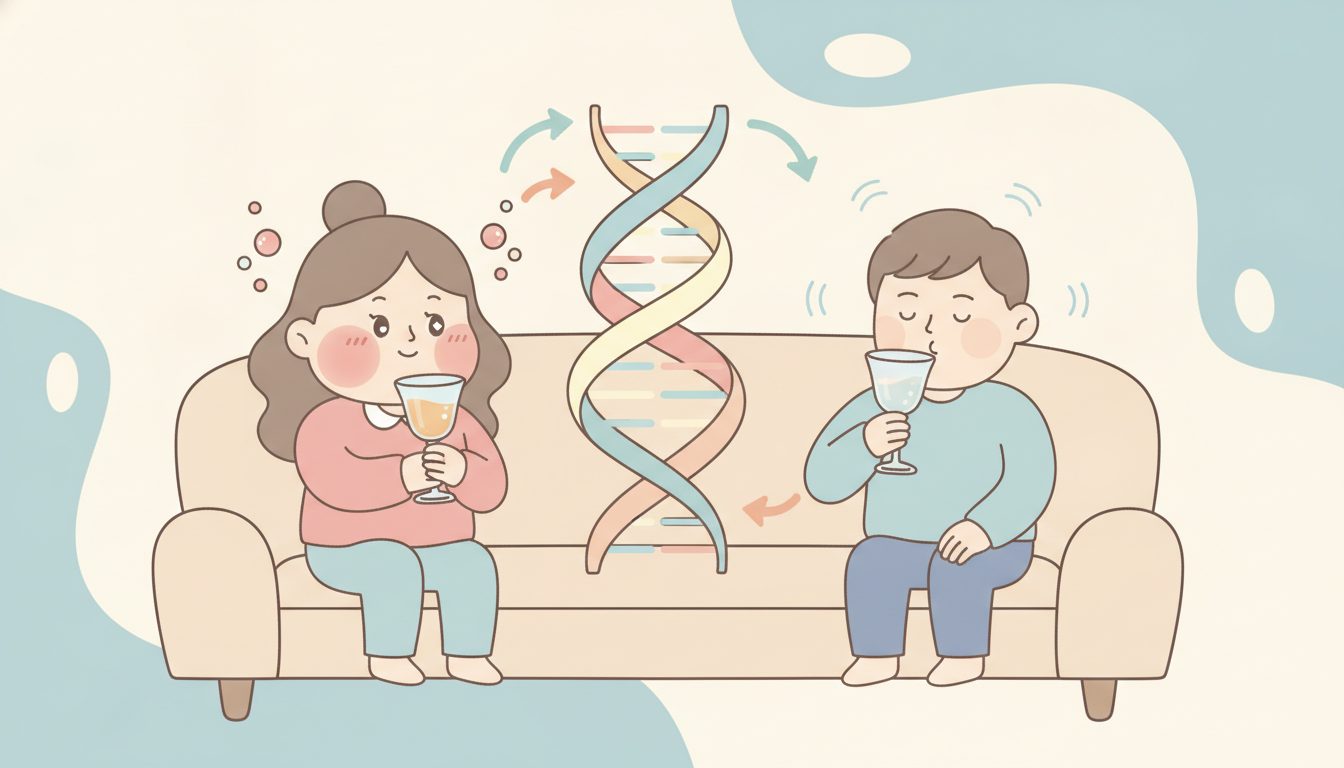
アルコールを摂取した際に、体内での分解スピードや影響の出方には個人差があります。その違いの大きな要因のひとつが「遺伝子」です。近年の遺伝子研究によって、アルコールの代謝能力が遺伝子によって左右されることが明らかになってきました。特に、アルコールをアセトアルデヒドに分解するADH1B遺伝子と、アセトアルデヒドを酢酸に変えるALDH2遺伝子が重要な役割を果たします。

アルコール代謝に関与する主要な遺伝子

  1. ADH1B(アルコール脱水素酵素1B)
    ADH1B遺伝子は、アルコールをアセトアルデヒドに変換する酵素の働きを決定します。この遺伝子の違いによって、アルコールの分解スピードが速い人と遅い人が存在します。
    • 速いタイプ(ADH1B*2):主に東アジアの人々に多く見られ、アルコールがすぐにアセトアルデヒドに変換されるため、顔が赤くなりやすい。
    • 遅いタイプ(ADH1B*1):欧米の人々に多く、アルコールの分解が遅いため、酔いにくいが、飲酒量が増えやすい傾向がある。
  2. ALDH2(アルデヒド脱水素酵素2)
    ALDH2遺伝子は、アセトアルデヒドを無害な酢酸に変える働きを持つ酵素を作ります。
    • 活性型(ALDH2*1/*1):アセトアルデヒドを効率よく分解できるため、アルコールの影響を受けにくい。
    • 低活性型(ALDH2*1/*2):アセトアルデヒドの分解能力が低く、飲酒するとすぐに顔が赤くなる。
    • 不活性型(ALDH2*2/*2):このタイプの人はアセトアルデヒドをほとんど分解できず、飲酒自体が困難。

日本人に多い遺伝子型とアルコール耐性

日本人の約40%がALDH2低活性型、約5%がALDH2不活性型であると報告されています。このため、日本人の多くが飲酒後に顔が赤くなる「フラッシング反応」を経験します。一方で、ADH1Bの速いタイプを持つ人も多く、アルコールが素早くアセトアルデヒドに変換されるため、酔いやすい傾向にあります。

遺伝子検査でわかること

遺伝子検査を受けることで、自分のADH1BやALDH2の型を知ることができます。これにより、自分のアルコール耐性を理解し、無理な飲酒を避けることが可能になります。特に、ALDH2不活性型の人はアルコールによる健康リスクが高いため、注意が必要です。

1. 遺伝子とアルコール代謝の基本

アルコールの影響は人によって異なります。同じ量を飲んでも、すぐに酔う人もいれば、ほとんど酔わない人もいます。この違いの主な要因の一つが「遺伝的要因」です。特にADH1B(アルコール脱水素酵素1B)とALDH2(アルデヒド脱水素酵素2)の2つの遺伝子がアルコール代謝に深く関与しています。

これらの遺伝子型を知ることで、自分がどのようにアルコールを分解するのかを理解し、飲酒のリスク管理に役立てることができます。近年、遺伝子検査の技術が進歩し、簡単な唾液や血液のサンプルからアルコール代謝能力を分析することが可能になりました。


2. アルコールの代謝プロセス

アルコールは体内で以下のように代謝されます。

  1. エタノール(アルコール)は、ADH1B酵素の働きによってアセトアルデヒドに変換される。
  2. アセトアルデヒドは、ALDH2酵素によって無害な酢酸に分解される。
  3. 酢酸は最終的に水と二酸化炭素に分解され、体外へ排出される。

このプロセスに問題があると、アセトアルデヒドが体内に蓄積し、顔が赤くなったり、吐き気や動悸を引き起こすことがあります。特にALDH2遺伝子の活性が低い人は、アセトアルデヒドの分解が遅くなるため、アルコールに弱い体質といえます。


3. ADH1B遺伝子の多型と影響

遺伝子 CG

**ADH1B遺伝子の型は、アルコールをどれくらい速くアセトアルデヒドに変換するかを決定します。**主に以下の3つのタイプがあります。

  • ADH1B*1/*1(低活性型):アルコールの分解が遅く、酔いにくいが、アルコール依存症になりやすい傾向がある。
  • ADH1B*1/*2(中間型):アルコールの分解がやや速い。
  • ADH1B*2/*2(高活性型):アルコールを素早くアセトアルデヒドに変えるため、酔いやすく、フラッシング反応が起こりやすい。

日本人の多くはADH1B*2型を持ち、アルコールを速やかにアセトアルデヒドに変換するため、悪酔いしやすいといわれています。


4. ALDH2遺伝子の多型と影響

ALDH2遺伝子の型によって、アセトアルデヒドの分解能力が決まります。

  • ALDH2*1/*1(活性型):アセトアルデヒドをすぐに分解できるため、飲酒の影響を受けにくい。
  • ALDH2*1/*2(低活性型):アセトアルデヒドの分解が遅いため、飲酒後に顔が赤くなりやすい(フラッシング反応)。
  • ALDH2*2/*2(不活性型):アセトアルデヒドをほとんど分解できないため、飲酒が極めて困難。

特にALDH2*2型を持つ人は、少量のアルコールでも心拍数が急上昇したり、吐き気を感じたりすることが多いです。これは、アセトアルデヒドの蓄積による影響です。


5. 日本人の遺伝子型分布とアルコール耐性

研究によると、日本人の遺伝子型の割合は以下のようになっています。

  • **ALDH2活性型(ALDH21/1):約55%
  • **ALDH2低活性型(ALDH21/2):約40%
  • **ALDH2不活性型(ALDH22/2):約5%

つまり、日本人の約半数が「お酒に強い」遺伝子型を持っていますが、40%以上は「お酒に弱い」体質である可能性が高いのです。


6. 遺伝子検査のメリット

遺伝子検査を受けることで、以下のようなメリットがあります。

① 自分のアルコール耐性を知る

無理な飲酒を避け、自分に合った適量を知ることができます。

② 健康リスクの管理

ALDH2の低活性型・不活性型の人は、食道がんや肝臓疾患のリスクが高いため、飲酒習慣を見直すことができます。

③ アルコール依存症の予防

ADH1Bが低活性型の人はアルコール依存症になりやすいため、飲酒習慣に注意が必要です。

7. 遺伝子型とアルコール関連疾患のリスク

アルコールの代謝能力が遺伝子によって決まることは、単に「お酒に強いか弱いか」だけでなく、さまざまな健康リスクにも関係しています。特に、ALDH2低活性型や不活性型を持つ人は、アルコール関連疾患のリスクが高いことが知られています。


7-1. 食道がんとの関連

ALDH2遺伝子が低活性型または不活性型の人は、アセトアルデヒドを分解する能力が低いため、飲酒後に体内にアセトアルデヒドが長時間残留します。アセトアルデヒドは発がん性物質であり、特に食道がんのリスクを高めることが多数の研究で示されています。

科学的エビデンス

  • 国立がん研究センターの研究によると、ALDH2低活性型の人は食道がんのリスクが通常の7倍以上であることが報告されています(参考研究)。
  • 日本の疫学研究では、飲酒習慣があるALDH2不活性型の人は、食道がんの発症率が特に高いことが示されています。

したがって、ALDH2遺伝子の型を知ることで、将来的な健康リスクを予測し、飲酒習慣を見直すことが重要です。


7-2. 肝臓疾患(肝硬変・肝がん)との関連

アルコールの過剰摂取は肝臓に負担をかけ、肝硬変や肝がんの原因となります。ADH1BとALDH2の遺伝子型によって、アルコールの分解速度や代謝負担が異なり、肝臓への影響も変わることがわかっています。

遺伝子型別のリスク

  • **ALDH2活性型(ALDH2*1/*1)**の人は、飲酒量が多くなる傾向があり、慢性的な飲酒によって肝疾患のリスクが高まる。
  • **ALDH2低活性型(ALDH2*1/*2)**の人は、少量の飲酒でもアセトアルデヒドの蓄積が肝臓に負担をかける。
  • **ADH1B低活性型(ADH1B*1/*1)**の人はアルコールの代謝が遅く、慢性的に高濃度のエタノールが肝臓に負担を与える。

科学的エビデンス

  • WHOの報告によると、アルコール関連の肝疾患は、東アジア人の遺伝的要因と密接に関係している。

7-3. アルコール依存症との関連

アルコール依存症は、遺伝的要因と環境要因の両方によって発症することが知られています。ADH1B遺伝子の低活性型(ADH1B*1/*1)の人は、アルコールの分解が遅いため、飲酒時に快感を得やすく、依存症のリスクが高くなることが報告されています。

科学的エビデンス

  • 米国の研究では、ADH1B低活性型を持つ人は、アルコール依存症のリスクが2倍以上高いことが示されている。

遺伝子検査を通じて、自分がアルコール依存症になりやすい体質かどうかを知ることで、適切な対策をとることができます。


8. 遺伝子検査の実際の手順と方法

遺伝子研究

遺伝子検査は、専門の検査機関で簡単に受けることができます。一般的な流れは以下の通りです。

8-1. 遺伝子検査の流れ

  1. 申し込み:オンラインまたは医療機関で遺伝子検査を申し込む。
  2. サンプル採取:唾液や頬の粘膜を専用のキットで採取する。
  3. 送付:検査機関にサンプルを送る。
  4. 分析:ADH1BやALDH2の遺伝子型を解析。
  5. 結果報告:数週間後に検査結果が送られてくる。

8-2. 遺伝子検査で得られる情報

  • アルコールの代謝能力(ADH1B、ALDH2の型)
  • 飲酒による健康リスク(がん、肝臓病、依存症のリスク)
  • 適切な飲酒習慣のアドバイス

9. 遺伝子検査の活用方法

遺伝子検査の結果をもとに、以下のような生活習慣の改善が可能です。

9-1. 飲酒の適量を知る

自分のアルコール代謝能力に応じて、適切な飲酒量を設定することで、健康リスクを最小限に抑えられます。

9-2. 健康リスクの低減

特にALDH2低活性型や不活性型の人は、飲酒習慣を見直すことで、がんや肝疾患のリスクを低減できます。

9-3. アルコール依存症の予防

ADH1B低活性型の人は、飲酒習慣を適切に管理することで、依存症のリスクを抑えることができます。


10. 今後の研究と展望

近年の遺伝子研究の進展により、アルコール代謝に関する新たな知見が次々と発表されています。今後の研究では、以下のようなテーマが注目されています。

  • 新しい遺伝子マーカーの発見:ADH1BやALDH2以外の遺伝子もアルコール代謝に関与している可能性がある。
  • 個別化医療の発展:遺伝子型に基づいた個別化飲酒指導の確立。
  • 新たな治療法の開発:アルコール依存症を予防・治療するための遺伝子治療の可能性。

11. 世界におけるアルコール代謝遺伝子の分布

アルコールの代謝能力は、民族や地域によって大きく異なります。これは遺伝的要因が関係しており、特定の遺伝子型が特定の地域で多く見られる傾向があるためです。


11-1. 東アジア人の遺伝的特徴

東アジア(日本、中国、韓国)では、ALDH2低活性型や不活性型の割合が非常に高いことが知られています。

東アジア人のALDH2遺伝子の分布

  • **ALDH2活性型(ALDH21/1):約55〜60%
  • **ALDH2低活性型(ALDH21/2):約35〜40%
  • **ALDH2不活性型(ALDH22/2):約5%

東アジア人にALDH2低活性型が多い理由については、進化の過程で特定の遺伝子変異が固定されたためと考えられています。特に、歴史的に発酵食品が多く摂取されてきたことが関係している可能性が示唆されています。


11-2. 欧米人の遺伝的特徴

欧米人(ヨーロッパ系、アメリカ系)は、ALDH2低活性型や不活性型をほとんど持っていないのが特徴です。

欧米人のALDH2遺伝子の分布

  • **ALDH2活性型(ALDH21/1):99%以上
  • **ALDH2低活性型(ALDH21/2):1%以下
  • **ALDH2不活性型(ALDH22/2):ほぼゼロ

そのため、欧米人はアルコールに強い傾向があります。しかし、ADH1B低活性型(ADH1B*1/*1)が多いため、アルコール依存症のリスクが高くなる傾向があります。


11-3. アフリカ・中東・南アジアの遺伝的特徴

  • アフリカ系の人々:ADH1B高活性型が多く、アルコールを素早く分解できるため、依存症のリスクが低い。
  • 中東・インド系の人々:地域によって遺伝子型のばらつきが大きいが、ADH1B低活性型の割合が比較的高い。
  • 東南アジア(タイ、ベトナム、フィリピンなど):ALDH2低活性型が一部の集団に存在するが、東アジアほど多くない。

12. 遺伝子型とアルコール感受性の関係

アルコールの影響の受け方は、遺伝子型によって異なります。以下のようなタイプに分類されます。

12-1. アルコールに非常に強いタイプ

  • **ADH1B低活性型(ADH1B1/1) + ALDH2活性型(ALDH21/1)
  • アルコールをゆっくり分解するため、酔いにくい
  • 依存症のリスクが高い

12-2. アルコールにやや強いタイプ

  • **ADH1B高活性型(ADH1B2/2) + ALDH2活性型(ALDH21/1)
  • アルコールは速やかに分解されるが、アセトアルデヒドの影響は受けない
  • 飲酒後に顔が赤くならず、比較的快適に飲める

12-3. アルコールに弱いタイプ

  • **ADH1B高活性型(ADH1B2/2) + ALDH2低活性型(ALDH21/2)
  • アセトアルデヒドの分解が遅く、飲酒後すぐに顔が赤くなる
  • 飲酒習慣があると食道がんのリスクが高まる

12-4. アルコールをほとんど受け付けないタイプ

  • **ADH1B高活性型(ADH1B2/2) + ALDH2不活性型(ALDH22/2)
  • 少量の飲酒でも動悸や吐き気を引き起こす
  • ほとんどアルコールを摂取できない

13. 遺伝子検査を活用した健康管理の実践

13-1. 遺伝子型に基づく飲酒ルール

遺伝子検査の結果に応じて、以下のような飲酒のルールを設定することができます。

遺伝子型推奨される飲酒ルール
ALDH2活性型 + ADH1B低活性型過度の飲酒を避ける、依存症リスクに注意
ALDH2活性型 + ADH1B高活性型適度な飲酒は可能
ALDH2低活性型飲酒量を減らす、定期的に健康診断を受ける
ALDH2不活性型禁酒が望ましい

13-2. 予防医療への応用

遺伝子検査の情報を活用することで、以下のような予防医療が可能になります。

  • アルコール関連がんの早期発見:ALDH2低活性型の人は定期的な内視鏡検査を受ける。
  • 肝機能検査の習慣化:肝臓に負担をかけやすい遺伝子型を持つ人は、定期的に血液検査を行う。
  • 依存症対策:ADH1B低活性型の人は、飲酒習慣をコントロールする方法を学ぶ。

14. 未来の遺伝子研究とアルコール代謝

研究室 女性

近年、遺伝子研究が進むにつれ、アルコール代謝に関わる新たな遺伝子の発見が進んでいます。

14-1. 新しい遺伝子マーカーの発見

  • CYP2E1遺伝子:肝臓でアルコールを代謝する過程に関与。
  • GABRA2遺伝子:アルコール依存症のリスクと関連。

14-2. 遺伝子治療の可能性

  • ALDH2不活性型の人向けの治療法が研究されており、将来的には飲酒時の影響を軽減できる可能性がある。

15. 遺伝子型に基づいた飲酒リスク管理の実践

遺伝子検査の結果を活用することで、個々人に最適な飲酒習慣を構築することが可能になります。ここでは、遺伝子型ごとに適切な飲酒リスク管理方法を紹介します。


15-1. ALDH2活性型(ALDH21/1)の人のリスク管理

この遺伝子型の人はアセトアルデヒドを素早く分解できるため、アルコールに強い傾向があります。しかし、油断すると飲酒量が増え、長期的に健康を害するリスクが高まります。

対策

・ 週に2日は休肝日を設ける
・ 飲酒時には水を多く摂取し、アルコールの影響を和らげる
・ 肝機能検査を定期的に受ける(AST・ALT・γ-GTPなど)
・ 1日のアルコール摂取量を日本酒換算で1合以内に抑える


15-2. ALDH2低活性型(ALDH21/2)の人のリスク管理

このタイプの人はアセトアルデヒドの分解が遅いため、飲酒後に顔が赤くなりやすいです。アセトアルデヒドの蓄積は発がんリスクを高めるため、慎重な管理が必要です。

対策

・ 飲酒頻度を週2回以下に抑える
・ 強い酒(焼酎・ウイスキー・ウォッカなど)を避け、アルコール度数の低いものを選ぶ
・ 食道がんのリスクが高いため、40歳以降は定期的に内視鏡検査を受ける
・ 飲酒時にはビタミンB群(特にB1・B6)を摂取し、肝機能をサポートする


15-3. ALDH2不活性型(ALDH22/2)の人のリスク管理

このタイプの人はほぼ完全にアセトアルデヒドを分解できないため、アルコールの摂取は健康にとって大きなリスクとなります。

対策

・ 基本的に禁酒を推奨(少量でも体に害があるため)
・ 飲酒を強要される場面では、ノンアルコール飲料を活用する
・ 肝臓や食道の定期検診を受ける(がんリスク管理)
・ 家族や医師と相談し、飲酒しない生活習慣を確立する


16. 遺伝子型とアルコール摂取量の関係

近年の研究では、遺伝子型によって自然なアルコール摂取量に違いがあることが分かっています。

遺伝子型平均的なアルコール摂取量(週)健康リスク
ALDH2活性型 + ADH1B低活性型高い(約14~21単位)肝硬変・依存症リスクが高い
ALDH2活性型 + ADH1B高活性型中程度(約7~14単位)適度な飲酒は可能
ALDH2低活性型低い(約3~7単位)少量でも発がんリスクが高い
ALDH2不活性型ほぼゼロ禁酒が推奨される

(1単位=日本酒1合、ビール中ジョッキ1杯程度)

このように、遺伝子型によって自然な飲酒傾向が異なるため、遺伝子検査の結果をもとに適切な飲酒習慣を構築することが重要です。


17. 遺伝子型を考慮したアルコール代謝の向上方法

遺伝子型によってアルコール代謝能力が決まるとはいえ、生活習慣を改善することで、代謝能力をある程度向上させることが可能です。


17-1. 体内の解毒機能を高める栄養素

アルコールを分解する酵素の働きを助ける栄養素を積極的に摂取することで、飲酒による負担を軽減できます。

肝機能を高める栄養素と食品

栄養素効果含まれる食品
ビタミンB1アルコール分解をサポート豚肉、玄米、大豆
ビタミンB6肝機能向上バナナ、ナッツ、鶏肉
システインアルコールの分解促進卵、にんにく、玉ねぎ
クルクミン肝臓の炎症抑制ウコン、ターメリック

17-2. アルコールの影響を抑える生活習慣

アルコールの影響を最小限にするために、以下の習慣を心がけましょう。

飲酒前に水を十分に飲む(脱水症状を防ぐ)
空腹時の飲酒を避ける(胃の負担を軽減)
アルコール摂取後は十分な睡眠をとる(肝臓の回復を促進)
飲酒後は運動を控える(肝臓の負担を減らす)


18. 遺伝子検査の未来とパーソナライズド医療

デジタルと未来のイメージ

近年の遺伝子研究の進展により、個別化医療(パーソナライズド医療)の重要性が高まっています

18-1. 遺伝子情報を活用した飲酒リスク管理

将来的には、個人の遺伝子型に基づいて、最適な飲酒習慣や健康管理方法が提案される時代が来ると考えられます。

可能性のある技術革新
・ スマートフォンアプリによる遺伝子型別の飲酒アドバイス
・ ウェアラブルデバイスによるリアルタイムのアルコール代謝モニタリング
・ 遺伝子編集技術によるALDH2不活性型の治療法開発

これらの技術が進化することで、より安全かつ健康的な飲酒習慣が可能になるでしょう

まとめ

アルコールの代謝能力は、ADH1BALDH2という2つの遺伝子によって大きく左右されます。ALDH2低活性型や不活性型を持つ人は、アセトアルデヒドの蓄積によって飲酒後に顔が赤くなりやすく、発がんリスクが高いことが分かっています。一方、ADH1B低活性型の人は酔いにくく、アルコール依存症のリスクが高まる傾向にあります。

遺伝子検査を活用することで、自分のアルコール耐性を正しく理解し、健康を守るための適切な飲酒習慣を確立することが可能です。将来的には、パーソナライズド医療の進展により、より精密なリスク管理が実現されるでしょう。

Posted on 2024年 11月 26日 飲み会

この記事の概要

アルコールの代謝能力は、ADH1B・ALDH2遺伝子の働きによって個人差があります。ヒロクリニックでは、遺伝子検査を通じて飲酒の適量や健康リスクを科学的に分析し、個々に合った飲酒習慣を提案。飲酒による健康リスクを理解し、適切な飲酒管理を行うことで、より健康的な生活をサポートします。

基因与酒精代谢的关系

饮酒后,酒精在体内分解的速度以及对身体的影响因人而异。造成这种差异的主要原因之一是基因。最近的基因研究表明,代谢酒精的能力是由基因决定的。特别是将酒精分解为乙醛的ADH1B基因和将乙醛转化为乙酸的ALDH2基因发挥着重要作用。

参与酒精代谢的关键基因

  1. ADH1B(酒精脱氢酶 1B)
    ADH1B 基因决定将酒精转化为乙醛的酶的活性。由于这些基因差异,有些人分解酒精的速度比其他人更快。
    • 快速型(ADH1B*2):此类型主要见于东亚人,酒精很快转化为乙醛,导致脸色容易发红。
    • 慢型(ADH1B*1):在西方人中很常见,这种类型的人分解酒精的速度很慢,所以他们不容易喝醉,但往往会喝得更多。
  2. ALDH2(乙醛脱氢酶 2
    ALDH2 基因产生一种酶,将乙醛转化为无害的乙酸。
    • 活性型(ALDH2*1/*1):能有效分解乙醛,因此受酒精的影响较小。
    • 低活性型(ALDH2*1/*2):分解乙醛的能力低,喝酒后脸色立即变红。
    • 非活性型(ALDH2*2/*2):患有这种类型的人无法分解乙醛,因此很难饮酒。

日本人的常见基因型和酒精耐受性

据报道,日本约有40%的人ALDH2活性较低,约有5%的人ALDH2不活跃。因此,许多日本人在饮酒后会出现脸色变红的“潮红反应”。另一方面,许多人患有快速型 ADH1B,这意味着酒精会快速转化为乙醛,他们更容易醉酒。

基因检测能告诉你什么

通过基因检测,您可以了解您的 ADH1B 和 ALDH2 类型。这将帮助您了解自己的酒精耐受度并避免过量饮酒。尤其是 ALDH2 功能不活跃的人更应小心,因为他们因饮酒而面临更高的健康风险。

1. 基因和酒精代谢的基础知识

酒精对每个人的影响不同。即使喝同样量的酒,有些人可能会很快醉,而有些人可能根本不会醉。这种差异背后的主要因素之一是遗传因素。具体来说,ADH1B(酒精脱氢酶1B)和ALDH2(乙醛脱氢酶2)两种基因与酒精代谢密切相关。

了解您的基因型可以帮助您了解如何分解酒精并帮助您管理饮酒风险。近年来,基因检测技术的进步使得通过简单的唾液或血液样本分析酒精代谢能力成为可能。


2. 酒精代谢

酒精在体内的代谢方式如下:

  1. 乙醇(酒精)在ADH1B酶的作用下转化为乙醛。
  2. 乙醛ALDH2 酶分解成无害的乙酸。
  3. 乙酸最终分解为水和二氧化碳并排出体外。

当这个过程出现问题时,乙醛就会在体内积聚,导致面部发红、恶心和心悸。尤其是 ALDH2 基因活性低的人,由于乙醛分解速度较慢,更容易受到酒精的影响。


3. ADH1B基因多态性及其效应

遺伝子 CG

**ADH1B 基因的类型决定了酒精转化为乙醛的速度。 **主要有三种类型:

  • ADH1B*1/*1(低活性型):酒精分解速度慢,不易醉酒,但有更容易产生酒精依赖的倾向。
  • ADH1B*1/*2(中间型):酒精分解得比较快。
  • ADH1B*2/*2(高活性型):快速将酒精转化为乙醛,使人更容易醉酒并出现潮红反应。

许多日本人患有 1B*2 型抗利尿激素 (ADH),这种激素会迅速将酒精转化为乙醛,使他们更容易醉酒。


4. ALDH2 基因多态性及其影响

ALDH2基因的类型决定了人体分解乙醛的能力。

  • ALDH2*1/*1(活性型):能快速分解乙醛,因此受酒精影响较小。
  • ALDH2*1/*2(低活性型):乙醛分解缓慢,导致饮酒后脸色发红(潮红反应)。
  • ALDH2*2/*2(非活性型):人体几乎无法分解乙醛,因此饮酒极其困难。

特别是具有 ALDH2*2 型的人,即使饮用少量酒精也常常会出现心率加快和恶心的症状。这就是乙醛积累的效应。


5. 日本人的基因型分布和酒精耐受性

据研究,日本人的基因型比例如下:

  • **ALDH2 活性类型(ALDH2 1/1):约 55%
  • **ALDH2 低活性型(ALDH2 1/2):约 40%
  • **ALDH2 非活性型(ALDH2 2/2):约 5%

换句话说,虽然大约一半的日本人具有“高度酒精耐受性”的基因构成,但超过 40% 的人可能具有“低酒精耐受性”的体质。


6. 基因检测的好处

进行基因检测的好处包括:

① 了解自己的酒精耐受量

您可以避免过量饮酒并找到适合您的适量。

② 健康风险管理

ALDH2 活性较低或不活跃的人患食道癌和肝病的风险更高,因此他们可能需要重新考虑自己的饮酒习惯。

预防酗酒

ADH1B 活性低的人容易酗酒,因此需要注意自己的饮酒习惯。

7. 基因型与酒精相关疾病的风险

我们代谢酒精的能力是由基因决定的,这不仅与我们是否能耐受酒精有关,还与各种健康风险有关。特别是,已知ALDH2 活性较低或不活跃的人患酒精相关疾病的风险更高。


7-1。与食道癌的关系

ALDH2 基因较低或不活跃的人分解乙醛的能力降低,因此饮酒后乙醛会在体内停留很长时间。乙醛是一种致癌物,大量研究表明,它会增加患癌症的风险,尤其是食道癌。

科学证据

  • 根据美国国家癌症中心的研究,ALDH2活性低的人患食道癌的风险比正常人高出七倍以上(参考研究)。
  • 日本的流行病学研究表明,具有非活性ALDH2型且有饮酒习惯的人群食道癌发病率特别高。

因此,了解 ALDH2 基因的类型对于预测未来的健康风险和审查饮酒习惯非常重要。


7-2。与肝病(肝硬化和肝癌)的关联

过量饮酒会给肝脏带来压力,并可能导致肝硬化和肝癌。研究发现,酒精分解的速度和造成的代谢负担因ADH1B和ALDH2基因型而异,对肝脏的影响也不同。

基因型特异性风险

  • ALDH2 功能被激活(ALDH2*1/*1)的人往往会饮用更多的酒精,而长期饮酒会增加患肝病的风险。
  • 对于 ALDH2 活性较低(ALDH2*1/*2)的人来说,即使少量的酒精也会导致乙醛的积累,从而给肝脏带来压力。
  • ADH1B活性低的人(ADH1B*1/*1)代谢酒精较慢,长期高浓度的乙醇会给肝脏带来压力。

科学证据

  • 据世界卫生组织报告,东亚人的酒精性肝病与遗传因素密切相关。

7-3。与酗酒有关

众所周知,酗酒是由遗传和环境因素造成的。据报道,携带ADH1B基因低活性型(ADH1B*1/*1)的人,由于分解酒精的速度较慢,饮酒时更容易感到愉悦,这增加了他们患上酒精中毒的风险。

科学证据

  • 美国一项研究表明,ADH1B活性低的人患酒精依赖的可能性是其他人的两倍多。

通过基因检测了解您是否有酗酒倾向,您就可以采取适当的措施。


8. 基因检测的具体流程和方法

遺伝子研究

在专门的检测实验室可以轻松进行基因检测。大致流程如下:

8-1. 基因检测流程

  1. 申请方式:在线申请或前往医疗机构申请基因检测。
  2. 样本采集:使用特殊套件采集唾液和面颊粘膜。
  3. 发送:将样品发送到测试机构。
  4. 分析:分析了ADH1B和ALDH2的基因型。
  5. 结果:测试结果将在几周后发送给您。

8-2。通过基因检测获得的信息

  • 酒精代谢能力(ADH1B、ALDH2型)
  • 饮酒的健康风险(癌症、肝病、成瘾风险)
  • 适当的饮酒习惯建议

9. 如何使用基因检测

根据基因检测的结果,您可能能够改变生活方式,例如:

9-1。了解适当的饮酒量

根据自身代谢酒精的能力选择适量的饮酒,可以最大限度地降低健康风险。

9-2。降低健康风险

特别是,ALDH2 活性较低或不活跃的人可以通过检查饮酒习惯来降低患癌症和肝病的风险。

9-3. アルコール依存症の予防

ADH1B 活性较低的人可以通过适当管理饮酒习惯来降低成瘾风险。


10. 未来研究与展望

随着基因研究的不断进步,有关酒精代谢的新发现不断被发表。以下主题是未来研究的重点:

  • 发现新的基因标记:除ADH1B和ALDH2之外的基因也可能参与酒精代谢。
  • 个性化医疗的发展:根据基因型制定个性化饮酒建议。
  • 开发新的治疗方法:基因疗法预防和治疗酒精中毒的潜力。

11. 酒精代谢基因的全球分布

不同种族和地区的人代谢酒精的能力存在很大差异。这是由于遗传因素造成的,某些基因型在某些地区更为普遍


11-1。东亚人的基因特征

已知在东亚地区(日本、中国、韩国),ALDH2活性低或不活跃的人群比例非常高。

ALDH2基因在东亚人群中的分布

  • **ALDH2 活性类型(ALDH2 1/1):约 55-60%
  • **ALDH2 低活性型(ALDH2 1/2):约 35-40%
  • **ALDH2 非活性型(ALDH2 2/2):约 5%

东亚人更容易出现 ALDH2 活性低的原因被认为是由于特定的基因突变在进化过程中固定下来。特别是,有人提出历史上摄入大量发酵食品可能与此有关。


11-2。西方人的基因特征

西方人(欧洲人和美国人)的特点是几乎没有低活性或不活性的ALDH2 。

西方人ALDH2基因的分布

  • **ALDH2 活性类型(ALDH2 1/1):99% 或更多
  • **ALDH2 低活性型(ALDH2 1/2):1% 或更低
  • **非活性 ALDH2(ALDH2 2/2):几乎为零

这就是为什么西方人对酒精的耐受性更高。但是,由于ADH1B活性较低(ADH1B*1/*1)的人较多,因此他们更容易出现酒精依赖。


11-3。非洲、中东和南亚的遗传特征

  • 非洲裔人群:他们具有较高的高活性ADH1B发生率,这使得他们能够快速分解酒精,从而降低成瘾风险。
  • 中东或印度血统的人:基因型因地区而异,但 ADH1B 低活性基因型的比例相对较高。
  • 东南亚(泰国、越南、菲律宾等):部分人群存在ALDH2活性低的情况,但不像东亚那么常见。

12. 基因型与酒精敏感性的关系

酒精对不同基因型的人的影响不同。它们分为以下类型:

12-1。高耐酒精型

  • **ADH1B低活性型(ADH1B 1/1)+ ALDH2活性型(ALDH21/1)
  • 它会缓慢地分解酒精,所以你不会轻易醉酒。
  • 成瘾风险高

12-2。对酒精有轻微耐受性

  • **ADH1B 高活性型(ADH1B 2/2)+ ALDH2 活性型(ALDH21/1)
  • 酒精分解很快,但不受乙醛的影响
  • 喝完脸不会红,可以安心喝。

12-3。对酒精敏感的人

  • **ADH1B 高活性型(ADH1B 2/2)+ ALDH2 低活性型(ALDH21/2)
  • 乙醛分解较慢,所以喝酒后脸很快就会变红。
  • 饮酒增加食道癌风险

12-4。几乎无法忍受酒精的人

  • **ADH1B 高活性型(ADH1B 2/2)+ ALDH2 非活性型(ALDH22/2)
  • 即使少量的酒精也会引起心悸和恶心
  • 我几乎不能忍受酒精

13. 利用基因检测进行健康管理

13-1。基于基因型的饮酒规则

根据您的基因测试结果,您可能可以制定饮酒规则,例如:

基因型建议饮酒规则
ALDH2活性型+ADH1B低活性型避免过量饮酒并注意成瘾风险
ALDH2活性型+ADH1B高活性型允许适量饮酒
ALDH2低活性型减少饮酒并定期进行健康检查
ALDH2非活性型建议戒酒

13-2。预防医学的应用

利用基因检测的信息可以实现以下预防性医疗治疗:

  • 酒精相关癌症的早期发现:ALDH2 活性低的人应定期接受内窥镜检查。
  • 养成进行肝功能检查的习惯:具有对肝脏造成压力的遗传类型的人应该定期进行血液检查。
  • 预防成瘾:ADH1B 活性低的人学会控制自己的饮酒习惯。

14. 未来的基因研究和酒精代谢

研究室 女性

近年来,随着基因研究的进展,人们发现了参与酒精代谢的新基因。

14-1。发现新的遗传标记

  • CYP2E1基因:参与肝脏代谢酒精的过程。
  • GABRA2 基因:与酗酒风险有关。

14-2。基因治疗的潜力

  • 目前正在研究针对 ALDH2 功能不活跃人群的治疗方法,这可能会在未来减少饮酒的影响。

15. 基于基因型的饮酒风险管理

通过利用基因检测的结果,可以培养每个人最佳的饮酒习惯。这里我们将针对每种基因型介绍适当的饮酒风险管理方法。


15-1。 ALDH2 活性人群(ALDH2 1/1)的风险管理

拥有这种基因型的人往往对酒精有更强的耐受性,因为他们可以快速分解乙醛。然而,如果不小心,您最终可能会喝更多的酒,这可能会增加长期损害健康的风险。

对策

・ 每周有两天时间不喝酒
・ 饮酒时请多喝水,以减轻酒精的影响
・ 定期进行肝功能检查(AST、ALT、γ-GTP 等)
・ 每日饮酒量限制在一杯以下


15-2。 ALDH2 活性低 (ALDH2 1/2)人群的风险管理

饮用此类酒精的人在饮酒后更容易脸红,因为他们分解乙醛的速度较慢。乙醛的积累会增加患癌症的风险,因此需要谨慎管理。

对策

・ 限制饮酒频率,每周不超过两次
・ 避免饮用烈性酒(烧酒、威士忌、伏特加等),选择低酒精 饮料
・ 由于您患食道癌的风险较高,因此 40 岁以后应定期进行内窥镜检查
・ 饮酒时,请服用 B 族维生素(尤其是 B1 和 B6)以支持肝功能


15-3。 ALDH2 功能不活跃 (ALDH2 2/2)人群的风险管理

患有这种酒精障碍的人几乎完全无法分解乙醛,因此饮酒时会对他们的健康造成重大风险。

对策

・ 一般建议戒酒(即使少量饮酒也会对身体有害
・ 如果被迫饮酒,请使用不含酒精的饮料
・ 定期进行肝脏和食道检查(癌症风险管理)
・ 与家人和医生协商,建立不饮酒的生活方式


16. 基因型与酒精摄入量的关系

最近的研究表明,天然酒精摄入量因基因型而异。

基因型每周平均饮酒量健康风险
ALDH2活性型+ADH1B低活性型高(约 14 至 21 个单位)肝硬化和成瘾风险高
ALDH2活性型+ADH1B高活性型中等(约7-14个单位)允许适量饮酒
ALDH2低活性型低(约 3 至 7 个单位)即使少量也会有很高的致癌风险
ALDH2非活性型几乎为零建议戒酒

(1 单位 = 约 1 杯清酒或 1 中杯啤酒)

因此,自然的饮酒倾向因基因型而异,因此根据基因检测的结果养成适当的饮酒习惯非常重要


17. 考虑基因型的改善酒精代谢的方法

虽然酒精代谢能力是由基因型决定的,但通过改善生活习惯可以在一定程度上提高代谢能力


17-1。增强身体排毒功能的营养素

您可以通过积极摄入有助于分解酒精的酶的营养物质来减轻饮酒造成的负担。

改善肝功能的营养素和食物

营养影响包含的食物
维生素B1支持酒精分解猪肉、糙米、大豆
维生素B6改善肝功能香蕉、坚果、鸡肉
半胱氨酸加速酒精分解鸡蛋、大蒜、洋葱
姜黄素抑制肝脏炎症姜黄

17-2。减少酒精影响的生活习惯

为了尽量减少酒精的影响,请尝试遵循以下习惯:

饮酒前请多喝水(防止脱水)
避免空腹饮酒(减轻胃部负担)
饮酒后请保证充足的睡眠(促进肝脏恢复)
饮酒后请避免运动(减轻肝脏负担)


18. 基因检测和个性化医疗的未来

デジタルと未来のイメージ

随着基因研究的最新进展,个性化医疗变得越来越重要

18-1。利用基因信息进行饮酒风险管理

将来,很可能会根据个人的基因型来建议最佳的饮酒习惯和健康管理方法。

潜在的技术创新
・ 通过智能手机应用程序提供针对特定基因型的饮酒建议
・ 通过可穿戴设备实时监测酒精代谢
・ 使用基因编辑技术开发非活性 ALDH2 治疗方法

随着这些技术的发展,更安全、更健康的饮酒习惯将成为可能

概括

代谢酒精的能力很大程度上由两个基因决定,即ADH1BALDH2 。据了解,ALDH2活性较低或不活跃的人在饮酒后,由于乙醛的积累,更容易出现脸红的情况,并且罹患癌症的风险也更高。另一方面, ADH1B 活性较低的人不太可能喝醉,并且往往更容易产生酒精依赖。

通过基因检测,可以正确了解自身的酒精耐受性,建立适当的饮酒习惯,保护自身的健康。未来,个性化医疗的进步将实现更精准的风险管理。

Posted on 2024年 11月 26日 飲み会

この記事の概要

アルコールの代謝能力は、ADH1B・ALDH2遺伝子の働きによって個人差があります。ヒロクリニックでは、遺伝子検査を通じて飲酒の適量や健康リスクを科学的に分析し、個々に合った飲酒習慣を提案。飲酒による健康リスクを理解し、適切な飲酒管理を行うことで、より健康的な生活をサポートします。

The relationship between genes and alcohol metabolism

When alcohol is consumed, there are individual differences in the speed at which it is broken down in the body and how it affects people. One of the major factors in these differences is “genes.” Recent genetic research has revealed that the ability to metabolize alcohol is determined by genes. In particular, the ADH1B gene, which breaks down alcohol into acetaldehyde, and the ALDH2 gene , which converts acetaldehyde into acetic acid, play important roles.

Key genes involved in alcohol metabolism

  1. ADH1B (alcohol dehydrogenase 1B)
    The ADH1B gene determines the activity of the enzyme that converts alcohol into acetaldehyde. Depending on the difference in this gene, some people break down alcohol faster than others。
    • Fast type (ADH1B*2) : This type is mainly seen in East Asians, and alcohol is quickly converted into acetaldehyde, causing the face to become red easily.
    • Slow type (ADH1B*1) : Common in Westerners, this type breaks down alcohol slowly so people are less likely to get drunk but tend to drink more.
  2. ALDH2 (aldehyde dehydrogenase 2)
    The ALDH2 gene produces an enzyme that converts acetaldehyde into harmless acetic acid。
    • Activated type (ALDH2*1/*1) : Can efficiently break down acetaldehyde, so is less affected by alcohol.
    • Low activity type (ALDH2*1/*2) : The ability to break down acetaldehyde is low, and the face becomes red immediately after drinking alcohol.
    • Inactive type (ALDH2*2/*2) : People with this type are unable to break down acetaldehyde, making it difficult for them to drink alcohol.

Common genotypes in Japanese people and alcohol tolerance

It has been reported that approximately 40% of Japanese people have low ALDH2 activity and approximately 5% have inactive ALDH2. For this reason, many Japanese people experience the “flushing reaction” in which their face turns red after drinking alcohol. On the other hand, many people have the fast type of ADH1B, which means that alcohol is quickly converted into acetaldehyde, making them more likely to get drunk.

What genetic testing can tell you

By taking a genetic test, you can find out your ADH1B and ALDH2 types. This will allow you to understand your alcohol tolerance and avoid excessive drinking. People with inactive ALDH2 types are particularly at risk of health problems from alcohol, so they need to be careful.

1. The basics of genes and alcohol metabolism

Alcohol affects people differently. Some people get drunk quickly, while others barely get drunk, even if they drink the same amount. One of the main factors behind this difference is genetic factors. In particular, two genes, ADH1B (alcohol dehydrogenase 1B) and ALDH2 (aldehyde dehydrogenase 2), are deeply involved in alcohol metabolism.

Knowing these genotypes can help you understand how you break down alcohol and help you manage your drinking risks. In recent years, genetic testing technology has advanced, making it possible to analyze alcohol metabolism capabilities from simple saliva or blood samples.


2. Alcohol metabolism

Alcohol is metabolized in the body in the following ways:

  1. Ethanol (alcohol) is converted to acetaldehyde by the action of the ADH1B enzyme.
  2. Acetaldehyde is broken down into harmless acetic acid by the ALDH2 enzyme .
  3. Acetic acid is eventually broken down into water and carbon dioxide and excreted from the body.

If there is a problem with this process, acetaldehyde can accumulate in the body, causing a red face, nausea, and palpitations. People with low activity of the ALDH2 gene in particular are more susceptible to alcohol because the breakdown of acetaldehyde is slower.


3. ADH1B gene polymorphisms and their effects

遺伝子 CG

**The type of ADH1B gene determines how quickly alcohol is converted into acetaldehyde.** There are three main types:

  • ADH1B*1/*1 (low activity type) : Alcohol is broken down slowly, making it difficult to get drunk, but there is a tendency to become more susceptible to alcohol dependence.
  • ADH1B*1/*2 (intermediate type) : Alcohol is broken down somewhat quickly.
  • ADH1B*2/*2 (high activity type) : Quickly converts alcohol into acetaldehyde, making people more susceptible to getting drunk and experiencing a flushing reaction.

Many Japanese people have type 1B*2 ADH, which quickly converts alcohol into acetaldehyde, making them more susceptible to getting drunk.


4. ALDH2 gene polymorphisms and their effects

The type of ALDH2 gene determines the body’s ability to break down acetaldehyde.

  • ALDH2*1/*1 (active form) : It can quickly break down acetaldehyde, so it is less affected by alcohol consumption.
  • ALDH2*1/*2 (low activity type) : The breakdown of acetaldehyde is slow, causing the face to turn red after drinking alcohol (flushing reaction).
  • ALDH2*2/*2 (inactive type) : The body is barely able to break down acetaldehyde, making it extremely difficult to drink alcohol.

In particular , people with ALDH2*2 type often experience a rapid heart rate and nausea even with a small amount of alcohol . This is due to the accumulation of acetaldehyde.


5. Genotype distribution and alcohol tolerance in Japanese people

According to research, the genotype ratios of Japanese people are as follows:

  • **ALDH2 active type (ALDH2 1/1): approximately 55%
  • **ALDH2 low activity type (ALDH2 1/2): approximately 40%
  • **ALDH2 inactive type (ALDH2 2/2): approximately 5%

In other words, while roughly half of Japanese people have the genetic makeup that makes them “highly tolerant of alcohol,” more than 40% are likely to have a constitution that makes them “low-tolerant of alcohol.”


6. Benefits of Genetic Testing

The benefits of undergoing genetic testing include:

① Know your alcohol tolerance

You can avoid excessive drinking and find out the appropriate amount that is right for you.

② Health risk management

People with low or inactive ALDH2 activity are at higher risk of esophageal cancer and liver disease, so they may want to reconsider their drinking habits.

3) Preventing alcoholism

People with low ADH1B activity are prone to alcoholism, so they need to be careful about their drinking habits.

7. Genotype and risk of alcohol-related disorders

The fact that the ability to metabolize alcohol is determined by genes is not just related to whether one is “tolerant or tolerant of alcohol,” but is also related to various health risks. In particular, people with low or inactive ALDH2 are known to be at higher risk of alcohol-related diseases.


7-1. Association with esophageal cancer

People with low or inactive ALDH2 genes have a reduced ability to break down acetaldehyde, which remains in the body for a long time after drinking alcohol. Acetaldehyde is a carcinogen, and numerous studies have shown that it increases the risk of esophageal cancer in particular.

Scientific evidence

  • According to a study by the National Cancer Center , people with low ALDH2 activity have a risk of esophageal cancer that is more than seven times higher than normal ( reference study ).
  • Epidemiological studies in Japan have shown that people with inactive ALDH2 type who have drinking habits have a particularly high incidence of esophageal cancer.

Therefore, it is important to know the type of ALDH2 gene in order to predict future health risks and review drinking habits.


7-2. Association with liver disease (cirrhosis and liver cancer)

Excessive alcohol intake puts a strain on the liver and can lead to cirrhosis and liver cancer. It is known that the rate at which alcohol is broken down and the metabolic burden it inflicts differ depending on the genotype of ADH1B and ALDH2, and the impact on the liver also differs .

Genotype-specific risks

  • People with activated ALDH2 (ALDH2*1/*1) tend to drink more alcohol, and chronic drinking increases their risk of liver disease.
  • For people with low ALDH2 activity (ALDH2*1/*2), even small amounts of alcohol can cause accumulation of acetaldehyde, which puts a strain on the liver.
  • People with low ADH1B activity (ADH1B*1/*1) metabolize alcohol slowly, and chronic high concentrations of ethanol put a strain on the liver.

Scientific evidence

  • According to a WHO report , alcohol-related liver disease is closely related to genetic factors in East Asians.

7-3. Association with alcoholism

Alcoholism is known to be caused by both genetic and environmental factors. It has been reported that people with low activity of the ADH1B gene (ADH1B*1/*1) are more likely to experience pleasure when drinking alcohol because alcohol is broken down more slowly, increasing the risk of alcoholism .

Scientific evidence

  • A US study has shown that people with low activity of ADH1B are more than twice as likely to develop alcohol dependence.

By finding out through genetic testing whether you are predisposed to alcoholism, you can take appropriate measures.


8. Actual procedures and methods of genetic testing

遺伝子研究

Genetic testing can be easily done at specialized testing institutions. The general process is as follows:

8-1. Genetic testing process

  1. Application : Apply for genetic testing online or at a medical institution.
  2. Sample collection : Saliva and cheek mucosa are collected using a special kit.
  3. Send : Send the sample to the testing facility.
  4. Analysis : Genotypes of ADH1B and ALDH2 were analyzed.
  5. Results : Test results will be sent to you a few weeks later.

8-2. Information obtained through genetic testing

  • Alcohol metabolism ability (ADH1B, ALDH2 types)
  • Health risks of drinking alcohol (risk of cancer, liver disease, addiction)
  • Advice on appropriate drinking habits

9. How to use genetic testing

Based on the results of your genetic test, you may be able to make lifestyle changes, such as:

9-1. Know the appropriate amount of alcohol

By choosing the appropriate amount of alcohol to drink based on your ability to metabolize alcohol, you can minimize the health risks.

9-2. Reducing health risks

In particular, people with low or inactive ALDH2 activity can reduce their risk of cancer and liver disease by reviewing their drinking habits.

9-3. Preventing alcoholism

People with low ADH1B activity can reduce their risk of developing addiction by properly managing their drinking habits.


10. Future Research and Prospects

Due to recent advances in genetic research, new findings about alcohol metabolism are being published one after another. The following themes are attracting attention for future research:

  • Discovery of new genetic markers : Genes other than ADH1B and ALDH2 may also be involved in alcohol metabolism.
  • Development of personalized medicine : Establishment of personalized drinking advice based on genotype.
  • Developing new treatments : The potential of gene therapy to prevent and treat alcoholism.

11. Global distribution of alcohol metabolism genes

The ability to metabolize alcohol varies greatly between different ethnic groups and regions, as genetic factors play a role and certain genotypes tend to be more prevalent in certain regions .


11-1. Genetic characteristics of East Asians

It is known that in East Asia (Japan, China, and Korea), the proportion of people with low or inactive ALDH2 activity is very high .

Distribution of the ALDH2 gene in East Asians

  • **ALDH2 active type (ALDH2 1/1): approximately 55-60%
  • **ALDH2 low activity type (ALDH2 1/2): approximately 35-40%
  • **ALDH2 inactive type (ALDH2 2/2): approximately 5%

It is believed that the reason why East Asians have a high prevalence of low ALDH2 activity is due to the fixation of certain gene mutations during the evolutionary process. In particular, it has been suggested that this may be related to the fact that East Asians have historically consumed a lot of fermented foods .


11-2. Genetic characteristics of Westerners

Westerners (Europeans and Americans) are characterized by having almost no low activity or inactive ALDH2 .

Distribution of ALDH2 genes in Westerners

  • **ALDH2 active type (ALDH2 1/1): 99% or more
  • **ALDH2 low activity type (ALDH2 1/2): 1% or less
  • **Inactive ALDH2 (ALDH2 2/2): Almost zero

Therefore, Westerners tend to have a higher tolerance to alcohol. However, because many of them have low ADH1B activity (ADH1B*1/*1), they tend to be at higher risk of alcoholism .


11-3. Genetic characteristics of Africa, the Middle East, and South Asia

  • People of African descent : They have a higher incidence of high activity ADH1B, which allows them to break down alcohol quickly and therefore reduces the risk of addiction.
  • People of Middle Eastern or Indian descent : There is a large variation in genotype depending on the region, but the proportion of ADH1B low activity genotypes is relatively high.
  • Southeast Asia (Thailand, Vietnam, Philippines, etc.) : Low activity of ALDH2 is present in some populations, but is not as common as in East Asia.

12. Relationship between genotype and alcohol sensitivity

The way alcohol affects you depends on your genotype. There are the following types:

12-1. Highly alcohol-resistant type

  • **ADH1B low activity type (ADH1B 1/1) + ALDH2 active type (ALDH21/1)
  • It breaks down alcohol slowly, so you won’t get drunk easily.
  • High risk of addiction

12-2. Slightly tolerant to alcohol

  • **ADH1B highly active type (ADH1B 2/2) + ALDH2 active type (ALDH21/1)
  • Alcohol is broken down quickly, but is not affected by acetaldehyde
  • Your face won’t turn red after drinking, so you can drink comfortably.

12-3. People who are sensitive to alcohol

  • **ADH1B high activity type (ADH1B 2/2) + ALDH2 low activity type (ALDH21/2)
  • The breakdown of acetaldehyde is slow, so your face turns red soon after drinking alcohol.
  • Alcohol consumption increases risk of esophageal cancer

12-4. People who can barely tolerate alcohol

  • **ADH1B highly active type (ADH1B 2/2) + ALDH2 inactive type (ALDH22/2)
  • Even small amounts of alcohol can cause palpitations and nausea
  • I can barely tolerate alcohol

13. Health management using genetic testing

13-1. Drinking rules based on genotype

Depending on the results of your genetic test, you may be able to set drinking rules, such as:

GenotypeRecommended drinking rules
ALDH2 active type + ADH1B low active typeAvoid excessive drinking and be aware of the risk of addiction
ALDH2 active type + ADH1B highly active typeModerate drinking is permitted
ALDH2 low activity typeReduce alcohol consumption and get regular health checks
ALDH2 inactive typeAbstinence from alcohol is recommended

13-2. Application to preventive medicine

Utilizing information from genetic testing makes the following preventive medical treatments possible:

  • Early detection of alcohol-related cancer : People with low ALDH2 activity should undergo regular endoscopic examinations.
  • Make liver function tests a habit : People with a genetic type that puts a strain on the liver should have regular blood tests.
  • Addiction prevention : People with low ADH1B activity learn to control their drinking habits.

14. Future genetic research and alcohol metabolism

研究室 女性

In recent years, as genetic research has progressed, new genes involved in alcohol metabolism have been discovered.

14-1. Discovery of new genetic markers

  • CYP2E1 gene : Involved in the process of metabolizing alcohol in the liver.
  • GABRA2 gene : Associated with risk of alcoholism.

14-2. The potential of gene therapy

  • Treatments for people with inactive ALDH2 are being investigated, which may in the future reduce the effects of drinking alcohol.

15. Genotype-based drinking risk management

By utilizing the results of genetic testing, it is possible to establish optimal drinking habits for each individual. Here, we will introduce appropriate drinking risk management methods for each genotype .


15-1. Risk management for people with activated ALDH2 (ALDH2 1/1)

People with this genotype tend to have a higher tolerance to alcohol because they can break down acetaldehyde quickly . However, if they are not careful, they may drink more alcohol and have a higher risk of long-term health problems.

Countermeasure

・ Take two days off from drinking alcohol per week
・ Drink plenty of water when drinking alcohol to reduce the effects of alcohol.
・ Have regular liver function tests (AST, ALT, γ-GTP, etc.).
・ Limit your daily alcohol intake to less than one cup of sake.


15-2. Risk management for people with low ALDH2 activity (ALDH2 1/2)

People with this type of alcoholic beverage tend to have red faces after drinking alcohol because the breakdown of acetaldehyde is slow . The accumulation of acetaldehyde increases the risk of cancer, so careful management is required.

Countermeasure

・ Limit your drinking frequency to no more than twice a week
・ Avoid strong alcohol (shochu, whiskey, vodka, etc.) and choose low-alcohol drinks
・ As you are at higher risk of esophageal cancer, undergo regular endoscopic examinations after the age of 40
・ When drinking alcohol, take B vitamins (especially B1 and B6) to support liver function


15-3. Risk management for people with inactive ALDH2 (ALDH2 2/2)

People with this type of alcohol disorder are almost completely unable to break down acetaldehyde, posing a significant risk to their health when they consume alcohol.

Countermeasure

・ It is generally recommended to abstain from alcohol (even small amounts are harmful to the body)
・ If forced to drink alcohol, use non-alcoholic drinks
・ Get regular liver and esophageal checkups (cancer risk management)
・ Consult with family and doctors to establish a lifestyle without drinking alcohol


16. Relationship between genotype and alcohol intake

Recent studies have shown that natural alcohol intake varies based on genotype .

GenotypeAverage amount of alcohol consumed per weekHealth risks
ALDH2 active type + ADH1B low active typeHigh (approximately 14 to 21 units)High risk of liver cirrhosis and addiction
ALDH2 active type + ADH1B highly active typeModerate (approximately 7-14 units)Moderate drinking is permitted
ALDH2 low activity typeLow (approximately 3 to 7 units)Even small amounts can cause cancer
ALDH2 inactive typeNearly zeroAbstinence from alcohol is recommended

(1 unit = about 1 cup of sake or 1 medium mug of beer)

As such, natural drinking tendencies vary depending on genotype, so it is important to develop appropriate drinking habits based on the results of genetic testing .


17. Methods for improving alcohol metabolism taking into account genotype

Although alcohol metabolism capacity is determined by genotype, it is possible to improve metabolic capacity to some extent by improving lifestyle habits .


17-1. Nutrients that enhance the body’s detoxification function

You can reduce the burden caused by drinking alcohol by actively consuming nutrients that help the enzymes that break down alcohol .

Nutrients and foods that improve liver function

NutrientsEffectFoods included
Vitamin B1Supports alcohol breakdownPork, brown rice, soybeans
Vitamin B6Improving liver functionBananas, nuts, chicken
CysteineAccelerates the breakdown of alcoholEggs, garlic, onions
CurcuminSuppression of liver inflammationTurmeric

17-2. Lifestyle habits to reduce the effects of alcohol

To minimize the effects of alcohol, try to follow these habits:

Drink plenty of water before drinking alcohol (to prevent dehydration)
Avoid drinking on an empty stomach (to reduce stress on the stomach)
Avoid exercising after drinking alcohol (to reduce stress on the liver)


18. The future of genetic testing and personalized medicine

デジタルと未来のイメージ

With recent advances in genetic research, personalized medicine is becoming increasingly important .

18-1. Drinking risk management using genetic information

In the future, it is likely that optimal drinking habits and health management methods will be suggested based on an individual’s genotype .

Potential technological innovations
・ Genotype-specific drinking advice via smartphone app
・ Real-time monitoring of alcohol metabolism via wearable devices
・ Development of treatment for inactive ALDH2 using gene editing technology

As these technologies evolve, safer and healthier drinking habits will become possible .

Summary

The ability to metabolize alcohol is largely determined by two genes , ADH1B and ALDH2 . People with low or inactive ALDH2 tend to have red faces after drinking alcohol due to the accumulation of acetaldehyde and are at higher risk of developing cancer. On the other hand, people with low ADH1B activity tend to have a harder time getting drunk and are at higher risk of alcoholism .

By utilizing genetic testing, it is possible to correctly understand one’s alcohol tolerance and establish appropriate drinking habits to protect one’s health . In the future, advances in personalized medicine will enable more precise risk management.