





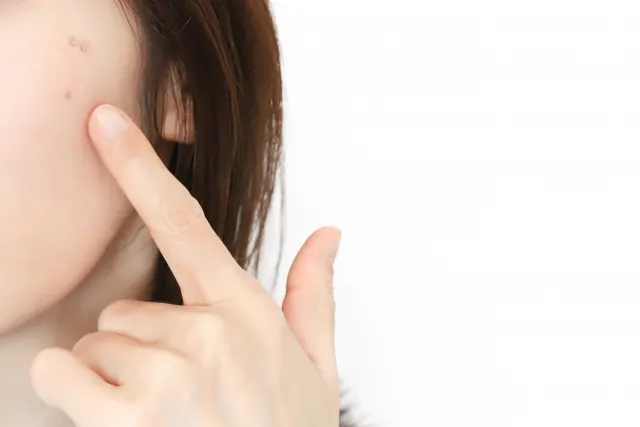
Dark spots that become more noticeable with age are one of the most common beauty concerns. Even with cosmetics or whitening care, stubborn spots often refuse to fade. This is where laser treatment for spots has gained attention. In recent years, it has become easily accessible at dermatology and aesthetic clinics, widely chosen as a treatment that delivers visible and reliable results.
This article provides a detailed, expert explanation of the basics of laser treatment for spots, including its effects, approximate costs, possible side effects, and important precautions.
What is laser treatment for spots? The basic mechanism.
Laser treatment for spots is a procedure that uses laser light of specific wavelengths to selectively destroy melanin pigment in the skin. Melanin, which causes dark spots, accumulates within the skin due to factors such as ultraviolet exposure, ageing, and hormonal changes, appearing as brown or black patches.
The laser light is designed to be easily absorbed by melanin, converting the absorbed light into heat energy that breaks the pigment into fine particles. Over time, these fragmented pigments are naturally eliminated through the body’s metabolic processes, resulting in the lightening or disappearance of the spots.
A major feature of this treatment is its ability to target only the pigment while minimising damage to the surrounding healthy skin tissue. Compared with traditional surgical methods or treatments that use strong chemical agents, it carries a lower risk and is more likely to achieve a natural-looking result.
Types of commonly used lasers.
There are several types of lasers used for spot removal, each differing in wavelength and characteristics. The choice of laser depends on factors such as the type and depth of the pigmentation, as well as the patient’s skin type.
1. Q-Switched Ruby Laser
This laser has a wavelength of 694 nm and is characterised by a high absorption rate by melanin. It is particularly effective for age spots (sun-induced pigmentation) and freckles, and its effects can often be seen in a relatively short period. However, temporary post-inflammatory pigmentation may occur after treatment, making proper post-procedure care important.
2. Q-Switched Alexandrite Laser
This laser uses a wavelength of 755 nm and is used not only for spots but also for birthmarks and tattoo removal. Compared with the ruby laser, it places less stress on the skin and is said to be well-suited for the skin types of Asians, including Japanese individuals.
3. Pico Laser
Recently gaining attention, the pico laser emits pulses with an extremely short duration measured in picoseconds (one trillionth of a second). Compared with conventional nanosecond lasers, it can break melanin into finer particles, facilitating smoother metabolic clearance, potentially reducing the number of treatment sessions and lowering the risk of pigmentation. Additionally, its short downtime and minimal redness or scabbing make it especially popular among those seeking a natural-looking result or those who do not want their daily life to be affected.
The importance of choosing the right laser.
Even within the category of “spots,” there are many types with different causes and characteristics, such as age spots, freckles, and melasma. For example, melasma carries a risk of worsening with strong laser irradiation, so low-power pico lasers or laser toning are typically chosen. Therefore, the ability to select the appropriate laser according to the type of spot is the most critical factor influencing treatment outcomes.
Effects and benefits.
A major feature of laser treatment for spots is its rapid and reliable effectiveness. In many cases, scabs naturally fall off within one to two weeks after the procedure, resulting in lightened or completely cleared spots. Particularly for cases where melanin is present in the epidermis, such as age spots (sun-induced pigmentation) and freckles, noticeable improvement can often be seen after just one treatment.
However, depending on the type and depth of the spot, multiple sessions may be necessary. For example, melasma carries a risk of worsening with strong laser exposure, so “laser toning,” which involves repeated low-power treatments, is often chosen, and it may take several months before results become noticeable. In this way, a treatment plan tailored to each patient’s skin type and the characteristics of their spots is essential.
Main benefits.
1. High effectiveness
It can address dark spots and deep pigmentation that are difficult to improve with whitening cosmetics or topical treatments. Because the laser directly destroys melanin, it is more likely to achieve clear results compared with surface-level care.
2. Short treatment time
The procedure itself typically takes only a few minutes to around 30 minutes, making it easy for busy individuals to fit into their daily routine. Since no scalpel is used, scarring is minimal, and downtime can be kept relatively short.
3. Targeted treatment possible
Instead of irradiating the entire face, only the specific areas of concern can be treated, allowing for a natural-looking result. Laser intensity can also be adjusted according to the darkness and location of the spots, giving the procedure a customised, tailored feel.
The importance of aftercare.
After laser treatment, temporary redness or inflammation may occur, and scabs may form. These usually subside within one to two weeks, but exposure to ultraviolet rays during this period can cause post-inflammatory hyperpigmentation (a phenomenon where spots appear darker). Therefore, using sunscreen and taking measures to block sunlight are essential. Additionally, following the doctor’s instructions for applying ointments or moisturisers can speed up recovery and help maintain a more aesthetically pleasing result.
In other words, laser treatment for spots excels over conventional care methods in that it can deliver highly effective results in a short period, but the longevity and satisfaction of the outcome largely depend on proper post-treatment care.
Cost Estimates and Typical Price Range
The cost of laser treatment for spots varies greatly depending on the clinic’s location and facilities, the type of laser used, the size and number of spots, and the number of treatment sessions. As it is a private (non-insured) procedure, health insurance does not apply, and each clinic sets its own pricing system.
Clinics that use the latest pico lasers or high-performance medical-grade equipment tend to charge more than those using conventional devices. On the other hand, spot treatments using simpler equipment are often available at relatively affordable prices.
Typical price range
- Approximately ¥2,000–¥5,000 per 1 mm
→ This pricing applies when targeting very small spots for precise removal. If there are multiple spots, the total cost can reach several tens of thousands of yen. - Single spot (approximately 5 mm in diameter): ¥5,000–¥15,000
→ This price range is commonly used for noticeable spots that concern many people (such as age spots). It is suitable for those who want focused treatment on prominent areas only. - Full-face treatment (laser toning or pico toning, etc.): ¥20,000–¥50,000
→ This option is chosen not only for spots but also for dullness, freckles, and overall skin tone improvement. Many people receive it as part of general skincare, and it is popular as a component of anti-ageing care.
Additional costs and options.
In addition to the procedure itself, the following costs may also apply.
- Initial consultation and follow-up fees: approximately ¥2,000–¥5,000.
- Anesthesia fee (if required): around a few thousand yen.
- Post-treatment medications: ointments, whitening creams, moisturisers, etc., approximately ¥2,000–¥5,000.
- Follow-up and monitoring fees: additional charges may apply for post-procedure check-ups.
Course fees and discount programs.
When there are multiple spots or freckles spread over a wide area, using multi-session courses or set pricing can be more cost-effective. Examples include plans such as “fixed price for up to 10 spots” or “three-session full-face course.” This helps lower the per-session cost, making it a good option for those considering long-term treatment.
Cost-related precautions.
- Even for the same “laser treatment,” costs can vary significantly depending on the type of device and the method of power output.
- If the price is too low, there may be risks such as outdated equipment or insufficient practitioner experience, so caution is needed.
- It is important to consider not only the cost but also the doctor’s experience, number of cases treated, and the post-procedure follow-up system when choosing a clinic.
In short, the cost of laser treatment for spots varies widely—from a few thousand yen to tens of thousands—depending on the number and size of spots and the chosen treatment method. The total cost also differs depending on whether it is a single session or a course, so it is essential to check a detailed estimate before undergoing treatment.
Procedure flow and post-treatment precautions.
Typical procedure flow.
1. Consultation
The first step is a thorough consultation with a doctor. During this session, the type of spot (age spots, melasma, freckles, etc.), its size, and depth are accurately assessed. The patient’s skin type, medical history, daily skincare routine, and history of sun exposure are also reviewed to select the most appropriate laser device and power settings. Choosing the wrong laser not only reduces effectiveness but may also worsen the condition, making this diagnostic step extremely important.
2. Procedure
After the consultation, a topical anaesthetic may be applied to the treatment area as needed to minimise pain. The irradiation time per spot ranges from a few seconds to a few minutes, and a full-face session typically takes about 10–30 minutes. Patients may feel a slight stinging sensation, similar to being snapped with a rubber band, but it is generally tolerable. Immediately after the treatment, redness or mild swelling may occur, which can be eased through cooling.
3.Aftercare
After the procedure, ointments are applied to reduce inflammation, and protective tape may be used if necessary. The treated spots may temporarily appear darker, but within a few days they form scabs that naturally fall off within one to two weeks. Once the scabs come off, new skin appears, resulting in a brighter complexion.
Post-treatment precautions.
Thorough sun protection
After the procedure, the skin is very delicate and highly susceptible to UV damage. Exposure to sunlight increases the risk of post-inflammatory hyperpigmentation, so it is essential to use sunscreen (recommended SPF 30 or higher) when going outdoors and to employ physical barriers such as hats or umbrellas.
Temporary redness and scabs
The treated area may temporarily become red or swollen, and scabs may form. It is important to let the scabs fall off naturally; forcibly removing them can cause pigmentation or scarring.
Skincare and lifestyle
After treatment, it is important to follow the doctor’s instructions for applying moisturisers and topical medications to protect the skin’s barrier function. Friction and strong stimuli should be avoided, and cleansing and makeup should be done gently. Additionally, getting sufficient sleep and maintaining a balanced diet can support recovery and help maintain healthy skin.
In short, laser treatment for spots is appealing because its effects can be seen in a short time, but to maximise the results, proper post-procedure care and adjustments to lifestyle habits are essential.
Types of spots and suitable lasers.
Even within the category of “spots,” types vary depending on their cause, location, and depth of pigmentation, and the suitable laser for treatment also differs. No single laser is effective for all spots, making accurate diagnosis and laser selection the key to successful results.
Age spots (commonly known as sun-induced spots)
These are typical spots caused by ultraviolet damage and ageing. They usually appear in middle age or later and are characterised by well-defined edges.
Suitable lasers: Q-Switched Ruby Laser and Q-Switched Alexandrite Laser are effective. These lasers selectively target melanin, allowing noticeable improvement in relatively few sessions. In many cases, a single treatment can lighten the spot, making this a classic target for spot removal.
Freckles (ephelides)
Freckles are largely influenced by genetics and are characterised by small brown spots that appear from the teenage years. They tend to darken with sun exposure.
Suitable lasers: Multiple sessions of laser toning or pico laser are recommended. Complete removal in a single session is difficult, so the spots are gradually lightened over several treatments. Because they are spread across the face, full-face uniform irradiation is often chosen rather than spot treatment.
Melasma
Melasma appears as faint spots symmetrically spread across the cheekbones, most commonly seen in women in their 30s and 40s. Hormonal balance, friction, and UV exposure are believed to contribute to its development.
Suitable lasers: Strong laser irradiation carries a risk of worsening the condition, so caution is needed. Typically, repeated low-power treatments such as pico toning or laser toning are used. Additionally, combining treatment with oral medications (such as tranexamic acid) or topical agents is often employed to enhance effectiveness, which is a characteristic approach in melasma management.
The importance of accurate diagnosis and laser selection.
If treatment is performed without correctly identifying the type of spot, not only may the results be poor, but there is also a risk of worsening the condition. Melasma, in particular, can darken with inappropriate laser treatment, making it more difficult to manage. Therefore, in spot removal, diagnostic accuracy and precise laser selection are directly linked to successful outcomes.
At a reputable clinic, the type of spot is first identified using tools such as a dermoscope or skin diagnostic devices, and a treatment plan tailored to the individual’s skin is proposed. Rather than assuming “it’s a spot, so laser should remove it” on your own, consulting a specialist before starting treatment is the first step toward achieving a beautiful result.
Side effects and risks.

Laser treatment for spots is considered relatively safe within the field of medical procedures. However, results are not guaranteed for every patient, and there is a possibility of certain side effects and risks. Understanding these in advance can help reduce anxiety and allow for a more confident approach to treatment.
Post-inflammatory hyperpigmentation (PIH)
After laser irradiation, melanin can be temporarily stimulated, making spots appear darker. This is called post-inflammatory hyperpigmentation (PIH). In most cases, it fades naturally within a few months, but exposure to UV rays or rubbing the treated area can prolong pigmentation. Appropriate sun protection and the use of topical whitening agents can often help speed up improvement.
Redness and swelling
Immediately after irradiation, it is common for the skin to show mild redness and swelling as an inflammatory response. This usually subsides naturally within a few days to a week, so there is no need for excessive concern. However, depending on individual constitution or skin type, healing may take longer, making aftercare such as moisturising and cooling important during this period.
Possibility of recurrence
Even after a spot has been removed with laser treatment, new spots may appear due to subsequent UV exposure, hormonal changes, or lifestyle factors. Age spots and freckles, in particular, are prone to recurrence. It is important to understand that laser treatment does not fundamentally prevent spots from forming. Continuing sun protection and proper skincare after the procedure can help minimise the risk of recurrence.
Rare risks
In rare cases, blisters, scarring, or depigmentation (white spots) may occur after treatment. These risks can be reduced by the doctor’s experience, the type of laser used, and proper post-procedure care. It is especially important for individuals with sensitive skin or atopic tendencies to inform the doctor beforehand.
Minimising side effects
To prevent or reduce these side effects, the following measures are essential.
- Implement thorough sun protection immediately after the procedure.
- Use moisturisers and topical medications according to the doctor’s instructions.
- Do not rub or touch the treated area while scabs or redness are present.
- Attend regular follow-up appointments and receive additional care as needed.
In short, laser treatment is a procedure that offers high effectiveness, but neglecting proper care can lead to side effects or recurrence.Working closely with a doctor and continuing appropriate treatment and aftercare leads to safe procedures and more satisfying results.
Summary
Laser treatment for spots is an effective method that can visibly improve stubborn spots that have been difficult to treat with conventional skincare or whitening cosmetics in a short period. Options range from targeted spot treatments to laser toning or pico laser procedures aimed at overall facial tone improvement. This allows for customised treatments tailored to the patient’s skin type and spot characteristics, making it popular across a wide range of age groups.
Regarding cost, laser treatment for spots is a private procedure and is not covered by insurance. Prices vary depending on the size and number of spots and the type of laser used, with a typical range of a few thousand to tens of thousands of yen. Additionally, multi-session courses or package plans can offer more cost-effective options. Rather than focusing solely on price, choosing a clinic based on its track record, the doctor’s experience, and the aftercare system contributes to a more satisfying treatment outcome.
After treatment, the skin is extremely delicate, so sun protection and proper skincare greatly influence the final appearance. In addition to using sunscreen, maintaining healthy lifestyle habits and following the doctor’s care instructions can help prevent recurrence of spots and post-inflammatory hyperpigmentation, allowing the treatment effects to last longer.
For those troubled by spots, the most important thing is not to repeatedly try over-the-counter treatments on your own, but to receive a specialist’s diagnosis and choose the most appropriate treatment. Because the method varies depending on the type of spot, an accurate diagnosis is the first step toward successful treatment.
By acquiring accurate knowledge, following proper aftercare, and receiving treatment at a trusted clinic, it is possible to restore clear, youthful-looking skin. Laser treatment for spots is not merely a cosmetic procedure; it can be an important choice for regaining confidence in oneself.



 Toll-free