




“Skin with invisible pores and a smooth texture” — this is the ideal type of skin that everyone longs for.
However, in reality, depending on age, skin type, lifestyle habits, and environmental factors, pores can enlarge, darken, or stretch vertically. Even if you cover them with foundation or concealer, pores may become noticeable again over time due to makeup settling or shine… Many people struggle with this issue.
The key to pore care is identifying the cause and taking the appropriate approach. Whether the pores are due to excess sebum, caused by dryness, or sagging from aging — the care needed varies greatly depending on the type.
This article provides a comprehensive explanation of the types, causes, and remedies for pore problems, based on insights from cosmetic dermatology and the latest research data. From at-home skincare and the effects of individual ingredients, to the newest beauty devices and medical treatments, as well as diet and lifestyle habits, it compiles the entire process for achieving poreless skin into one complete “definitive guide.”
1. Understanding the True Causes of Noticeable Pores
1-1. Structure and Function of Pores
Pores are small openings on the surface of the skin, connected internally to sebaceous glands. Sebum acts as a natural moisturizer, protecting the skin and shielding it from external irritants and dryness.
However, when the amount of sebum secretion or the surrounding pore tissue changes, pores can develop problems such as “enlargement, darkening, or sagging.”
1-2. Types of Pores and Their Characteristics
- Enlarged Pores
Cause: Excess sebum production, thickened keratin, and disrupted skin turnover due to dryness.
Characteristics: Round, visibly enlarged pores that are prone to makeup breakdown. Commonly found in the T-zone. - Blackhead Pores (Comedone Pores)
Cause: Sebum and keratin trapped in the pores oxidize, causing a dark appearance.
Characteristics: Concentrated around the sides of the nose and nose area; feels rough to the touch. - Sagging Pores
Cause: Decrease in collagen and elastin due to aging and UV damage.
Characteristics: Pores appear elongated vertically and become more noticeable along with reduced firmness in the cheeks.
1-3. Factors That Worsen Pore Problems
- Hormonal imbalance: Activates sebaceous glands, increasing sebum production.
- Dryness: The stratum corneum hardens, causing the pore openings to widen.
- Ultraviolet rays: They damage the collagen in the dermis, causing the support around the pores to weaken.
- Aging: The skin’s elasticity decreases, causing the pores to sag.
2. Basic Skincare for Achieving Poreless Skin
2-1. The Importance of Cleansing
The first step in pore care is “proper cleansing.”
- By thoroughly removing makeup residue, sebum, and oxidized impurities, you prevent clogged pores and darkening caused by oxidation.
- Oil and balm types have strong cleansing power and can remove even waterproof makeup, but for dry or sensitive skin, milk-type cleansers are recommended as they are gentle.
Key Points:
- Gently massage in circular motions using your fingertips.
- Avoid water that is too hot, and rinse with lukewarm water at 32–34°C (90–93°F).
2-2. The Role of Face Washing
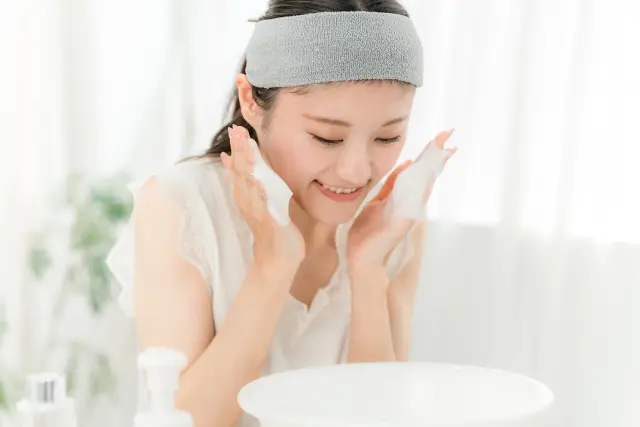
Face washing removes sebum, sweat, and old keratin, enhancing the absorption of skincare ingredients.
- In the morning, cleanse lightly to remove sebum and night sweat.
- At night, gently wash your face with a foamed cleanser after cleansing.
Special care once or twice a week.
- Enzyme cleansing: Breaks down keratin and comedones using proteolytic enzymes.
- Clay cleansing: Removes pore impurities through its absorbent properties.
2-3. Tighten pores with proper moisturization.
Moisturizing is essential because dry skin tends to make pores more noticeable.
- Toner: Provides hydration with hyaluronic acid and glycerin.
- Serum: Tightens pores with vitamin C derivatives and niacinamide.
- Emulsion/Cream: Prevents water loss with ceramides.
3. Scientific Evidence for Pore Care by Ingredients
3-1. Vitamin C Derivatives
- Effects: Suppresses sebum secretion, promotes collagen production, and provides antioxidant activity.
- Evidence: In clinical trials, skin that used vitamin C for four weeks showed an average 17% reduction in sebum production, with a significant improvement in enlarged pores.
3-2. Niacinamide
- Effect: Sebum suppression, skin brightening, and barrier function improvement.
- Evidence: According to the International Journal of Dermatology, the use of a cosmetic containing 5% niacinamide reduced pore area.
3-3. Retinol
- Effect: Promotes skin turnover and stimulates collagen production in the dermis.
- Caution: Be aware of retinoid reaction (redness and peeling), and start with a low concentration
3-4. AHA・BHA
- AHA (alpha hydroxy acids, fruit acids): Effective for dry skin and dullness. Softens the keratin layer.
- BHA (salicylic acid): Effective for oily skin and clogged pores.
4. How to Choose At-Home Skincare Items for Pore Care
4-1. Serum
- Vitamin C derivative serum: Controls sebum production and improves skin firmness. Can be used morning and night.
- Niacinamide serum: Improves dullness and tightens pores. Relatively gentle even on sensitive skin.
4-2. Peeling lotion
- AHA type: for dry and normal skin. Use once or twice a week.
- BHA type: for oily skin. Effective for clogged pores and blackheads.
4-3. Facial device
- Ultrasonic cleansing: effective for blackhead-prone pores.
- Iontophoresis: increases the absorption of vitamin C and tranexamic acid.
- RF (radio frequency): promotes collagen production to improve sagging pores.
5. Latest pore treatments at dermatology clinics
Pore care at home can often be quite effective, but for severe sagging pores or long-standing blackheads, dramatic improvement can be achieved with the help of cosmetic medical treatments. Here, we provide a detailed explanation of representative procedures, their characteristics, and their advantages and disadvantages.
5-1. Chemical peeling
Mechanism: Uses acids such as AHA (glycolic acid or lactic acid) and BHA (salicylic acid) to chemically remove old keratin.
Indications: Enlarged pores, blackheads, acne prevention.
Advantages: Improves skin clarity and makeup adherence immediately after treatment.
Disadvantages: May cause redness or mild peeling. Sun protection is essential immediately after treatment.
Frequency: Every 2–4 weeks; effects stabilize after five or more sessions.
5-2. Fractional laser
Mechanism: Creates tiny holes in the skin with a laser, enhancing the skin’s self-repair ability and rebuilding collagen.
Indications: Sagging pores, acne scars, skin texture improvement.
Advantages: Restores firmness from the dermis, shrinking pores from the inside.
Disadvantages: Downtime of about 3–7 days. Temporary redness and scabbing may occur.
Frequency: Every 1–2 months, 3–5 sessions.
5-3. Dermapen
Mechanism: Creates tiny punctures on the skin surface with fine needles, stimulating collagen production through wound healing. Effectiveness increases when combined with the introduction of cosmetic ingredients.
Indications: Sagging pores, cratered skin.
Advantages: Shorter downtime compared to fractional laser.
Disadvantages: Mild redness and swelling for 1–2 days.
Frequency: Every 3–4 weeks, 3–5 sessions.
5-4. HydraFacial
Mechanism: Removes old keratin, sebum, and pore impurities using water flow and suction while introducing serums.
Indications: Blackheads, rough skin texture.
Advantages: No downtime. Makeup can be applied immediately after treatment.
Disadvantages: Effects are maintained only with continued treatments.
Frequency: Once a month.
6. Ask a cosmetic dermatologist! Professional perspectives on pore care
Q: What is the most important point in pore care?
“Identify the condition and cause of your pores, and choose care accordingly. Treatments for excess oil will be ineffective on dehydrated skin, and excessive cleansing on dry skin can make things worse.”
Q: What is the difference between people who can manage with just at-home care and those who need professional treatments?
“Mildly enlarged pores or light blackheads can be improved with skincare, but sagging pores or deep cratered skin respond more effectively to professional cosmetic treatments.”
Q: What should you be careful about after treatment?
“Sun protection and moisturizing. Your skin is sensitive after treatment, so switch to gentle skincare products.”
7. Pore care from within
7-1. The importance of nutrients
- Vitamin C: promotes collagen production and has antioxidant effects (citrus fruits, broccoli).
- Vitamin E: promotes blood circulation and has antioxidant effects (nuts, avocado).
- Zinc: controls sebum and supports skin regeneration (oysters, red meat).
7-2. Improving sleep quality
- The first three hours after falling asleep are the peak of growth hormone secretion, essential for skin regeneration.
- Avoid blue light exposure and caffeine intake before bedtime.
7-3. UV Protection
- Ultraviolet rays accelerate pore aging.
- Use sunscreen with SPF 30 or higher and PA+++ every day.
- Even indoors, take sun protection measures near windows.
7-4. Importance of Hydration
When the body is dehydrated, the skin tries to protect its barrier function by producing more sebum. This is one cause of excess sebum and enlarged pores.
The recommended daily water intake is roughly body weight × 30 ml. For example, someone weighing 50 kg should drink about 1.5 L.
However, it’s best to sip water or barley tea at room temperature throughout the day rather than drinking a large amount at once. Beverages high in caffeine or sugar can have the opposite effect due to their diuretic effect and impact on blood sugar levels.
7-5. Preventing pore problems by improving gut health
When gut health is disrupted, inflammatory substances in the body increase, which stimulate the sebaceous glands and worsen clogged pores and redness.
- Foods that increase good bacteria: fermented foods such as yogurt, natto, and miso.
- Dietary fiber that feeds the gut: burdock root, mushrooms, seaweed, oatmeal.
- Limit excessive fats and sugars: trans fats in particular tend to increase sebum production.
8. Key points for seasonal skincare
- Spring and summer: Sebum production is active. Use vitamin C serums and light moisturizers. Strengthen sun protection.
- Autumn and winter: Focus on dryness prevention. Protect skin with creams containing ceramides and hyaluronic acid. Use a humidifier.
Spring pore care: Pollen, yellow dust, and PM2.5 stick to pores, causing inflammation and clogging. When going out, physically protect your skin with a hat or mask, and cleanse gently with a low-irritant face wash immediately after returning home.
Summer pore care: Sebum production is at its peak. Control sebum with serums containing vitamin C derivatives, and be mindful of dryness from air conditioning. Surprisingly, moisture is lost even indoors.
Autumn pore care: As humidity drops, the skin loses moisture, making pores more prone to enlargement. Strengthen the skin barrier with creams containing ceramides and regulate skin turnover.
Winter pore care: Dryness from heating is the biggest enemy. Layer moisturizers in three steps: toner → serum → cream. Use a humidifier to maintain indoor humidity at 50–60%, which is ideal.
9. Pore care: actions to avoid
- Rubbing your face harshly or using strong scrubs that cause friction.
- Squeezing pores with nails or tools, which can cause inflammation and hyperpigmentation.
- Neglecting moisturizing and sun protection.
Conclusion
Poreless skin relies on “accurate cause analysis” and a “combined approach.”
- Maintain your skin daily with care tailored to the underlying causes.
- Use professional cosmetic treatments when needed to achieve fundamental improvement.
- Boost your skin’s resilience through diet, sleep, and sun protection.
If you gradually review your habits and skincare from today, your pores will definitely improve.
Beautiful, poreless skin comes from daily effort and the right knowledge.







 Toll-free