






For sensitive skin, skincare missteps often arise from “excessive steps” and “incompatible ingredients.” This is where multifunctional skincare products come into focus—products that, with minimal friction and minimal steps, simultaneously provide hydration, soothing, barrier repair, and anti-ageing care. However, multifunctional does not necessarily mean ingredient overload. On the contrary, the practical solution for sensitive skin lies in a design that combines key modules based on skin science—hydration, soothing, repair, and antioxidants—in just the right amounts, while minimising “noise” such as surfactants and fragrances. This article provides a professional yet practical guide on selecting ingredients based on the pathophysiology of sensitive skin, interpreting formulations, using products minimally but effectively, and fine-tuning according to season, age, and lifestyle. Across ten chapters, it presents a comprehensive view of “skin-friendly multifunctionality” that can be implemented from today.
Chapter 1: The Nature of Sensitive Skin and the Definition of “Multifunctional”
Sensitive skin is not merely defined by a “subjective discomfort in response to stimuli”; it also involves impaired stratum corneum barrier function and heightened neural sensitivity. When the quantity or quality of intercellular lipids in the stratum corneum—particularly ceramides—is disrupted, transepidermal water loss (TEWL) increases, making the skin more vulnerable to external irritants. Additionally, the production of inflammatory cytokines and the sensitisation of sensory nerve receptors such as TRPV1 can trigger stinging or redness even from minor stimuli. In other words, the primary goal for sensitive skin is not simply to avoid irritation, but to reconstruct the barrier, soothe inflammation, calm hyperreactive nerves, and prevent recurrence.
Here, “multifunctional” does not mean increasing the number of products to “pile on everything.” Rather, it refers to a formulation optimised within a single product that integrates key functional modules at concentrations and with solvents tolerable for sensitive skin:
1. Moisture retention (hyaluronic acid, glycerin, amino acids)
2. Lipid replenishment (ceramides, squalane)
3. Soothing and anti-inflammatory effects (dipotassium glycyrrhizate, allantoin, panthenol, CICA)
4. Antioxidant and anti-glycation measures (niacinamide, vitamin E derivatives, ferulic acid, etc.)
5. pH and penetration design (mildly acidic, low-irritation solvents; combination of high- and low-molecular-weight ingredients)
There are two key reasons for choosing multifunctional products for sensitive skin. First, they reduce the number of steps and friction, limiting exposure to surfactants, thickeners, fragrances, and other auxiliary ingredients. Second, the combination of functions more directly translates into clinical outcomes—reduced redness, improved tightness, and better makeup adherence. A single product that covers everything from post-cleansing over-dryness to daytime external stresses (UV, particulate matter, air-conditioning dryness, pollen) acts as a “safety net” during rushed mornings or unstable periods.
Caution is warranted with formulations that claim multifunctionality but contain multiple irritants. Unfavourable examples include high concentrations of essential oils, high alcohol content, strong colouring or fragrance agents, and combinations of exfoliating acids with overlapping effects. For sensitive skin, long-term barrier reconstruction should take precedence over temporary sensations of freshness. Additionally, routinely performing patch tests (behind the ear or along the facial line for 48–72 hours) helps determine reaction thresholds, enabling the identification of genuinely beneficial multifunctional products.
In conclusion, multifunctionality for sensitive skin means integrating functions to achieve “maximum outcomes with minimal irritation.” It involves reducing product numbers while consolidating the necessary and sufficient functions into a single formulation—this principle underpins all chapters of this article.
Chapter 2: Ingredients That Are “Effective Yet Gentle” for Sensitive Skin
The core of multifunctional skincare for sensitive skin lies in combining hydration, soothing, repair, and antioxidant functions while minimising irritation.
For hydration, the main players are hyaluronic acid—which creates “water pathways” in the stratum corneum (high-molecular-weight for surface hydration, low-molecular-weight for deeper layers)—glycerin, which has high water affinity, and an amino acid blend close to natural moisturizing factors (NMF). These are reinforced in a sandwich structure with lipids such as ceramides (especially multiple types like NP, AP, and EOP) and squalane, recreating a “water-and-oil layer” similar to the lamellar structure of intercellular lipids.
For soothing, ingredients that suppress inflammatory signals are effective, such as allantoin, panthenol (provitamin B5), dipotassium glycyrrhizate, and CICA (Centella asiatica extract). Panthenol increases stratum corneum water content, helps repair micro-cracks, and alleviates the transmission of stimuli. CICA promotes recovery of damaged skin and serves as a useful “bridge” during periods of stinging.
For antioxidant and anti-glycation effects, niacinamide is central to multifunctionality. It gently supports barrier recovery, sebum regulation, skin tone evenness, and pore appearance. Around 5% is generally well tolerated by sensitive skin, with the advantage of causing fewer initial reactions compared to stronger actives like retinol. Vitamin E derivatives, ferulic acid, and resveratrol act as “shields” against urban stresses such as air pollution and blue-light-induced oxidative stress.
Combinations that are too aggressive should be avoided. High-concentration retinol combined with strong acids (AHA/BHA) at high frequency, high alcohol content with fragrances, or cooling stimulants like menthol and spices can unnecessarily activate sensitive nerves. When choosing multifunctional products, it is better to examine the INCI list rather than rely on marketing claims, taking stock of the total amount of potential irritants.
The order of ingredients and choice of solvents are also important. Hydrating polymers in the aqueous phase, squalane or plant sterols in the oil phase, and emulsifiers from mild anionic/nonionic systems produce high stratum corneum affinity with minimal greasiness and film feeling. Good multifunctional products for sensitive skin should be evaluated not immediately after application, but several hours later and over weeks of continuous use, by the “peacefulness” of the skin.
Chapter 3: Reducing Steps and Maximising Results: How to Use Minimal Multifunctional Products
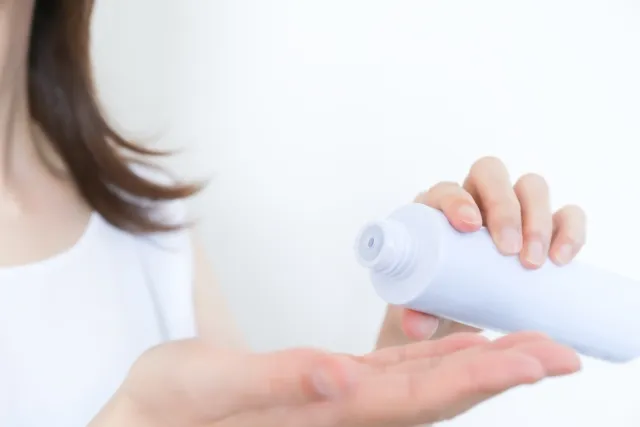
For sensitive skin, the biggest thing to avoid is “unnecessary steps.” Over-cleansing, patting in excessive toner, layering multiple serums, and sealing with a cream—the cumulative friction and total surfactant exposure—can be a root cause of redness and roughness the next day. The value of a multifunctional product lies in cutting through all of this in one go.
In the morning: low-irritant cleansing (or just lukewarm water) → multifunctional product → sunscreen. At night: rinse with lukewarm water → low-irritant cleanser (only if needed) → multifunctional product → night guard (thin layer of petrolatum or squalane). If hydration, lipids, soothing, and antioxidants are integrated in the multifunctional product, there’s no need to insert separate items in between. In dry seasons or under air-conditioning, applying the multifunctional product in two thin layers improves penetration and adherence.
The application method should follow the principle of “press and spread.” Warm the product in your palms, then envelop the skin from the cheeks to the forehead and along the jawline in broad strokes. The finer you rub with your fingertips, the more micro-irritation occurs. On thin areas such as the cheeks and under the eyes, pre-applying a small amount reduces unevenness and friction.
Dividing functions between AM and PM is also effective. In the morning, use a multifunctional product focused on antioxidants and hydration; at night, one focused on repair and soothing. This creates an “attack and defence” rhythm against daily environmental stress. During predictable trigger periods—menstrual cycle, pollen season, long mask use—switching to a night product emphasising soothing a few days in advance can be beneficial.
If you need to add functions, it’s safer to replace layering with a “spot second application” of the same multifunctional product. Increase the functional density only in necessary areas, staying below the irritation threshold. This is a sustainable routine for sensitive skin.
Chapter 4: Fine-Tuning Formulations According to Season, Environment, and Age
Multifunctional products for sensitive skin are not a “fixed solution” but a “variable optimum.”
In spring, pollen, yellow dust, and strong winds easily disturb the barrier, so the soothing module should be emphasised. Increase the ratio of CICA, allantoin, and panthenol, while eliminating fragrances and essential oils as much as possible. In summer, the combined effects of sweat, sebum, UV exposure, and air pollution increase, so focus on antioxidants (niacinamide, vitamin E derivatives) and lightweight hydration (low-molecular-weight hyaluronic acid), using mainly squalane for oils. This avoids clogged pores while minimising mucosal irritation.
Autumn is a period to address summer-induced photoaging, with dullness and roughness becoming apparent. However, overdoing exfoliation can backfire. Keep acids at low concentration and frequency, and use niacinamide for tone-evening alongside ceramide complexes to repair the lamellar structure. In winter, low humidity and temperature fluctuations are the main stressors. Use high-molecular-weight hyaluronic acid or heparinoid-like substances for hydration, and reinforce lipids with ceramides and squalane. A night guard before sleep blocks the “final escape route” for transepidermal water loss.
Age differences also matter. In the teens and twenties, sebum and water fluctuations are large, so a lightweight multifunctional product that does not overstimulate sebum is suitable. In the early thirties, balance barrier reconstruction with early tone correction; in the late thirties and beyond, focus more on dryness, microinflammation, and anti-glycation/oxidation. After fifty, lipid reduction and slower recovery become pronounced, making the quality of the oil phase (squalane, phytosterols) and multi-ceramide design increasingly important.
Environmental factors also affect sensitive skin. Long hours in air-conditioned spaces, high humidity and temperature inside masks, improper indoor humidification when living with children or older adults, and external stresses in active environments—salt, wind, UV at the beach or mountains—can all challenge the skin. Carrying a single multifunctional product and applying small “palm touch-ups” during sudden daytime dryness minimises mechanical friction. When travelling, reducing the routine to cleanser, multifunctional product, and sunscreen, and adjusting the amount of cleanser according to hard or soft hotel water, lowers the risk of skin trouble.
Chapter 5: Case Studies: Strategies for Unstable, Inflamed, and Stable Periods
First, the “unstable period.” When the skin is prone to stinging, with sporadic redness and roughness, the key principle is to drastically “prune” the routine. At night: low-irritant cleansing → lukewarm rinse → multifunctional product emphasising soothing → thin night guard. In the morning: lukewarm water → multifunctional product → sunscreen is sufficient. The multifunctional product should centre on panthenol, allantoin, dipotassium glycyrrhizate, and CICA, while ceramides and squalane stabilise the barrier “scaffold.” Niacinamide should be limited to around 3%, gradually increasing to 5% once stinging subsides.
During the “inflammatory period” (with pronounced redness, heat, or burning at contact points), cutting physical and chemical stimuli is paramount. Cleanse only areas with noticeable oil, rinsing the rest with lukewarm water. The multifunctional product should focus entirely on soothing and hydration, while fragrances, acids, and high-concentration actives are temporarily paused. Before sleep, apply the multifunctional product in a spot-layered manner on friction-prone areas such as the cheekbones and mask-contact zones to form a “micro-cushion.” Switching pillowcases or mask materials to low-friction fabrics can significantly reduce morning redness.
The “stable period” is about quietly building preventive habits. In the morning, use a multifunctional product emphasising antioxidants and lightweight hydration, applying slightly more per pump. At night, apply a repair- and lipid-focused multifunctional in two thin layers, with the night guard spot-applied to the cheeks, corners of the mouth, and around the eyes before bed. Once or twice a week, lightly incorporate low-concentration exfoliating ingredients (such as lactate or PHA in a gentle multifunctional) to prevent accumulation of dullness and roughness.
For concerns about uneven tone or visible pores, choose a multifunctional product centred on niacinamide and low-molecular-weight hyaluronic acid, increasing vitamin E derivatives only during photoaging seasons (early to mid-summer). For dryness-prone sensitive skin, a triad of ceramides NP/AP/EOP combined with cholesterol and fatty acids is effective, with a squalane-based light oil phase providing thickness without greasiness.
In all cases, evaluation should not be based on “does it sting?” but on “user-centred indicators”: reduced tightness the next morning, smoother makeup application, and absence of evening redness rebound. If these indicators are positive, that is your “correct multifunctional routine.”
Chapter 6: Strategies for Using Multifunctional Skincare Across Different Age Groups
Sensitive skin exists at every age, but the priorities for “multifunctional” skincare shift depending on the life stage.
In the teens and twenties, sebum production is high, often leading to acne and clogged pores, while barrier immaturity and hormonal fluctuations are also pronounced. What this age group needs is a multifunctional product that combines soothing with lightweight hydration. Formulations centred on low-concentration niacinamide, panthenol, CICA, and low-molecular-weight hyaluronic acid provide necessary moisture without excess oil, while helping to reduce redness and inflammation.
In the thirties, combined concerns such as dryness, enlarged pores, and uneven skin tone increase. What is needed here is “antioxidation plus barrier reconstruction.” Place ceramides, glycerin, and niacinamide at the core of the multifunctional product, adding vitamin E derivatives or ferulic acid as needed. In the late thirties, with sleep deprivation and stress becoming more significant, night-use multifunctional products emphasising the soothing module (panthenol, allantoin) become particularly valuable.
In the forties, declining oestrogen causes a rapid decrease in the skin’s water-retention capacity. What is needed at this stage is “lipid replenishment” and “regeneration support.” Incorporate high concentrations of ceramide complexes and squalane, and integrate peptides or placental extracts to boost skin recovery. Alongside anti-inflammatory care, it is also important to address yellowing and dullness caused by glycation and oxidation.
From the fifties onward, both sebum and water content decline, making chronic dryness, fine lines, and sagging more prominent. At this stage, multifunctional products should integrate “soothing + barrier repair + lipid sealing.” Formulations containing growth-factor-like ingredients such as EGF or FGF, or stem-cell-conditioned media, may aid post-inflammatory recovery and compensate for delayed turnover. Additionally, multifunctional products used with a small amount of petrolatum are a practical approach widely recommended in dermatological practice for dryness-prone sensitive skin.
By adjusting the “design axis” of multifunctional products according to age, sensitive skin can maintain stability throughout life while receiving the necessary functions without excess or deficiency.
Chapter 7: Ingredient Compatibility and the Science of Multifunctional Skincare
Because multifunctional products combine multiple ingredients, incorrect “compatibility” can have counterproductive effects. For example, niacinamide and vitamin C are generally compatible, but the form of vitamin C (L-ascorbic acid versus derivatives) and the solution’s pH can alter its reactivity. For sensitive skin, unstable combinations should be avoided.
Examples of well-compatible combinations:
- Ceramides + hyaluronic acid + squalane → simultaneously replenish water and lipids, recreating the lamellar structure.
- Niacinamide + panthenol → support barrier repair and soothing simultaneously, reducing redness.
- CICA + allantoin → suppress inflammatory cytokines and raise the irritation threshold.
Combinations requiring caution:
- High-concentration retinol + strong acids (AHA/BHA) → increases the risk of barrier disruption and can exacerbate inflammation in sensitive skin.
- High-concentration vitamin C + copper peptides → may theoretically antagonise each other, potentially cancelling out their effects.
In multifunctional skincare, stabilisation technologies—such as nanocapsulation, liposomes, and microemulsions—are critically important. They mitigate incompatibilities through “time-release,” allowing sensitive skin to tolerate the product while still delivering effective results.
Furthermore, the choice of solvent is a major factor. Alcohol-based formulations tend to cause irritation, so mild polyols such as glycerin, butylene glycol, or pentylene glycol are preferable. For sensitive skin, the “compatibility and stability” of ingredients should take precedence over their sheer “number” when evaluating multifunctional products.
Chapter 8: Lifestyle Factors and the Synergistic Effects of Multifunctional Skincare
No matter how excellent a multifunctional product is, its effects are halved if lifestyle habits work against it. For improving sensitive skin, the three pillars are sleep, nutrition, and stress management.
Sleep is essential for regulating turnover and cytokine balance. Using a multifunctional product before bed allows its ingredients to align with the skin’s nighttime repair processes, enhancing soothing and repair efficiency.
For nutrition, omega-3 fatty acids (from fatty fish or flaxseed oil), antioxidants (vitamins C and E, polyphenols), and protein are important. These work synergistically with the hydration and anti-inflammatory effects of topical multifunctional products.
Stress management is often the most overlooked factor, yet chronic stress can worsen inflammation via excess cortisol, prolonging sensitive skin. Incorporating breathing exercises, yoga, or walks into daily life helps create an environment in which the skin’s soothing modules can function effectively.
In other words, multifunctional skincare does not achieve its full potential alone; its true value emerges only when the “foundation of daily life” and the “science of multifunctionality” work in synergy.
Chapter 9: Cutting-Edge Technologies and the Future of Multifunctional Skincare
Advances in cosmetic technology are making multifunctional skincare even more friendly for sensitive skin.
Liposome technology encapsulates potentially irritating ingredients, releasing them gradually to improve tolerability. Advances in AI skin diagnostics and IoT devices are making it increasingly feasible to propose customised multifunctional products tailored to the skin’s condition on any given day.
Furthermore, probiotic and postbiotic cosmetics help stabilise sensitive skin by modulating the skin microbiome. Incorporating these into multifunctional products could advance them beyond traditional “repair and hydration” toward a new paradigm of “skin-environment management.”
Additionally, sustainable sourcing of ingredients and low-impact manufacturing processes minimise not only irritation to sensitive skin but also the environmental burden. Future multifunctional products will likely prioritise a “design that is gentle to both people and the planet.”
Chapter 10: Conclusion: The “Optimal Solution” for Sensitive Skin and Multifunctional Skincare
For sensitive skin, multifunctional skincare holds significance beyond “time-saving” or “all-in-one” claims. It is a methodology for achieving maximum barrier repair and stability with minimal friction and minimal ingredient-induced irritation.
The basic principle is:
- Rebuild the barrier through hydration and lipid replenishment.
- Soothe nerve sensitivity through calming and anti-inflammatory actions.
- Control long-term damage through antioxidant protection.
Integrating these functions into a single formulation constitutes “good multifunctionality” for sensitive skin.
Multifunctional skincare reveals its true value when customised according to age, season, daily rhythm, and environment. Combined with technological advances and lifestyle improvements, sensitive skin can transition from being a mere “trouble-prone type” to a “long-term stable and balanced skin.”
In conclusion, the future of sensitive skin lies in the integration of “intelligent multifunctionality” and “optimised lifestyle habits.” When chosen and used correctly, multifunctional skincare can become the most reliable partner for sensitive skin.







 Toll-free