






The Growing Popularity and Demand for VIO Hair Removal
In recent years, with rising beauty awareness, the demand for “VIO hair removal” has surged. Especially for intimate zones, people choose medical hair removal for various reasons, such as improved hygiene and avoiding skin issues from self‑treatment. But what many wonder is: “How many sessions are needed to really feel the effects of VIO hair removal?”
In this article, centering on the keyword “VIO hair removal number of sessions,” we will explain the relationship between number of sessions and results, the treatment pace, differences between medical and salon hair removal, and draw on the latest clinical research to provide guidelines for VIO hair removal session counts and benchmarks.
Differences by Area and Removal Method
VIO hair removal refers to the removal of hair in the following three areas:
- V line: around the bikini line (above the pubic bone)
- I line: the sides of the genital area (around the labia)
- O line: the area around the anus
These areas have thin skin and hair that is typically denser and coarser, so hair removal here is more challenging than in other body parts. There are two main methods:
- Medical laser hair removal: high‑output lasers performed by medical institutions. Can achieve permanent hair reduction.
- Salon hair removal (light-based removal): uses lower-output light (e.g. IPL) that targets the hair root. Primarily aims for hair reduction rather than permanent removal.
Typical Number of Sessions and Expected Effects
The number of sessions required for VIO hair removal depends on:
- Hair density and thickness
- Skin type and hair texture
- The removal method (medical vs. salon)
- Treatment intervals (commonly every 6 to 8 weeks)
- Desired finish (overall thinning, partial retention, or hairlessness)
Medical hair removal — session benchmarks
| Medical hair removal | —session benchmarks |
| 1–3 sessions: | temporary hair reduction, hair regrowth is common |
| 4–6 sessions | :clear reduction in hair volume, easier self‑maintenance |
| 7–9 sessions | :many achieve satisfaction and smooth finish |
| 10+ sessions | :for those with very coarse hair or perfectionists |
Salon hair removal — session benchmarks
| Medical hair removal | —session benchmarks |
| 6–8 sessions | :noticeable hair reduction, but regrowth still occurs |
| 10–12 sessions | :many will no longer need regular self‑maintenance |
| 13+ sessions | :for those aiming for nearly complete hairlessness, though it takes more time |
Why Multiple Sessions Are Necessary: Hair Growth Cycles and VIO Traits
Hair removal cannot be completed in one session because of the hair growth cycle (anagen, catagen, telogen). Lasers or light only affect hairs in the anagen (growth) phase, so a single session cannot impact every hair.
VIO areas especially require more sessions due to:
- Hair being coarse, dense, and containing more melanin
- Skin more prone to pigmentation, sometimes requiring lower energy
- Being a highly sensitive area, where energy output is sometimes adjusted to reduce pain
Medical vs Salon Removal: Impacts on Session Count and Results
| Factor | Medical RemovalSalon | Removal |
| Output | High | Low |
| Effect | May achieve permanent removalPrimarily | reduction / temporary effect |
| Sessions | Often 5–8 sessions sufficeUsually | requires 10+ sessions |
| Pain | More intense (anesthesia available) | Milder |
| Cost | Higher (¥10,000–¥20,000 per session)Cheaper | (a few thousand yen per session) |
Conclusion: If you want to finish with fewer sessions and reliable results, medical removal is recommended. Salon removal is attractive for lesser pain and lower initial cost, but the number of sessions tends to be higher.
Latest Research and Evidence
Recent studies demonstrate the scientific effectiveness of medical laser removal in the VIO region. For example, some literature states that medical laser removal yields statistically significant effects in the VIO area.
Further, a 2022 study reported that the VIO region requires on average 1.5–2 more sessions than face or legs.
What to Know Before Starting Treatments
Stop self‑hair removal methods
Before treatment, avoid plucking or waxing; use shaving to maintain short hair. If no hair root is present, the laser cannot react.
Avoid treatment during menstruation
Since VIO is near mucous membranes, performing treatment during menstruation increases discomfort or risk, so it is generally avoided.
Seek medical advice if pigmentation is present
If pigmentation is strong, there is a risk of burns; treatment might not be possible. Consult with a specialist.
Frequently Asked Questions (FAQ)
Q. After how many sessions will VIO be completely smooth?
A. With medical removal: around 8–10 sessions. With salon removal: 12 or more. But there is individual variation depending on hair type and desired finish.
Q. Are unlimited session plans cost‑effective?
A. Over the long term, unlimited plans can offer good value. However, since some people may be satisfied before using all sessions, clarify your goal before signing a contract.
Q. How long should you wait between sessions?
A. Generally 6–8 weeks is recommended. Aligning with the hair growth cycle makes treatments more efficient.
Examples of Session Counts by Age & Hair Type
Age and hormone balance significantly affect VIO hair removal outcomes.
By age
- Early 20s to early 30s:
- Hormonal balance is stable, hair follicles are active.
- Many achieve smooth results in 7–9 sessions
- with medical removal.
- Hormonal balance is stable, hair follicles are active.
- Late 30s to 40s:
- Hair may become softer; some achieve adequate reduction in 6–8 sessions
- with medical removal.
- Hair may become softer; some achieve adequate reduction in 6–8 sessions
- 50s and beyond:
- Might have gray hair or finer hair mixed in, making lasers less effective;
- combining needle (electrolysis) removal may be considered.
- Might have gray hair or finer hair mixed in, making lasers less effective;
By hair type
- Coarse hair:
- More melanin means good laser response in early sessions.
- However, deeper roots may require ~10 sessions for final finish.
- More melanin means good laser response in early sessions.
- Fine hair:
- Slower initial response; some may finish in 6–7 sessions.
- When hair becomes very fine, “accumulative heat” lasers (such as Soprano Ice) or accumulative‑type medical removal may be preferable.
- Slower initial response; some may finish in 6–7 sessions.
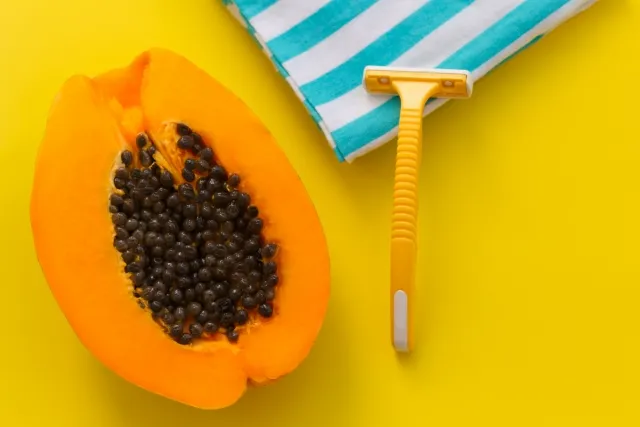
Precautions Before and After Treatment
To maximize the effectiveness of the treatment, proper care before and after hair removal is also important.
Before treatment
- Day before self‑shaving
- Use an electric razor for trimming.
- Avoid deodorants or lotions
- Use an electric razor for trimming.
- These can block laser light;
- arrive at the clinic with nothing applied.
- arrive at the clinic with nothing applied.
After treatment care
- Redness / stinging
- Use a cold compress or
- prescribed ointment.
- Use a cold compress or
- Moisturization is crucial
- use low‑irritation VIO‑suitable moisturizers.
- Skin tends to dry after removal
- use low‑irritation VIO‑suitable moisturizers.
- Avoid friction or irritation
- Refrain from tight underwear or pads for a few days.
- Refrain from tight underwear or pads for a few days.
Advantages of Having VIO Removal Done in Medical Facilities
Because VIO is close to mucous membranes and prone to complications, performing it in a medical setting is recommended.
Medical consultation
A doctor can check for skin conditions or allergies before treatment, enhancing safety.
Use of anesthesia
I‑line or O‑line can be more painful; topical anesthetic can improve comfort.
Immediate response to complications
If burns, pigmentation, or folliculitis occur, doctors can immediately diagnose or treat.
Relationship Between Session Count and Cost
VIO removal effectiveness consolidates over repeated sessions, and cost is a key consideration.
Medical removal cost estimates
- 1 session: ¥15,000–¥25,000
- 5‑session course: about ¥60,000–¥100,000
- Unlimited plan: ~¥120,000–¥150,000 (many clinics valid for 2–3 years)
Salon removal cost estimates
- 1 session: ¥5,000–¥10,000
- 12‑session course: ~¥70,000–¥100,000
- Unlimited plan: ~¥100,000 (with a guarantee period)
Although medical removal feels more expensive per session, it tends to show results faster, so overall it may be more cost‑efficient. Thus, evaluating total cost vs effectiveness is important.
The Optimal Number of VIO Sessions Depends on “Purpose × Hair Type × Method”
Regarding the question “How many sessions are needed for VIO hair removal?” the conclusion is:
- Medical removal: 7–9 sessions is the typical reference. Even for coarse hair, around 10 sessions often suffice.
- Salon removal: Usually requires 10–15 or more sessions depending on the desired finish.
- The optimal number varies with hair type, age, and desired result (natural vs hairless).
- Medical removal holds advantage in both effectiveness and safety.
VIO hair removal is more than just cosmetic — it also contributes to self-esteem, hygiene, and resolving concerns around intimacy. By selecting the number of sessions and method that suit you and proceeding with a plan, you can achieve a safe and satisfactory VIO removal result.
References (VIO Removal / Medical Hair Removal)
- Alster TS, Tanzi EL.
Laser hair removal: a review.
Dermatol Clin. 2011 Jan;29(1):67-73. doi: 10.1016/j.det.2010.08.009
- Wanitphakdeedecha R, Manuskiatti W, Siriphukpong S, et al.
Efficacy and tolerability of diode laser hair removal in the bikini area: a prospective, split-side, evaluator-blinded study.
Lasers Med Sci. 2022 Jun;37(5):2549–2557. doi: 10.1007/s10103-021-03374-9
→ ビキニライン(VIO)におけるダイオードレーザーの脱毛効果と忍容性を検証した最新研究。 - Haedersdal M, Wulf HC.
Evidence-based review of hair removal using lasers and light sources.
J Eur Acad Dermatol Venereol. 2006 Jan;20(1):9-20. doi: 10.1111/j.1468-3083.2005.01362.x
- Battle EF Jr.
Advances in laser hair removal: Long-pulsed alexandrite and Nd:YAG lasers.
Facial Plast Surg Clin North Am. 2004 Nov;12(4):573–582. doi: 10.1016/j.fsc.2004.06.001
- Tanzi EL, Alster TS.
Single treatment hair removal using an 800 nm pulsed diode laser: a long-term clinical study.
Lasers Surg Med. 2003;33(2):132–137. doi: 10.1002/lsm.10207






 Toll-free