






“The correct procedure” is the best serum for your skin. Skincare is not about addition, but about reproducibility through wash → condition → protect. This article organises, scientifically, the process from cleansing to moisturising and daytime UV protection, centred on the stratum corneum barrier (corneocytes + intercellular lipids) and the sebum film. It explains the “key points for effectiveness” — pH, surfactants, water retention/sealing (humectants/emollients), lamellar structure, usage amount, and application pressure — in an easy-to-understand way, covering fine adjustments by skin type and templates for morning and night routines.
Chapter 1: General Skincare Principles — The Goal is “Minimising Deductions” and Protecting the Barrier
The skin reacts not to whether something is “natural or synthetic,” but to the molecular properties, concentration, contact time, and pH. Therefore, the most important indicator in skincare is “rather than adding, nip the points of deduction in the bud.” Excessive oil removal, prolonged cleansing, water that is too hot, strong friction, random layering of high-concentration actives, and daytime UV — these act as small daily “loss points,” disturbing the lamellar structure of the stratum corneum, increasing transepidermal water loss (TEWL), and triggering a chain reaction of dryness → micro-inflammation → excessive sebum → uneven texture. First, establish reproducibility by standardising procedures (time, frequency, temperature, amount, pressure).
The ideal design is:
①Cleansing without over-stripping (short contact, weakly acidic, low friction) →
②Redistribution of stratum corneum moisture (hydration with toner) →
③Lamellar repair and sealing (lipid reinforcement with emulsion/cream) →
④Protection from daytime light and oxidative stress (UV + antioxidants) →
⑤Avoid interfering with nighttime recovery (refrain from excessive exfoliation or strong stimuli).
This “few steps, high precision” approach forms the foundation of resilient skin.
Chapter 2: The Science of Cleansing — Remove Makeup, UV, and Sebum “Gently and Quickly”
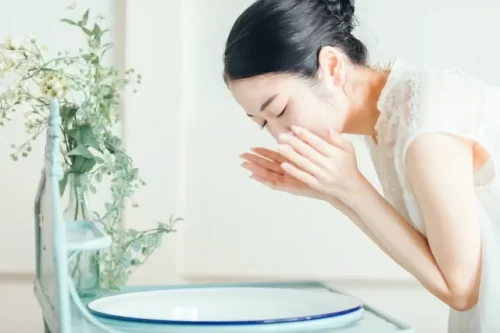
Cleansing is the biggest deduction point. What is required is not “strength,” but the selective ability to quickly remove only what is necessary. Surfactants should be amino acid-based, taurine-based, or betaine-based; oils should primarily be high-polarity esters, which have excellent affinity for the stratum corneum. Limit contact time to 60–90 seconds, and emulsify and rinse thoroughly with lukewarm water at 32–34°C. Hot water dissolves lipids, while water that is too cold leaves surfactants behind.
- Light makeup / dry-prone: use milk or gel for a short duration.
- Waterproof UV / oily skin: use oil or balm → always emulsify → rinse off with lukewarm water.
- Sensitive / redness-prone: avoid fragrances and high-concentration alcohol; apply by laying and rinsing rather than rubbing.
For the nose and chin, do not “scrub”; leave for several tens of seconds to improve dissolution and removal efficiency. Double cleansing is only necessary on days when there is a residual film or feeling of leftover product. For wipe-off, press and blot with a towel, keeping friction as close to zero as possible.
Chapter 3: Optimising Cleansing — Standardising pH, Foam, Time, and Temperature
Cleansers should be weakly acidic to neutral, with amino acid- or betaine-based types as the baseline. The foam should have “just the right” elasticity — neither too stiff nor too soft — and should simply be rolled over the skin. The T-zone requires several tens of seconds, while the cheeks only need a few seconds. Extending the time does not increase cleansing power, but only softens the stratum corneum and loosens the barrier. Rinse with the prescribed number of times (around 20–30) mechanically, and use touch to check for residue along the hairline, jawline, and sides of the nose.
Moisturising within three minutes after cleansing is the “golden time” for the stratum corneum for water supply and retention. Delays at this stage greatly reduce the efficiency of subsequent moisturising. On days with exercise or high pollen/PM levels, it is safe to raise cleansing intensity by one notch at night, and in the following morning, use lukewarm water + moisturiser — a “variable gear” approach.
Chapter 4: Tolerable Range for Exfoliation — Frequency Design for AHA, BHA, PHA, and Enzymes
Exfoliation does not mean “the more you do, the smoother it gets.” The goal is to fine-tune stagnant stratum corneum turnover, not to destroy the barrier. AHA (lactic acid, mandelic acid) is water-soluble and acts on the surface; BHA (salicylic acid) is lipid-soluble and penetrates the pores; PHA (such as lactobionic acid) has a larger molecular size and acts gently. Frequency should be 1–2 times per week, with short contact time, paired on the same day with calming agents (panthenol/madecassoside) and ceramide reinforcement. Scrubs can cause problems due to particle size and hardness, so regular use is not recommended.
During retinol introduction, avoid layering on the same day as acidic peels; increase gradually from every other day to daily. If reactions (redness, dryness) occur, stop → focus entirely on moisturising → reintroduce using the “three-step rollback” method. The KPI for exfoliation is the uniformity of radiance and makeup adhesion. Evaluate not by “smoothness,” but by how well makeup adheres the next morning.
Chapter 5: Toner — Distribution Techniques to “Hold Water”
The role of toner is not “moisture sensation,” but to distribute water evenly within the stratum corneum. The main players are humectants such as glycerin, propanediol, sodium hyaluronate, and amino acids. The key is uniformity rather than quantity. Press in with your hands → apply in two thin layers to ensure even distribution, so that the subsequent lipid layer works effectively with a small amount.
Niacinamide (2–5%) supports the expression of barrier key proteins (such as filaggrin) and contributes to sebum regulation and tone uniformity — a “few steps, high-efficiency” ingredient. For sensitive skin, avoid fragrances, high-concentration alcohol, and strongly irritating extracts, and maintain a weakly acidic pH. On days when stickiness occurs, reduce the application amount by 30%, or in high-humidity seasons, switch to a lighter formulation — “seasonal tuning.”
Chapter 6: Serums — Use a “Small, Elite Selection” for Each Purpose
Serums are not “better the more you use.” Focus on a single targeted product based on symptom × tolerable stimulus × daily rhythm. For pores/dullness, use vitamin C (including derivatives) in the morning; for loss of firmness, use retinol/retinal at night; for dryness/redness, use panthenol/madecassoside/centella; for texture improvement, use peptides, etc. Layering multiple active ingredients at the same time increases exposure to friction, solubilizers, and preservatives, raising risk, so the basic approach is 1 item × consistent use.
Guidelines for combination use: avoid strong acids × retinol, use vitamin C in the morning and retinol at night (time separation). During the initial introduction, start with low concentration, low frequency, and short contact, and evaluate every two weeks to gradually increase concentration/frequency.
Chapter 7: Emulsions and Creams — Repair the Lamellae and Retain Water
The essence of emulsions/creams is the replacement of intercellular lipids and restoration of their arrangement. The ideal combination is ceramides (NP/AP/EOP, etc.) + cholesterol + free fatty acids — a “trinity.” This pseudo-recreates the lamellar structure of the stratum corneum and reduces TEWL. For texture, apply in dots → spread to connect the surface; even a small amount can cover the area while minimising stickiness.
Zoning is also key: apply thicker on the inner cheeks and around the mouth corners, and thinner on the T-zone. Using oxidation-stable emollients like squalane for “replacement moisturising” allows even oily skin to strengthen the barrier while controlling shine. Finish by applying a very thin layer of petrolatum on areas prone to friction (sides of the nose, cheekbones) for targeted occlusion. Avoid covering the entire face thickly, as this can cause heat buildup and disruption.
Chapter 8: UV & Antioxidants — Minimise Daytime Damage with “Reproducible Protection”
Photoaging contributes to almost every skin concern. Prioritise PA (UVA protection) over SPF, and ensure sufficient quantity and ease of reapplication. Choose formulations with minimal film feel, and in the morning, apply in two layers to even out coverage. Outdoors, reapply thin layers every 2–3 hours. On oily days, follow the sequence: blot with tissue → mist for surface hydration → reapply.
- Key points for UV use: prioritise PA → ensure sufficient amount → choose a texture that allows “reapplication.”
- Morning antioxidant — select a single product and use consistently: vitamin C derivatives, polyphenols (green tea/rosemary), or fullerene.
- Non-cosmetic measures: review the material inside masks, avoid stiff collars, and reduce pressure from smartphones.
The “double layer” of UV protection and antioxidants slows the progression of darkening, redness, and loss of firmness.
Chapter 9: Lifestyle Tuning — Enhance the Effectiveness of Topicals through Sleep, Diet, Exercise, and Friction Management
The skin is a dashboard of your lifestyle. Prioritise a fixed bedtime for sleep; the more the growth hormone rhythm is regulated, the more stable the turnover. For diet, base meals on low-GI staples + quality protein (fish/soy) + coloured vegetables, and limit regular consumption of soft drinks and high-sugar snacks to suppress sebum peroxidation and inflammatory cytokines. Exercise — a mix of aerobic and resistance training, around 150 minutes per week — improves peripheral circulation and reduces puffiness and dullness.
Physical friction (pillowcases, towels, masks) is also a hotbed for chronic inflammation. Switching to smooth fabrics and thoroughly pressing/blotting can have effects comparable to topicals. For stress management, short breathing exercises, bathing, or walking can cultivate parasympathetic dominance. These measures may seem subtle, but they lay the foundation to “fully realise the effects of effective products.”
Chapter 10: Morning & Night Templates and Summary — Continue with Few Steps, High Precision
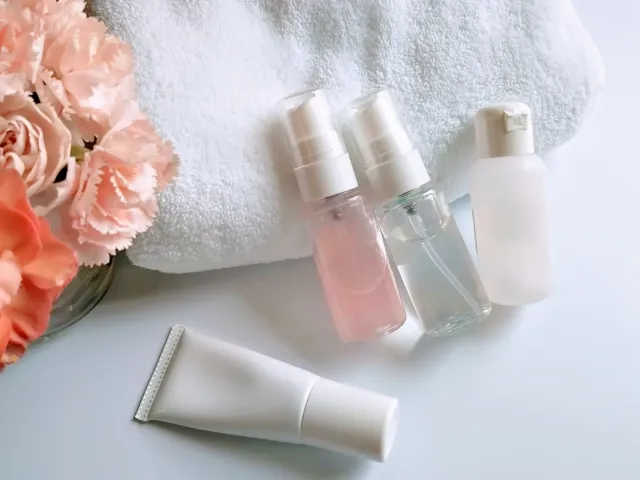
In the morning, within 10 minutes, reproduce “cleanse → hydrate → seal → protect.”
At night: “remove → cleanse as needed → hydrate → repair → targeted occlusion.”
Evaluate with fixed-point photos every two weeks, under the same light, same distance, and no filters.
- Morning: lukewarm water (use a mild cleanser only on necessary days) → evenly press in toner to hold water → one targeted serum → repair lamellae with emulsion/cream → apply sufficient UV (if needed, a small amount of powder on the T-zone).
- Night: cleanse according to makeup/UV amount → decide on additional cleansing based on skin condition → toner → targeted serum (pores/dullness = vitamin C, firmness = retinol, redness = calming agents) → ceramide-focused emulsion/cream → apply a thin layer of petrolatum on dry or friction-prone areas.
- 追補A:肌タイプ別・1週間ミニプロトコル(再現性を上げる検証法)Supplement A: Mini 1-Week Protocol by Skin Type (A Method to Improve Reproducibility)スキンケアは一度の手応えではなく、同条件での反復が品質を作ります。以下は“最小手数で効果を可視化する”7日間の運用案です。朝はぬるま湯→(必要日だけ洗顔)→化粧水→目的別1点美容液→乳液/クリーム→UV、夜はクレンジング→(必要日だけ洗顔)→化粧水→目的別1点美容液→乳液/クリーム→乾燥部にワセリン薄膜。Skincare is not about a single sensation, but about repeated application under the same conditions to build quality. Below is a 7-day plan to “visualise effects with minimal steps.”
Morning: lukewarm water → (mild cleanser only on necessary days) → toner → one targeted serum → emulsion/cream → UV.
Night: cleansing → (mild cleanser only on necessary days) → toner → one targeted serum → emulsion/cream → thin layer of petrolatum on dry areas.乾燥〜敏感肌:1・4・7日目にだけ“鎮静厚め+油分やや多め”。角質ケアは行わず、赤み・つっぱり・痒みをKPIに。日中は摩擦源(マスク・襟)をメモ化し、刺激の起点を切り分けます。Dry to sensitive skin: on days 1, 4, and 7, apply a thicker calming layer with slightly more oil. Do not perform exfoliation; use redness, tightness, and itchiness as KPIs. During the day, note sources of friction (mask, collars) to identify and isolate the origins of irritation.混合肌:Tゾーンは“洗顔短時間+油分軽め”、Uゾーンは“保湿厚め”。角質ケアは5日目にPHA短時間のみ。皮脂は**置き換え保湿(スクワラン微量)**で暴走を抑え、テカリ評価は15時の鏡で実施。Combination skin: T-zone — “short cleansing + light oil”; U-zone — “thicker moisturising.” Exfoliation on day 5 only, with short-contact PHA. Control sebum with replacement moisturising (small amount of squalane), and assess shine at 3 p.m. in the mirror.脂性〜毛穴悩み:2・6日目に小鼻〜眉間へクレイ短時間+同日“鎮静・保湿増量”。朝はC系1点を継続、夜は強酸×レチノールの併用を避け隔日導入。
評価は同光・同距離・ノーフィルターでの定点写真+「洗後5分のつっぱり/昼の粉ふき/夕方のテカリ/メイク密着/赤み頻度」の5指標を日次メモ。変数は“1回につき1つだけ”変えるのが鉄則です。Oily / pore-prone skin: on days 2 and 6, apply a short-contact clay mask from the nose to glabella, paired with increased calming and moisturising on the same day. In the morning, continue with one vitamin C product; at night, avoid combining strong acids with retinol, and introduce retinol every other day.
Evaluate using fixed-point photos under the same light, distance, and no filters, plus daily notes on five indicators: “tightness 5 minutes after washing / midday flaking / evening shine / makeup adhesion / frequency of redness.” The rule for variables is to change only one per session.追補B:成分選定の判断フロー(迷わない最短経路)Supplement B: Decision Flow for Ingredient Selection (The Shortest Path Without Hesitation)主訴を1つに絞る(例:乾燥、皮脂、赤み、毛穴の陰影)。2) 許容刺激(敏感度)を自己申告でL/M/Hに。3) 生活リズム(塗り直し可否、勤務環境、運動・発汗の頻度)を加味。Narrow down to a single main concern (e.g., dryness, sebum, redness, pore shadows).
Assess tolerable stimulus (sensitivity) via self-report: L/M/H.
Consider lifestyle rhythm (ability to reapply, work environment, frequency of exercise/sweating).乾燥・赤み主体 × L〜M:ナイアシンアミド低濃度+セラミド軸。角質ケアはPHAから。Primarily dryness/redness × L–M sensitivity: low-concentration niacinamide + ceramide-focused regimen. Start exfoliation with PHA.皮脂・毛穴主体 × M〜H:ビタミンC(誘導体可)朝/ナイアシンアミド夜。詰まりはBHA点的、同日に鎮静を同梱。Primarily sebum/pores × M–H sensitivity: vitamin C (derivatives allowed) in the morning / niacinamide at night. For congestion, apply BHA spot treatment, paired with calming agents on the same day.ハリ不足 × M:レチノール/ペプチド夜、朝は抗酸化+PA高いUV。
どの経路でも“1時間に複数の攻め成分を重ねない”を最優先に。可溶化剤や香料の暴露は重ねるほど増え、バリアは消耗します。続けられる濃度で2週間ごとに見直し、KPIが3つ以上改善なら据え置き、1つ以下なら“手数を減らす”方向で再設計します。Loss of firmness × M sensitivity: retinol/peptides at night, antioxidant + high-PA UV in the morning.
In all pathways, prioritise “do not layer multiple active ingredients within the same hour.” Exposure to solubilizers and fragrances increases with layering, depleting the barrier. Review every two weeks at tolerable concentrations: if three or more KPIs improve, continue; if one or fewer improve, redesign by reducing the number of steps.追補C:手技の精度を上げるマイクロテクニックSupplement C: Microtechniques to Improve Application Precision塗布圧:人差し指ではなく中指+薬指で面を作り、押さえるだけ。摩擦は“速度×回数”で増えるため、ゆっくり・少回数が原則。Application pressure: use the middle and ring fingers, not the index, to create a surface and simply press. Friction increases with “speed × repetitions,” so the principle is slow and few motions.量の標準化:化粧水は500円玉2回を顔全体で“ムラなく”、乳液/クリームは米粒2〜3粒を点置き→面で結ぶ。UVは顔で1g前後を2層に分けて。Standardising amount: for toner, apply twice the size of a 500‑yen coin evenly over the entire face; for emulsion/cream, use 2–3 rice-grain-sized dots and spread to connect the surface. For UV, apply about 1 g to the face, divided into two layers.温度管理:クレンジング・すすぎは32〜34℃を“常に”守る。熱い湯の“達成感”は過剰脱脂の錯覚です。
この3点だけで、同じ処方でも体感がまるで別物になります。とくに量と圧は“習慣のクセ”が支配するので、7日間だけでも意識的に矯正すると、その後のブレが激減します。Temperature control: always maintain 32–34 °C for cleansing and rinsing. The “satisfaction” from hot water is an illusion of over‑stripping.
With just these three points, the same formulation can feel completely different. Especially for amount and pressure, “habitual tendencies” dominate, so consciously correcting them for even seven days greatly reduces subsequent variability.追補D:よくある失敗と最短リカバリーSupplement D: Common Mistakes and the Shortest Recovery Path“つるっと感”を求めて角質ケアを加速:一時的に手触りは良くても、TEWL上昇→皮脂リバウンド→赤みのスパイラルへ。対処は即時中止→鎮静+セラミド72時間→再導入は半濃度・半頻度。Accelerating exfoliation to achieve a “silky feel”: even if the texture temporarily improves, TEWL rises → sebum rebound → redness spiral. Response: stop immediately → apply calming agents + ceramides for 72 hours → reintroduce at half concentration and half frequency.皮脂が怖くて油分をゼロに:かえって置き換え保湿が不在となり、粘度の高い皮脂が優位に。スクワラン極薄で“置く”だけに切替。Eliminating all oils out of fear of sebum: this removes replacement moisturising, allowing viscous sebum to dominate. Switch to applying an ultra-thin layer of squalane, simply “placing” it on the skin.日焼け止めの量が恒常的に不足:シミ・たるみ・毛穴の陰影化の“進行速度”が上がります。朝2層塗り+携行で部分補塗りを“運用”として定着させるのが最速の打ち手。Consistently applying insufficient sunscreen: accelerates the “progression” of spots, sagging, and pore shadowing. The fastest corrective measure is to establish a routine of two-layer application in the morning plus on-the-go spot reapplication.追補E:朝夜テンプレの詳細運用(ハイプレシジョン版)Supplement E: Detailed Morning Night Template (High-Precision Version)朝(〜10分)Morning (within ~10 minutes)ぬるま湯→必要日だけ低刺激洗顔(Tゾーン中心30秒)Lukewarm water → mild cleanser only on necessary days (focus on T-zone for 30 seconds)化粧水は2回分割でムラなく抱水Toner: apply in two divided layers to distribute water evenly.目的別美容液1点(C、鎮静、保湿いずれか)One targeted serum (vitamin C, calming, or moisturising).乳液/クリームでラメラ補修(頬厚め・T薄め)Emulsion/cream for lamellar repair (thicker on cheeks, thinner on T‑zone).UV二度塗り(薄層×2、携行で補塗り前提)Apply UV in two layers (thin layers ×2, with on-the-go touch-ups planned).夜(〜10分)Night (within ~10 minutes)クレンジングは乳化→ぬるま湯で短時間Cleansing: emulsify → rinse briefly with lukewarm water.肌次第で洗顔は省略可Cleansing can be skipped depending on skin condition.化粧水2回分配Toner: apply in two divided layers.美容液1点(ハリ=レチノール隔日、赤み=鎮静)One targeted serum (firmness = retinol every other day, redness = calming agent).乳液/クリーム→摩擦多発部にワセリン点的Emulsion/cream → apply a thin layer of petrolatum on areas prone to friction.週1〜2で角質ケア短時間+同日“鎮静・保湿増量”Exfoliation 1–2 times per week, short contact → pair with increased calming and moisturising on the same day.追補F:最終まとめ(指標化して続ける)Supplement F: Final Summary (Continue with Measurable Indicators)スキンケアは科学+再現性。勝ち筋はつねに同じです。Skincare is science + reproducibility. The winning strategy is always the same.短時間・低摩擦の洗浄(温度と時間の規格化)Short-duration, low-friction cleansing (standardising temperature and time).均一な抱水+ラメラ補修(少数精鋭・ゾーニング)Even water retention + lamellar repair (targeted, minimal steps + zoning).PA重視のUVを足量・補塗り運用(+朝の抗酸化一点)
これらを同じ品質で毎日回せば、キメの乱れ・赤み・テカリ・毛穴の“揺れ幅”は確実に縮みます。**増やす勇気より、守る勇気。**手数ではなく精度で、今日から肌のベースラインを底上げしましょう。PA‑prioritised UV applied in sufficient amount with reapplication as needed (+ one morning antioxidant).
If these are repeated daily with consistent quality, the fluctuations in texture, redness, shine, and pores will reliably decrease. It’s about the courage to protect, not to apply more. Focus on precision rather than steps, and from today, raise the baseline of your skin.
Supplement A: Mini 1-Week Protocol by Skin Type (A Method to Improve Reproducibility)
Skincare is not about a single sensation, but about repeated application under the same conditions to build quality. Below is a 7-day plan to “visualise effects with minimal steps.”
Morning: lukewarm water → (mild cleanser only on necessary days) → toner → one targeted serum → emulsion/cream → UV.
Night: cleansing → (mild cleanser only on necessary days) → toner → one targeted serum → emulsion/cream → thin layer of petrolatum on dry areas.
- Dry to sensitive skin: on days 1, 4, and 7, apply a thicker calming layer with slightly more oil. Do not perform exfoliation; use redness, tightness, and itchiness as KPIs. During the day, note sources of friction (mask, collars) to identify and isolate the origins of irritation.
- Combination skin: T-zone — “short cleansing + light oil”; U-zone — “thicker moisturising.” Exfoliation on day 5 only, with short-contact PHA. Control sebum with replacement moisturising (small amount of squalane), and assess shine at 3 p.m. in the mirror.
- Oily / pore-prone skin: on days 2 and 6, apply a short-contact clay mask from the nose to glabella, paired with increased calming and moisturising on the same day. In the morning, continue with one vitamin C product; at night, avoid combining strong acids with retinol, and introduce retinol every other day.
Evaluate using fixed-point photos under the same light, distance, and no filters, plus daily notes on five indicators: “tightness 5 minutes after washing / midday flaking / evening shine / makeup adhesion / frequency of redness.” The rule for variables is to change only one per session.
Supplement B: Decision Flow for Ingredient Selection (The Shortest Path Without Hesitation)
- Narrow down to a single main concern (e.g., dryness, sebum, redness, pore shadows).
Assess tolerable stimulus (sensitivity) via self-report: L/M/H.
Consider lifestyle rhythm (ability to reapply, work environment, frequency of exercise/sweating).
- Primarily dryness/redness × L–M sensitivity: low-concentration niacinamide + ceramide-focused regimen. Start exfoliation with PHA.
- Primarily sebum/pores × M–H sensitivity: vitamin C (derivatives allowed) in the morning / niacinamide at night. For congestion, apply BHA spot treatment, paired with calming agents on the same day.
- Loss of firmness × M sensitivity: retinol/peptides at night, antioxidant + high-PA UV in the morning.
In all pathways, prioritise “do not layer multiple active ingredients within the same hour.” Exposure to solubilizers and fragrances increases with layering, depleting the barrier. Review every two weeks at tolerable concentrations: if three or more KPIs improve, continue; if one or fewer improve, redesign by reducing the number of steps.
Supplement C: Microtechniques to Improve Application Precision
- Application pressure: use the middle and ring fingers, not the index, to create a surface and simply press. Friction increases with “speed × repetitions,” so the principle is slow and few motions.
- Standardising amount: for toner, apply twice the size of a 500‑yen coin evenly over the entire face; for emulsion/cream, use 2–3 rice-grain-sized dots and spread to connect the surface. For UV, apply about 1 g to the face, divided into two layers.
- Temperature control: always maintain 32–34 °C for cleansing and rinsing. The “satisfaction” from hot water is an illusion of over‑stripping.
With just these three points, the same formulation can feel completely different. Especially for amount and pressure, “habitual tendencies” dominate, so consciously correcting them for even seven days greatly reduces subsequent variability.
Supplement D: Common Mistakes and the Shortest Recovery Path
- Accelerating exfoliation to achieve a “silky feel”: even if the texture temporarily improves, TEWL rises → sebum rebound → redness spiral. Response: stop immediately → apply calming agents + ceramides for 72 hours → reintroduce at half concentration and half frequency.
- Eliminating all oils out of fear of sebum: this removes replacement moisturising, allowing viscous sebum to dominate. Switch to applying an ultra-thin layer of squalane, simply “placing” it on the skin.
- Consistently applying insufficient sunscreen: accelerates the “progression” of spots, sagging, and pore shadowing. The fastest corrective measure is to establish a routine of two-layer application in the morning plus on-the-go spot reapplication.
Supplement E: Detailed Morning Night Template (High-Precision Version)
Morning (within ~10 minutes)
- Lukewarm water → mild cleanser only on necessary days (focus on T-zone for 30 seconds)
- Toner: apply in two divided layers to distribute water evenly.
- One targeted serum (vitamin C, calming, or moisturising).
- Emulsion/cream for lamellar repair (thicker on cheeks, thinner on T‑zone).
- Apply UV in two layers (thin layers ×2, with on-the-go touch-ups planned).
Night (within ~10 minutes)
- Cleansing: emulsify → rinse briefly with lukewarm water.
- Cleansing can be skipped depending on skin condition.
- Toner: apply in two divided layers.
- One targeted serum (firmness = retinol every other day, redness = calming agent).
- Emulsion/cream → apply a thin layer of petrolatum on areas prone to friction.
- Exfoliation 1–2 times per week, short contact → pair with increased calming and moisturising on the same day.
Supplement F: Final Summary (Continue with Measurable Indicators)
Skincare is science + reproducibility. The winning strategy is always the same.
- Short-duration, low-friction cleansing (standardising temperature and time).
- Even water retention + lamellar repair (targeted, minimal steps + zoning).
- PA‑prioritised UV applied in sufficient amount with reapplication as needed (+ one morning antioxidant).
If these are repeated daily with consistent quality, the fluctuations in texture, redness, shine, and pores will reliably decrease. It’s about the courage to protect, not to apply more. Focus on precision rather than steps, and from today, raise the baseline of your skin.







 Toll-free