

この記事のまとめ
7q36.3の微小重複は、遺伝子調節因子として重要なZRS領域を含み、Sonic hedgehog(SHH)遺伝子の発現異常を通じて四肢形成や臓器発生に影響を与えます。この異常はTPT-PSや複合的な先天性疾患に関連付けられており、追加の遺伝的要因の可能性も示唆されています。この記事では、この微小重複が臓器や形態形成に与える影響を詳しく解説します。
Microduplication at 7q36.3 and Related Disorders

The 7q36.3 microduplication is an important subject of genetic and clinical research. This region contains the evolutionarily conserved zone of polarizing activity regulatory sequence (ZRS), a key long-range enhancer for the SHH gene. SHH functions as a morphogen during embryogenesis, regulating the proper development of organs and limbs. Variants and microduplications in this region have been linked to rare developmental disorders and malformations.
To understand the influence of 7q36.3 microduplications on organ and limb formation, it is essential to understand SHH function and the role of ZRS. During early embryogenesis, SHH provides critical signaling cues to establish the anterior-posterior and left-right axes. In limb buds, its localized expression in the zone of polarizing activity (ZPA) determines the precise number and shape of fingers and toes. Disruption of this finely tuned regulatory system can lead not only to limb malformations but also to broader multi-organ developmental issues.
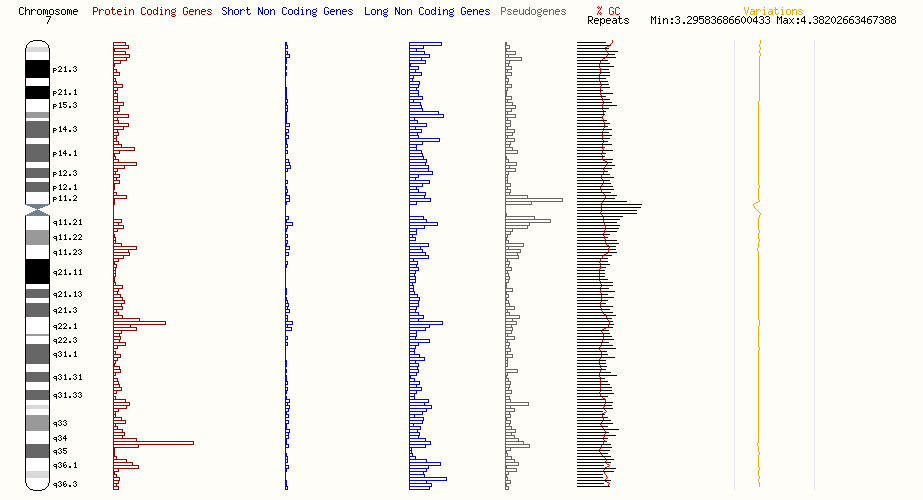
7q36.3 and Triphalangeal Thumb-Polysyndactyly Syndrome (TPT-PS)
TPT-PS (Triphalangeal Thumb-Polysyndactyly Syndrome) is a relatively rare autosomal dominant disorder. It is characterized by:
- A triphalangeal thumb, where the thumb has three phalanges instead of the normal two, resulting in an elongated thumb.
- Syndactyly, or fusion of fingers or toes.
- Polydactyly, or extra fingers or toes.
The causative locus for this syndrome is 7q36.3, where variations and duplications within the ZRS enhancer are the main contributors. The ZRS sequence regulates long-range SHH expression patterns, ensuring proper anterior-posterior axis formation in limb buds. Point mutations and duplications within this regulatory region have been linked not only to TPT-PS but also to Laurin-Sandrow syndrome and isolated congenital polydactyly.
However, while TPT-PS primarily manifests with limb anomalies, it typically does not affect other organs such as the heart or eyes.
Exceptional Cases with Cardiovascular and Ocular Abnormalities
Recently, there have been reports of patients with TPT-PS combined with severe cardiovascular diseases (CHD) and ocular malformations. In one family, a 299 kb microduplication at 7q36.3 was identified in all members with TPT-PS. Interestingly, congenital heart disease (such as double outlet right ventricle) and ocular anomalies (such as microphthalmia and optic disc coloboma) were present only in some members, indicating variable expressivity.
This suggests that 7q36.3 microduplications may have effects that go beyond limb development, potentially influencing the formation of the cardiovascular system and ocular structures.

The Role and Broad Impact of SHH Signaling
The SHH gene plays a critical role that extends beyond limb patterning. It is essential for the development of the heart and eyes. Animal studies have demonstrated that overexpression of SHH can result in muscle hypertrophy and abnormal cellular proliferation. Likewise, inappropriate timing or levels of SHH expression can disrupt cardiac morphogenesis and ocular development.
Particularly, changes in SHH expression levels—either increases or decreases—can critically affect downstream genes, including PAX2, during eye development, resulting in structural malformations.
Additional Genetic Factors
In some families, only certain members with a 7q36.3 duplication presented with cardiovascular or ocular anomalies, while others exhibited only TPT-PS. This points to the involvement of additional genetic or epigenetic factors.
For example, another study described a patient presenting with TPT-PS and Tetralogy of Fallot, where the condition was attributed to a combination of a 7q36.3 duplication and a 22q11.21 deletion. This highlights how multiple genetic events can interact to produce complex phenotypes.In some families, only certain members with a 7q36.3 duplication presented with cardiovascular or ocular anomalies, while others exhibited only TPT-PS. This points to the involvement of additional genetic or epigenetic factors.
For example, another study described a patient presenting with TPT-PS and Tetralogy of Fallot, where the condition was attributed to a combination of a 7q36.3 duplication and a 22q11.21 deletion. This highlights how multiple genetic events can interact to produce complex phenotypes.

Future Research Directions
These findings demonstrate that 7q36.3 microduplications are not only a primary driver of TPT-PS but may also contribute to broader multi-system abnormalities, including cardiac and ocular malformations.
Further studies are needed to elucidate:
- How this region modulates SHH signaling across different tissues.
- The role of additional regulatory or epigenetic factors that may influence gene expression.
Advancing this research will enhance the understanding of the diverse mechanisms by which microduplications lead to such complex developmental disorders.
References
- Liu, Z., Yin, N., Gong, L., Tan, Z., Yin, B., Yang, Y., & Luo, C. (2017). Microduplication of 7q36.3 encompassing the SHH long‑range regulator (ZRS) in a patient with triphalangeal thumb‑polysyndactyly syndrome and congenital heart disease. Molecular medicine reports, 15(2), 793–797. https://doi.org/10.3892/mmr.2016.6092
- Kroeldrup, L., Kjaergaard, S., Kirchhoff, M., Kock, K., Brasch-Andersen, C., Kibaek, M., & Ousager, L. B. (2012). Duplication of 7q36.3 encompassing the Sonic Hedgehog (Shh) gene is associated with congenital muscular hypertrophy. European Journal of Medical Genetics, 55(10), 557–560. https://doi.org/10.1016/j.ejmg.2012.04.009
- Aleksic, B., Kushima, I., Ohye, T., Ikeda, M., Kunimoto, S., Nakamura, Y., Yoshimi, A., Koide, T., Iritani, S., Kurahashi, H., Iwata, N., & Ozaki, N. (2013). Definition and refinement of the 7q36.3 duplication region associated with schizophrenia. Scientific Reports, 3(1), 2587. https://doi.org/10.1038/srep02587
- Zlotina, A., Melnik, O., Fomicheva, Y., Skitchenko, R., Sergushichev, A., Shagimardanova, E., Gusev, O., Gazizova, G., Loevets, T., Vershinina, T., Kozyrev, I., Gordeev, M., Vasichkina, E., Pervunina, T., & Kostareva, A. (2020). A 300-kb microduplication of 7q36.3 in a patient with triphalangeal thumb-polysyndactyly syndrome combined with congenital heart disease and optic disc coloboma: A case report. BMC Medical Genomics, 13(1), 175. https://doi.org/10.1186/s12920-020-00821-x
- Perez, G., Barber, G. P., Benet-Pages, A., Casper, J., Clawson, H., Diekhans, M., Fischer, C., Gonzalez, J. N., Hinrichs, A. S., Lee, C. M., Nassar, L. R., Raney, B. J., Speir, M. L., van Baren, M. J., Vaske, C. J., Haussler, D., Kent, W. J., & Haeussler, M. (2024). The UCSC Genome Browser database: 2025 update. Nucleic Acids Research, gkae974. https://doi.org/10.1093/nar/gkae974
- Harrison, P. W., Amode, M. R., Austine-Orimoloye, O., Azov, A. G., Barba, M., Barnes, I., Becker, A., Bennett, R., Berry, A., Bhai, J., Bhurji, S. K., Boddu, S., Branco Lins, P. R., Brooks, L., Budhanuru Ramaraju, S., Campbell, L. I., Carbajo Martinez, M., Charkhchi, M., Chougule, K., … Yates, A. D. (2024). Ensembl 2024. Nucleic Acids Research, 52(D1), D891–D899. https://doi.org/10.1093/nar/gkad1049
- Jumper, J et al. Highly accurate protein structure prediction with AlphaFold. Nature (2021).
- Varadi, M et al. AlphaFold Protein Structure Database: massively expanding the structural coverage of protein-sequence space with high-accuracy models. Nucleic Acids Research (2021).
日本皮膚科学会 皮膚科専門医/日本医師会 産業医/東京衛生検査所 指導監督医
この記事は、 ヒロクリニックNIPTの編集・監修体制 にもとづき、資格を持つ医師が内容を確認しています。