

この記事のまとめ
本記事では、8p23.1領域に関連する稀少疾患である家族性若年糖尿病(MODY)、先天性横隔膜ヘルニア(CDH)、スクアレン合成酵素欠損症(SQSD)について解説します。これらの疾患に関与する遺伝子BLK、GATA4、FDFT1の役割や症状、診断法、管理の重要性をわかりやすく説明します。
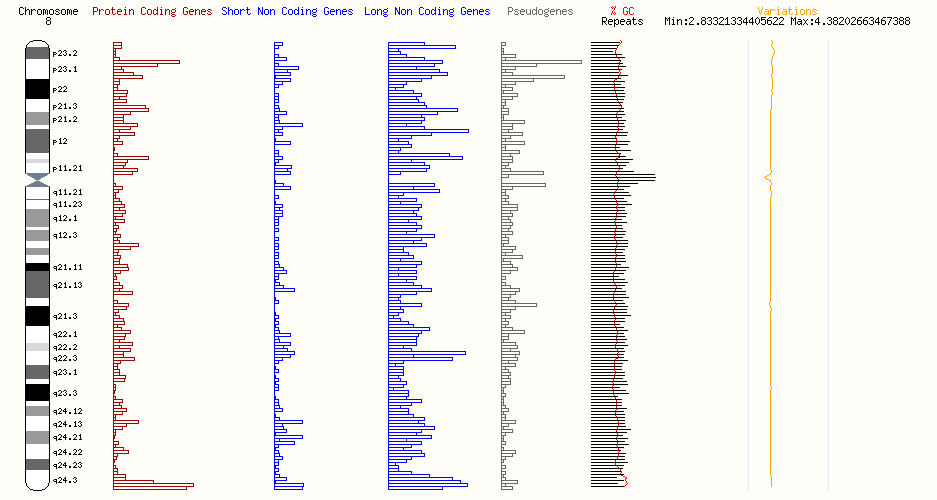
Genes and Their Associated Disorders

| S/N | Gene | Associated Disorder (Japanese) | Associated Disorder (English) |
|---|---|---|---|
| 1 | BLK | 家族性若年糖尿病 | Maturity-Onset Diabetes of the Young (MODY) |
| 2 | GATA4 | 先天性横隔膜ヘルニア | Congenital Diaphragmatic Hernia (CDH) |
| 3 | FDFT1 | スクアレン合成酵素欠損症 | Squalene Synthase Deficiency (SQSD) |
[1. BLK] Maturity-Onset Diabetes of the Young (MODY)

MODY is a group of non-autoimmune, genetically-driven diabetes disorders that typically manifest during adolescence or early adulthood. The BLK gene, located in the 8p23.1 region, is associated with MODY11, an extremely rare subtype accounting for less than 1% of all MODY cases. The primary pathophysiology of this form is impaired insulin secretion.
MODY usually presents before age 35 and is distinct from type 1 and type 2 diabetes. In type 1 diabetes, islet autoantibodies are present, whereas in MODY they are absent. Endogenous insulin secretion often continues beyond the initial “honeymoon period,” and patients may achieve glycemic control with low-dose insulin therapy (<0.5 U/kg/day). Additionally, diabetic ketoacidosis rarely develops during periods of insulin interruption.

Distinguishing MODY from type 2 diabetes involves recognizing the absence of obesity or acanthosis nigricans and normal triglyceride and elevated HDL cholesterol levels. Patients often show persistent fasting hyperglycemia with limited responsiveness to pharmacological treatments but may demonstrate heightened sensitivity to sulfonylureas.
A molecular genetic test is typically performed when MODY is suspected based on family history and clinical features, such as early-onset diabetes (before 35) or a dominant inheritance pattern. MODY is transmitted in an autosomal dominant manner, and its familial presentation differs from type 1 and type 2 diabetes.

To date, at least 14 causative genes for MODY have been identified, with GCK (MODY2) and HNF1A (MODY3) mutations being the most common, together representing 30–60% of cases. BLK-related MODY11 remains very rare, sometimes presenting with clinical obesity. Accurate diagnosis of MODY requires a multifactorial approach that integrates family history, phenotype, and laboratory findings.
Identifying the genetic cause of MODY not only optimizes individualized treatment but also supports genetic counseling and risk monitoring for family members. In the case of BLK-related MODY11, thorough clinical evaluation, a three-generation pedigree, physical examinations, and molecular testing are crucial for confirmation. Understanding the genetic background of this disorder is critical for tailoring treatment and improving patient outcomes.
[2. GATA4] Congenital Diaphragmatic Hernia (CDH)

Congenital Diaphragmatic Hernia (CDH) may occur in isolation or in combination with other congenital anomalies. Multiple factors contribute to its development, including chromosomal abnormalities and copy number variations (CNVs). Among single-gene mutations, GATA4, located in the 8p23.1 region, has been increasingly implicated in CDH pathogenesis.
CDH typically presents at birth with severe respiratory distress, caused by abdominal organs herniating into the thoracic cavity, thereby hindering lung development. Severity varies; some patients experience only mild respiratory or gastrointestinal symptoms beyond the neonatal period, while others are asymptomatic and diagnosed incidentally via imaging.

The most common anatomical type is the posterolateral defect (Bochdalek hernia), which accounts for 80–90% of CDH cases. Of these, 85% occur on the left side, 10% on the right, and 5% bilaterally. Less common types include Morgagni hernias and central defects.
GATA4 encodes a zinc finger transcription factor critical for the development of the diaphragm and lungs. Mutations have been observed in both familial and sporadic cases, often with incomplete penetrance. For example, in one family, a c.754C>T (p.R252W) mutation led to mild diaphragmatic defects detectable only by MRI in asymptomatic carriers. In sporadic cases, de novo variants such as c.848G>A (p.R283H) have been reported.

Animal studies support these findings: inhibition of GATA4 expression leads to diaphragm and lung malformations. Conversely, retinoic acid treatments have been shown to upregulate GATA4 expression, mitigating some developmental defects. This underscores the connection between GATA4 and retinoic acid pathways in diaphragm formation.
Advances in genetic testing, particularly whole-exome sequencing (WES), have enhanced the detection of rare variants associated with CDH, aiding in diagnosis, prognosis, and personalized care.
Treatment primarily involves surgical repair, supported by respiratory management, nutritional support, and long-term multidisciplinary follow-up to address complications such as developmental delays, hearing loss, and thoracic deformities.
Understanding GATA4’s role provides crucial insights into CDH pathophysiology and opens avenues for future therapeutic approaches.
[3. FDFT1] Squalene Synthase Deficiency (SQSD)

Squalene Synthase Deficiency (SQSD) is a rare congenital metabolic disorder affecting cholesterol biosynthesis. It is caused by biallelic pathogenic variants in the FDFT1 gene, located in the 8p23.1 region.
Squalene synthase (SS) catalyzes the conversion of two molecules of farnesyl diphosphate (FPP) into squalene, a key step in cholesterol biosynthesis. Enzyme dysfunction disrupts cholesterol production, leading to multisystemic clinical manifestations.

Clinical features of SQSD resemble those of Smith-Lemli-Opitz syndrome (SLOS) and include:
- Facial dysmorphisms (narrow forehead, flat nasal bridge, posteriorly rotated ears)
- Neonatal seizures
- Brain malformations (e.g., cortical malformations)
- Visual impairment (optic nerve hypoplasia, cortical blindness)
- Severe developmental delay and intellectual disability
- Dry skin and photosensitivity
- Genital anomalies in males (cryptorchidism, hypospadias)
- Additional signs: low birth weight, neonatal jaundice, and hepatic dysfunction.

Diagnosis can be made by urine metabolic profiling, which reveals characteristic metabolites such as branched-chain dicarboxylic acids and farnesol-derived glucuronide conjugates. Techniques like gas chromatography–mass spectrometry (GC-MS) and nuclear magnetic resonance spectroscopy (NMRS) are used. Genetic confirmation is achieved via molecular analysis of FDFT1.
Currently, there is no curative treatment. Management is symptomatic, including standard interventions for seizures, developmental delays, constipation, and spasticity. Early vision therapy, nutritional support (including gastrostomy feeding if needed), and melatonin for sleep disturbances can be beneficial. Patients should avoid sunlight exposure to manage photosensitivity.
SQSD follows an autosomal recessive inheritance pattern, with a 25% recurrence risk for siblings and 50% chance of being asymptomatic carriers. Carrier testing and prenatal diagnosis are available when the familial FDFT1 variant is known.
Research has demonstrated that FDFT1 variants reduce enzyme activity, causing toxic accumulation of intermediates like farnesyl diphosphate, which triggers cell growth inhibition and apoptosis. These findings highlight the critical role of cholesterol in embryogenesis and organ development.
Reported cases remain limited, predominantly within European families, but awareness and accurate diagnosis are improving. With appropriate medical care and family support, patients’ quality of life can be meaningfully enhanced.
References:

- Coman, D., Vissers, L. E. L. M., Riley, L. G., Kwint, M. P., Hauck, R., Koster, J., Geuer, S., Hopkins, S., Hallinan, B., Sweetman, L., Engelke, U. F. H., Burrow, T. A., Cardinal, J., McGill, J., Inwood, A., Gurnsey, C., Waterham, H. R., Christodoulou, J., Wevers, R. A., & Pitt, J. (2018). Squalene synthase deficiency: Clinical, biochemical, and molecular characterization of a defect in cholesterol biosynthesis. The American Journal of Human Genetics, 103(1), 125–130. https://doi.org/10.1016/j.ajhg.2018.05.004
- Coman D, Vissers L, Waterham H, et al. Squalene Synthase Deficiency. 2020 Feb 6. In: Adam MP, Feldman J, Mirzaa GM, et al., editors. GeneReviews® [Internet]. Seattle (WA): University of Washington, Seattle; 1993-2025. Available from: https://www.ncbi.nlm.nih.gov/books/NBK553533/
- Yu, L., Wynn, J., Cheung, Y. H., Shen, Y., Mychaliska, G. B., Crombleholme, T. M., Azarow, K. S., Lim, F. Y., Chung, D. H., Potoka, D., Warner, B. W., Bucher, B., Stolar, C., Aspelund, G., Arkovitz, M. S., & Chung, W. K. (2013). Variants in GATA4 are a rare cause of familial and sporadic congenital diaphragmatic hernia. Human genetics, 132(3), 285–292. https://doi.org/10.1007/s00439-012-1249-0
- Longoni M, Pober BR, High FA. Congenital Diaphragmatic Hernia Overview. 2006 Feb 1 [Updated 2020 Nov 5]. In: Adam MP, Feldman J, Mirzaa GM, et al., editors. GeneReviews® [Internet]. Seattle (WA): University of Washington, Seattle; 1993-2025. Available from: https://www.ncbi.nlm.nih.gov/books/NBK1359/
- Naylor R, Knight Johnson A, del Gaudio D. Maturity-Onset Diabetes of the Young Overview. 2018 May 24. In: Adam MP, Feldman J, Mirzaa GM, et al., editors. GeneReviews® [Internet]. Seattle (WA): University of Washington, Seattle; 1993-2025. Available from: https://www.ncbi.nlm.nih.gov/books/NBK500456/
- Perez, G., Barber, G. P., Benet-Pages, A., Casper, J., Clawson, H., Diekhans, M., Fischer, C., Gonzalez, J. N., Hinrichs, A. S., Lee, C. M., Nassar, L. R., Raney, B. J., Speir, M. L., van Baren, M. J., Vaske, C. J., Haussler, D., Kent, W. J., & Haeussler, M. (2024). The UCSC Genome Browser database: 2025 update. Nucleic Acids Research, gkae974. https://doi.org/10.1093/nar/gkae974
- Harrison, P. W., Amode, M. R., Austine-Orimoloye, O., Azov, A. G., Barba, M., Barnes, I., Becker, A., Bennett, R., Berry, A., Bhai, J., Bhurji, S. K., Boddu, S., Branco Lins, P. R., Brooks, L., Budhanuru Ramaraju, S., Campbell, L. I., Carbajo Martinez, M., Charkhchi, M., Chougule, K., … Yates, A. D. (2024). Ensembl 2024. Nucleic Acids Research, 52(D1), D891–D899. https://doi.org/10.1093/nar/gkad1049
日本皮膚科学会 皮膚科専門医/日本医師会 産業医/東京衛生検査所 指導監督医
この記事は、 ヒロクリニックNIPTの編集・監修体制 にもとづき、資格を持つ医師が内容を確認しています。