

If you received a result mentioning “Xp22.31 microdeletion syndrome” from expanded NIPT or a postnatal chromosome test, an unfamiliar diagnosis like this can feel confusing.
Here is the key point first. This condition is a group of disorders caused by a congenital deletion in the region Xp22.31 on the short arm of the X chromosome, which includes the STS gene and neighboring genes. The most common cause is deletion of the steroid sulfatase (STS) gene, which leads to X-linked ichthyosis (a condition where the skin becomes dry and scaly). Because the number of X chromosomes differs between men and women, the way symptoms appear differs significantly between males and females, which is a defining feature of this condition.
This article organizes what is known about the STS gene and neighboring genes that cause the condition, why symptoms differ by sex, the contiguous gene syndromes (such as Kallmann syndrome) that occur with larger deletions, the relationship with prenatal diagnosis and NIPT, the path to a confirmed diagnosis, and treatment and management. The information is based on GeneReviews, Orphanet (the European rare disease database), academic papers, and public information from the Japan Society of Obstetrics and Gynecology and the Ministry of Health, Labour and Welfare. Because reporting on some aspects of this condition is still limited, let’s go through each point carefully.
💡 What this article covers
- What kind of chromosomal change Xp22.31 microdeletion syndrome is (the genes involved, such as STS, ANOS1, and NLGN4X, and the typical size of the deletion)
- Why symptom severity differs between males (hemizygous) and females (carriers)
- The main symptoms that vary depending on the size of the deletion (skin findings, corneal opacity, undescended testes, behavioral traits)
- Contiguous gene syndromes that occur with larger deletions (Kallmann syndrome and genes linked to autism spectrum traits)
- When this condition is suspected on prenatal diagnosis or NIPT, and the important caution about a possible maternal origin
- The path to a confirmed diagnosis and the approach to treatment and management
1. What is Xp22.31 Microdeletion Syndrome? (Caused by Deletion of the STS Gene)
Xp22.31 microdeletion syndrome is a contiguous gene deletion syndrome caused by a congenital loss of the region spanning Xp22.31 on the short arm of the X chromosome. The most common form is a deletion of roughly 2 Mb (megabases) that removes the entire steroid sulfatase (STS) gene, which causes X-linked ichthyosis.
STS deletion tends to occur because of mistaken recombination between repeated sequences in the neighboring VCX gene cluster, and this recurrent type of deletion is reported to account for roughly 85–90% of all cases of X-linked ichthyosis. It is estimated to affect 1 in 2,500 to 1 in 6,000 males, making it the second most common form of ichthyosis after ichthyosis vulgaris.

The Main Genes Included in the Deletion and What They Do
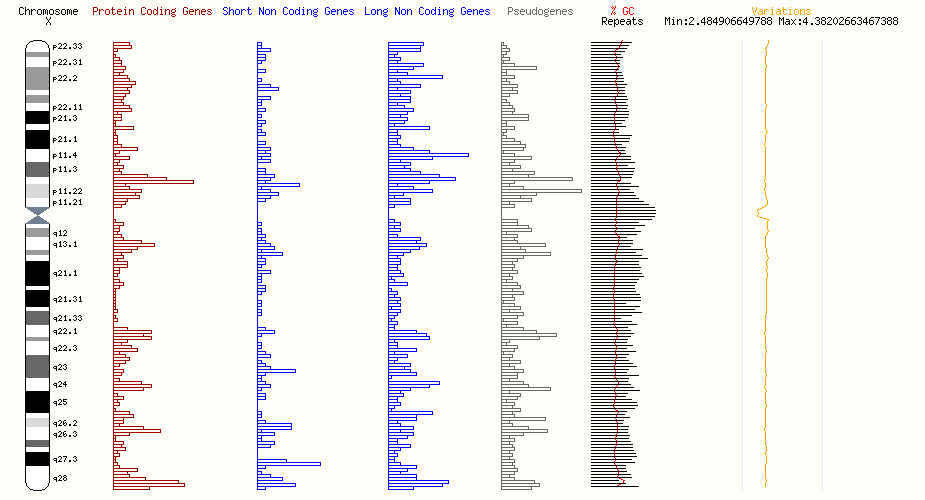
The Xp22.31 region contains several genes, including STS (steroid sulfatase), ANOS1 (also known as KAL1), NLGN4X, HDHD1 (PUDP), PNPLA4, and the VCX gene cluster.
Each gene has a different role. STS produces an enzyme needed for normal shedding of the skin’s outer layer, and its loss causes ichthyosis. ANOS1 is involved in the development of the sense of smell and the secretion of gonadotropin hormones; its deletion is linked to Kallmann syndrome (hypogonadism with loss of smell). NLGN4X is involved in connections between nerve cells, and its loss has been linked to autism spectrum disorder and intellectual disability. The larger the deletion, the more of these genes are lost together, and the wider the range of accompanying symptoms tends to be.
2. Why Symptom Severity Differs by Sex (X-linked Recessive Inheritance)
Because X-linked ichthyosis caused by STS deletion follows an X-linked recessive pattern of inheritance, males almost always develop symptoms, while females generally remain asymptomatic. Males have only one X chromosome, so if STS is deleted on that single copy, enzyme function is lost and symptoms appear (hemizygous). Females have two X chromosomes, so as long as one copy is normal, enzyme function is preserved and most women remain unaffected carriers.
Symptoms Common in Males (Hemizygous)
Polygonal, brown scaling typically appears on the extensor surfaces of the limbs within the first few weeks after birth. The inner creases of the joints and the palms and soles tend to be relatively spared.
Females (Carriers) Are Generally Asymptomatic
Skin symptoms are rare in female carriers, but reports include a slightly increased likelihood of corneal opacity and attention-deficit/hyperactivity (ADHD) traits. From the standpoint of future pregnancies, confirming carrier status becomes an important consideration.
| Comparison | Males (Hemizygous) | Females (Carriers) |
|---|---|---|
| Skin symptoms | Scaling appears in nearly all cases | Usually asymptomatic |
| Corneal opacity | Seen in about half (rarely noticeable to the person) | Occasionally seen |
| Undescended testes | Seen in about 20% | Not applicable |
| Behavioral traits (e.g., ADHD tendencies) | Reported in a certain proportion | Slightly increased likelihood noted in reports |
| Effect on future children | Daughters tend to become carriers; sons tend not to inherit it | About half of sons are affected; about half of daughters become carriers |
3. Main Symptoms (Focusing on X-linked Ichthyosis)
Scaly skin changes are the central feature, but corneal opacity, undescended testes, and behavioral traits can also occur. The main symptoms reported are as follows.
- Skin scaling: Large, polygonal, brown to grayish-brown scales. The inner joint creases, palms, and soles tend to be relatively less affected.
- Corneal opacity: Often first noted during an eye examination; it usually has little effect on vision.
- Undescended testes: Reported in about 20% of affected boys, sometimes requiring follow-up with a urologist.
- Attention-deficit/hyperactivity (ADHD) tendencies: Reported in a certain proportion of cases, sometimes noticed around the time a child starts school.
The combination of symptoms depends on how large the deletion is. When only STS is deleted, skin symptoms tend to dominate, but when the deletion extends to neighboring genes, features of the contiguous gene syndromes described next can also appear.

4. Contiguous Gene Syndromes Seen With Larger Deletions (Including Kallmann Syndrome)
When a deletion extends to include the ANOS1 gene, Kallmann syndrome (hypogonadotropic hypogonadism with loss of smell) can also occur. Academic reports describe cases of boys with deletions spanning both STS and ANOS1 who presented with ichthyosis and Kallmann syndrome together.
Isolated gonadotropin-releasing hormone deficiency (IGD), which includes Kallmann syndrome, results from insufficient gonadotropin-releasing hormone (GnRH). In infancy, affected boys may show a micropenis or undescended testes, but the condition often goes unnoticed until adolescence. When it develops later, delayed puberty or primary amenorrhea can be the clue that leads to diagnosis.
Treatment centers on hormone replacement therapy to induce and maintain secondary sexual characteristics. Testosterone or human chorionic gonadotropin (hCG) is used in men, while estrogen and progestin are used in women. For those who wish to have children, gonadotropin therapy or GnRH therapy to induce ovulation or sperm production, and in vitro fertilization (IVF), may also be options.
When the deletion is even larger, reports also describe autism spectrum and intellectual disability traits linked to loss of NLGN4X, ocular albinism when the deletion extends to the GPR143 region, short stature, epilepsy, and hearing loss. Coordinated evaluation by dermatology, endocrinology, pediatrics, and clinical genetics is important. If you are concerned about developmental traits, our article on the diagnostic limits of NIPT for mild intellectual disability may also be helpful.
Note that “Chondrodysplasia punctata, X-linked dominant” (CDPX2, the EBP gene, located at Xp11.23) is a different condition from the one discussed in this article, despite also originating on the X chromosome. The difference from the often-confused CDPX1 (the ARSE gene, X-linked recessive) is explained in this related article.
5. How This Differs From Conditions It Is Often Confused With (Comparison With Other Types of Ichthyosis)
There are several types of ichthyosis, each caused by different genes and inheritance patterns. Because symptoms alone are hard to distinguish, genetic testing is important for telling them apart.
| Comparison | X-linked Ichthyosis (this article) | Ichthyosis Vulgaris | Autosomal Recessive Congenital Ichthyosis |
|---|---|---|---|
| Causative gene | STS (Xp22.31) | FLG (filaggrin) | TGM1 and several others |
| Inheritance | X-linked recessive (mainly affects males) | Autosomal dominant | Autosomal recessive |
| Frequency | About 1 in 2,500–6,000 males | The most common type of ichthyosis | Very rare |
| Typical presentation | Scaling that spares joint creases and palms/soles | Joint creases can also be somewhat affected | Can present with severe skin findings from birth |
A confirmed diagnosis for any of these types requires a skin biopsy or genetic testing. Please avoid self-diagnosis and seek evaluation from a dermatologist or clinical geneticist.
6. Cause and Inheritance Pattern (X-linked Recessive, Transmitted From the Mother)
In most cases, the mother is a carrier of the STS deletion, and the condition is passed on to her son. Because the mother herself is asymptomatic, her carrier status is often discovered for the first time only after her child is diagnosed.
When the Mother Is a Carrier
If the mother is a carrier, each son has about a 1 in 2 chance of inheriting the deletion and being affected. Each daughter has about a 1 in 2 chance of inheriting the deletion, but most daughters remain asymptomatic carriers. When considering future pregnancies, genetic counseling can help clarify these probabilities in your specific situation.
When the Deletion Occurs De Novo
In rare cases, a new deletion can arise during the formation of sperm or eggs even when the mother is not a carrier. In these cases, diet or lifestyle during pregnancy is not the cause. In our clinical experience, we always want parents to know this is not something to blame themselves for.
7. Relationship With Prenatal Diagnosis and NIPT
When a deletion at Xp22.31 is detected on NIPT, it is essential to consider that the signal may be of maternal origin. This is an important caution specific to this condition, different from many other microdeletions.
The cell-free DNA (cfDNA) analyzed in NIPT is largely derived from the mother herself. If the mother is a carrier of an STS deletion, a deletion signal at Xp22.31 may be detected simply reflecting the mother’s own cfDNA, even if the fetus has not inherited the deletion.
A 2022 study published in the journal Frontiers in Genetics found that among 13,156 expanded NIPT cases, 19 cases (about 1 in 692) showed a deletion signal at Xp22.31, and maternal leukocyte testing confirmed that in every case, the deletion originated from the mother herself. Of the 15 cases carrying a male fetus, 11 underwent confirmatory testing by amniocentesis, and 9 were confirmed to have inherited the gene for X-linked ichthyosis.
Another point worth knowing is the relationship with traditional maternal serum marker screening (such as the quad test). A deficiency of placental steroid sulfatase is known to cause low levels of unconjugated estriol (uE3) in maternal blood, and this finding has, in some reported cases, been the clue that led to a suspicion of X-linked ichthyosis.
The NIPT guidelines issued by the Japan Society of Obstetrics and Gynecology state that NIPT results remain a screening test and do not constitute a confirmed diagnosis. The Ministry of Health, Labour and Welfare’s expert committee report on NIPT and other prenatal testing also notes that expanded testing, including for microdeletions, has limitations in analytical and clinical validity.
Standard basic NIPT primarily targets numerical changes in chromosomes 21, 18, and 13 (trisomies); microdeletions on the sex chromosomes only become a candidate finding with an expanded panel that specifically screens for microdeletions and duplications. Hiro Clinic NIPT offers an expanded panel covering 143 conditions, including microdeletions and duplications, but please check the testing scope table for your plan before testing to confirm whether this condition is included.
If NIPT returns a positive finding at Xp22.31, the first step is genetic counseling to check the possibility of a maternal origin and the sex of the fetus. From there, the process typically combines amniocentesis with chromosomal microarray analysis (CMA) and testing of the mother herself. Please avoid drawing firm conclusions as soon as a positive result appears, and work through the findings step by step with a specialist. Our article on what types of chromosomal abnormalities NIPT can detect may also help explain what NIPT can and cannot tell you overall.
8. The Path to a Confirmed Diagnosis
Chromosomal microarray analysis (CMA) and measurement of steroid sulfatase enzyme activity play the central role in reaching a confirmed diagnosis.
Chromosomal Microarray Analysis (CMA)
This test can detect deletions from a few hundred kilobases to several megabases in size — changes too small to be seen with traditional microscope-based karyotyping (G-banding). It can be performed prenatally through amniocentesis or chorionic villus sampling, or postnatally through a blood test, and it can precisely map the extent of the deletion.
Steroid Sulfatase Enzyme Activity Testing
This method directly measures enzyme activity in cultured skin fibroblasts and is known for its high sensitivity. When CMA cannot detect a deletion because the cause is a point mutation instead, direct gene sequencing may also be performed.
FISH Testing and Parental Testing
Fluorescence in situ hybridization (FISH), which lights up a specific region for confirmation, is sometimes used to support the diagnosis. Testing the mother’s blood alongside this can help determine whether the change is of maternal origin or unique to the fetus.
9. Treatment and Management (Moisturizing Care and Regular Follow-up)
There is not yet a fundamental treatment that restores the missing genes, but combining skin care with regular follow-up can support a child’s healthy development.
- Daily moisturizing care: Frequent bathing and regular use of moisturizers form the basis of care. Keratolytic agents containing lactic acid, urea, or glycolic acid are sometimes used as well.
- When skin symptoms are severe: Topical or oral retinoids such as tazarotene or acitretin may be considered at a dermatologist’s discretion.
- Regular ophthalmology and urology check-ups: Because corneal opacity rarely causes noticeable symptoms, it is monitored through regular eye exams. If undescended testes are present, follow-up with a urologist is needed.
- Developmental and behavioral follow-up: If ADHD tendencies or autism spectrum traits are suspected, evaluation and support through pediatrics and developmental clinics are combined.
Because the combination and severity of symptoms differ for each child, dermatology, pediatrics, ophthalmology, urology, and clinical genetics work together to build a support plan tailored to that child, step by step.

10. Outlook and Prognosis
When only STS is deleted, ongoing skin care can often keep the impact on daily life manageable.
Skin symptoms rarely improve with age on their own, so moisturizing care needs to continue long term. When the deletion is larger and involves Kallmann syndrome or developmental traits, long-term follow-up that includes endocrinology and developmental clinics has a greater influence on quality of life.
It is difficult to state a uniform long-term outlook. In our experience, what matters most is consistent follow-up with dermatology, ophthalmology, and developmental assessments, combined with steady day-to-day care.
11. Support for Families and Considerations for Future Pregnancies
Because the impact on future children differs depending on whether the deletion is maternal or de novo, genetic counseling is central to organizing this information.
Looking only at the skin symptoms, this may seem like a rare and unusual condition, but it can be managed by combining routine dermatological care with support from a clinical genetics specialist and a certified genetic counselor. Medical management can be left to the doctors and support staff, while a family’s role is to celebrate each small step of their child’s growth together.
If you are interested in other microdeletion syndromes or sex-chromosome-related conditions, our article on the conditions NIPT may be able to detect may also help. If you are concerned about microdeletions in general, our article on the risks associated with small chromosomal abnormalities is also a useful reference.
If you are considering NIPT for a future pregnancy, how much microdeletion coverage a plan includes will change what is right for you. If you are not sure which plan fits your situation, try our Plan Finder. Phone consultations are also available; feel free to reach us at 0120-169-629.
Frequently Asked Questions
What is Xp22.31 microdeletion syndrome?
It is a group of conditions caused by a congenital deletion of a region on the short arm of the X chromosome at Xp22.31. The most common form is X-linked ichthyosis caused by deletion of the STS gene, which mainly causes dry, scaly skin.
Why does symptom severity differ between males and females?
This is because of the X-linked recessive pattern of inheritance. Males, who have only one X chromosome, almost always develop symptoms if a deletion is present, whereas females, who have two X chromosomes, generally remain asymptomatic carriers as long as the other copy is normal.
Can a large deletion also cause Kallmann syndrome?
When the deletion extends to include the ANOS1 gene, Kallmann syndrome — hypogonadotropic hypogonadism with loss of smell — can also occur. The range of accompanying symptoms depends on how large the deletion is.
Can this condition be found through NIPT?
It can become a candidate finding on an expanded NIPT panel that includes microdeletions, but a detected deletion signal is known to often be of maternal origin. If a positive finding occurs, testing of the mother is combined with confirmatory testing by amniocentesis to reach a conclusion.
Is this hereditary? Could it affect future children?
In most cases, it stems from the mother being a carrier: each son has about a 1 in 2 chance of being affected, and each daughter has about a 1 in 2 chance of becoming a carrier. It can also arise rarely as a de novo change, so confirmation through genetic counseling is recommended.
Is there a treatment?
There is not yet a treatment that addresses the underlying cause. Management relies on daily care with moisturizers and keratolytic agents, along with topical or oral retinoids when symptoms are severe. Corneal opacity, undescended testes, and developmental traits are each followed by the relevant specialty on a regular basis.
Medical supervision: Hiroshi Oka, M.D., Ph.D. — Director-General and Lab Director, Hiro Clinic, Fukumikai Medical Corporation. Graduate of Keio University School of Medicine. Licensed physician in both Japan and the United States, and holds a Ph.D. in Medicine. One of the few Lab Director-certified physicians in Japan. This article was written with attention to medical advertising guidelines, referencing public information and academic literature from GeneReviews, Orphanet, the Japan Society of Obstetrics and Gynecology, the Ministry of Health, Labour and Welfare, and peer-reviewed studies. Reported frequencies and figures vary across sources. Please consult your physician for final decisions on diagnosis and treatment.
References
- Hussain S, et al. X-Linked Ichthyosis. StatPearls [Internet]. Treasure Island (FL): StatPearls Publishing.
- Orphanet. Xp22.3 microdeletion syndrome. ORPHA:1643.
- Tang X, Wang Z, Yang S, Chen M, Zhang Y, Zhang F, Tan J, Yin T, Wang L. (2022). Maternal Xp22.31 copy-number variations detected in non-invasive prenatal screening effectively guide the prenatal diagnosis of X-linked ichthyosis. Frontiers in Genetics, 13, 934952. https://doi.org/10.3389/fgene.2022.934952
- Balasubramanian R, Crowley WF Jr. Isolated Gonadotropin-Releasing Hormone (GnRH) Deficiency. 2007 May 23 [Updated 2022 May 12]. In: Adam MP, Feldman J, Mirzaa GM, et al., editors. GeneReviews® [Internet]. Seattle (WA): University of Washington, Seattle; 1993-2025. Available from: https://www.ncbi.nlm.nih.gov/books/NBK1334/
- Nagai, K., Shima, H., Kamimura, M., Kanno, J., Suzuki, E., Ishiguro, A., Narumi, S., Kure, S., Fujiwara, I., & Fukami, M. (2017). Xp22.31 Microdeletion due to Microhomology-Mediated Break-Induced Replication in a Boy with Contiguous Gene Deletion Syndrome. Cytogenetic and genome research, 151(1), 1–4. https://doi.org/10.1159/000458469
- Japan Society of Obstetrics and Gynecology. Guidelines on NIPT.
- Ministry of Health, Labour and Welfare. Expert Committee Report on NIPT and Other Prenatal Testing.
- Perez, G., Barber, G. P., Benet-Pages, A., Casper, J., Clawson, H., Diekhans, M., Fischer, C., Gonzalez, J. N., Hinrichs, A. S., Lee, C. M., Nassar, L. R., Raney, B. J., Speir, M. L., van Baren, M. J., Vaske, C. J., Haussler, D., Kent, W. J., & Haeussler, M. (2024). The UCSC Genome Browser database: 2025 update. Nucleic Acids Research, gkae974. https://doi.org/10.1093/nar/gkae974
- Harrison, P. W., Amode, M. R., Austine-Orimoloye, O., Azov, A. G., Barba, M., Barnes, I., Becker, A., Bennett, R., Berry, A., Bhai, J., Bhurji, S. K., Boddu, S., Branco Lins, P. R., Brooks, L., Budhanuru Ramaraju, S., Campbell, L. I., Carbajo Martinez, M., Charkhchi, M., Chougule, K., … Yates, A. D. (2024). Ensembl 2024. Nucleic Acids Research, 52(D1), D891–D899. https://doi.org/10.1093/nar/gkad1049
日本皮膚科学会 皮膚科専門医/日本医師会 産業医/東京衛生検査所 指導監督医
この記事は、 ヒロクリニックNIPTの編集・監修体制 にもとづき、資格を持つ医師が内容を確認しています。